On the first genuinely cold evening of the year, my flat becomes a rehearsal space for percussion. The radiators start before I wake, clanking and thudding like an ageing bus over potholes, while pipes shudder inside the walls as though something is attempting an escape. In the darkness, you listen as the noise moves between rooms and wonder whether the boiler is about to burst or whether this is simply the sound of “grown-up home ownership”. Eventually the heating calms down, the building seems to exhale, and you tell yourself you will deal with it before January. Naturally, you do not.
The amusing part is that much of this winter noise does not require a major, costly refit. Sometimes the answer begins with an amount of oil no bigger than a thimbleful. The most peaceful homes can have a very small secret travelling along their pipework.
The winter chorus hiding in your walls
When your radiators seem to be under attack from a spoon whenever the heating starts, it is not your imagination. Hot water rushing through cold metal causes a commotion. Pipework expands, brackets protest and trapped air performs its own tap routine through the system. That sudden knock in the hallway at 6:03am? It is essentially your heating declaring, “I’m awake too.”
We rarely think of plumbing as mobile, yet it is. As water warms, copper or steel pipes lengthen by a tiny amount and push against what secures them: joists, clips, floorboards and even plaster. Without room to slide freely, they catch, build tension and then abruptly break loose. That is the bang. Across an entire house, those individual sounds add up to a complete winter chorus.
Most people simply raise the television volume and tolerate it. Or they mention it with mild irritation over tea: “Oh yes, old house, the pipes make a right racket.” Yet the sound is not merely unavoidable. Behind the walls, it is often the result of friction, resistance and restricted movement working against one another.
The strange magic of a drop of oil
This is where winter’s understated heroes appear: heating engineers and traditional caretakers familiar with the peculiar solutions that never feature on polished renovation programmes. A highly experienced plumber asked about noisy radiators may first mention releasing air, balancing the system and checking pressure. Then, if they consider you trustworthy, they may suggest the faintest trace of oil.
The idea could not be simpler. In minute quantities, oil allows surfaces to slide rather than grind. When metal meets metal, or when metal rubs against timber, the contact can become harsh as soon as the heating starts. Oil makes that interaction gentler. It changes a confrontation into a compromise.
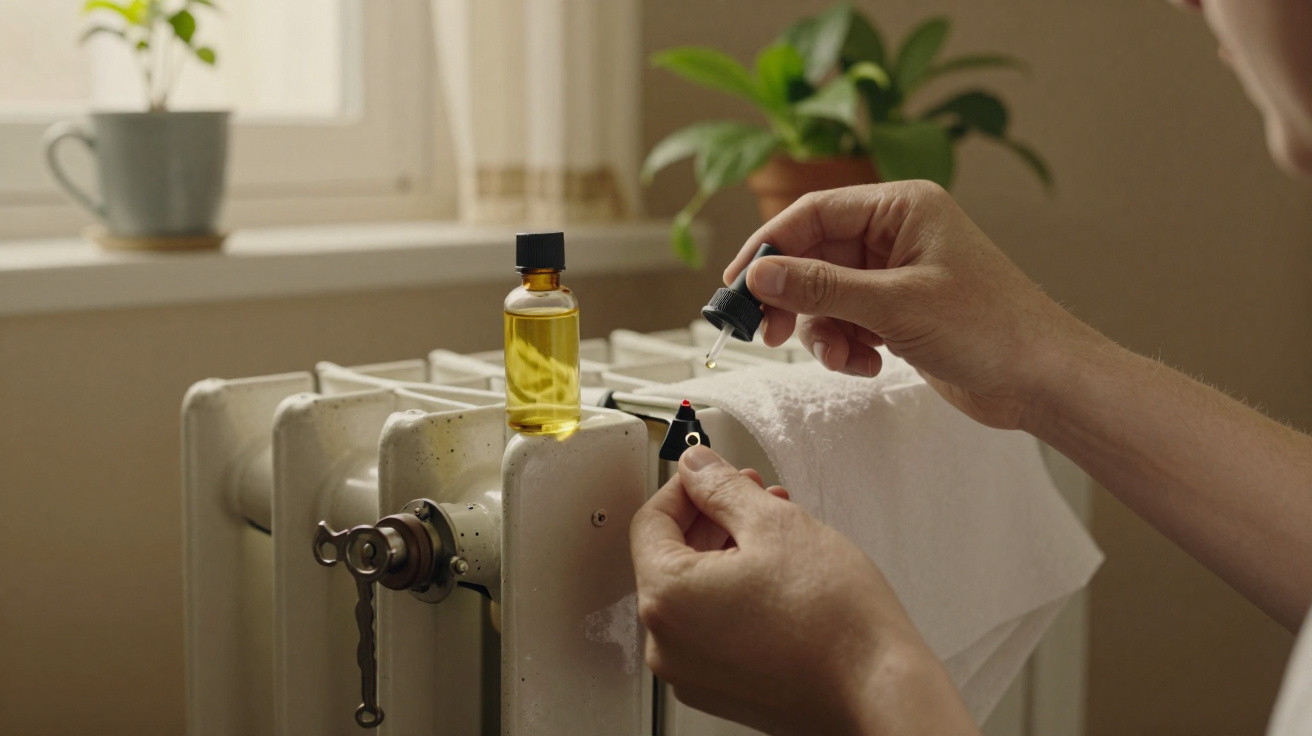
You may picture somebody pouring engine oil into the heating water itself. That is not the point, and your boiler would strongly object. The useful applications are outside the system: on brackets, within moving joints and at places where pipes are fixed in place or pass through holes and notches. A small dab here and a light smear there can turn a fierce “crack!” into a quiet “tck” - or remove the noise completely.
Where the noise is really coming from
The pipe dance you can’t see
Beneath floorboards and behind plaster, pipes try to expand and contract much like a runner loosening up before and after a race. Often, though, the building prevents it. They may be held tightly by plastic clips that have stiffened over time, or forced through timber joists without any protective lining. Once the heating ignites and the metal lengthens by a fraction, something has to move.
That is when the thumping begins. A pipe presses against an uneven piece of timber, remains stuck for a moment and then finally jolts onwards. It is plumbing’s version of scraping a chair over a wooden floor rather than lifting it carefully. At the right time, you may even sense the vibration by placing a hand on the wall.
Treating these concealed pressure points with a little oil helps convert the jerking action into a smooth slide. Heating engineers may gently free the pipe, apply a light oil or silicone-based lubricant, and allow it to shift naturally. Reduced friction means less accumulated strain and fewer dramatic sounds. It also means quieter mornings.
Radiator brackets: the unsung villains
At times, the rattle seems to come directly from the radiator. There may be a ping, followed by a creak and then a muted knock as the metal casing flexes. Those large white panels attached to your walls expand as well, all while resting on a pair of metal hooks. Where the fit is close and dry, every minor adjustment produces its own soundtrack.
A fine coating of oil on the points where brackets meet can make a substantial difference. An engineer may lift the radiator from its brackets, clean the contact area, insert a little felt or plastic, and then use a dab of oil where metal still meets metal. As the radiator warms, it can then settle and move without announcing every adjustment. The noise is not removed through magic; it vanishes because movement becomes easy and almost languid.
Nobody is likely to share this kind of modest, unglamorous task on Instagram. On a bitterly cold morning, however, when all you want is another ten minutes in bed, the improvement can feel like an upgrade to a luxury hotel.
Oil, air and water: a three-part peace treaty
Naturally, a few applications of oil will not resolve every noisy radiator. There is usually an entire supporting cast: trapped air, rapidly moving water, excessive pressure and untidy pipework left by a hurried installation years earlier. Consider oil the peacekeeper that arrives after the more obvious offenders have been addressed.
Air trapped in a radiator is the familiar culprit. It leaves the radiator tops cold and sits there while water passes, producing gurgling or knocking noises. Releasing the air with a key, allowing it to hiss out until water emerges, is the basic first task that most people know about. Still, in truth, hardly anyone does it every day, even though the system calls for attention each autumn.
After the air has been released and water is circulating more smoothly, persistent clanging often points directly to friction and movement. That is when oil proves useful. It will not repair a poorly designed system or an excessively powerful pump, but it can make the problem less severe. It is rather like adding olive oil to a frying pan so that eggs slide rather than fuse to its surface.
What kind of oil, and how little is “little”?
Oils vary greatly, and central heating systems are not a place for experiments. Avoid anything thick, tacky or likely to collect dust and become a grey paste in time. Light machine oil, such as the type used for hinges or sewing machines, is often preferred. A very small drop spreads readily, adheres to metal and does not leave the place smelling like a car park.
When people say a “small amount”, they truly mean it. Use one or two drops at a bracket contact point, a light smear along pipework rubbing inside a joist notch, or perhaps a dab on a stubborn clip. The aim is not to saturate anything, but to lessen friction at carefully chosen locations. Excess oil can drip, stain surfaces or make future leaks more difficult to spot.
For plastic clips and rubber grommets, some engineers favour silicone-based lubricants because they suit non-metal materials and remain effective for a long period. Whichever option is chosen, the principle remains unchanged: create a smoother route and quieter movement. You’re not silencing the system; you’re helping it move the way it wanted to all along.
Old-school tricks from draughty buildings
Speak to somebody responsible for an old school, a council building or a Victorian terrace divided into flats, and they will have plenty of stories. They may recall long corridors of radiators that once banged like drumlines at 7am every morning. Tenants complained, caretakers cringed and everyone blamed “the ancient plumbing”. Then an experienced engineer arrived, carrying a battered tool kit and a small bottle of oil.
They work their way along the route, listening closely, touching pipes lightly and locating the places where normal movement becomes a jarring jolt. First comes the radiator key, followed by the screwdriver and then the oil. A bracket is loosened and adjusted. A clip receives the faintest touch of lubricant. A pipe tightly jammed against the edge of a joist is given just enough clearance to shift without resistance.
The task feels unexpectedly intimate, rather like tuning a slightly off-key instrument. Once it is complete, the building seems more settled. The heating still switches on and warms the same spaces, but its angry percussion becomes a quiet, satisfied hum. You tend only to realise how noisy it was when the sound has disappeared.
The quiet psychological payoff
Unidentified noises in a home are particularly unnerving during winter. Nights stretch longer, wind mutters through the gutters and then a bang arrives from somewhere inside the walls that you cannot quite identify. The logical part of your mind says, “Thermal expansion.” The version of you awake at 3am thinks, “What if the boiler is about to launch itself into orbit?” Everyone has paused Netflix after hearing a sound, simply to check what happened.
As those noises recede, everyday life feels less tense. Mornings become gentler. Instead of metallic shocks that make you sit upright, you wake to the low hum of the boiler and perhaps one or two soft ticks. It is the sort of minor domestic improvement that subtly changes the emotional atmosphere of an entire home.
There is also a discreet pleasure in understanding the reason for it. Realising that a minute amount of oil on a concealed bracket helps maintain peace in your home makes you feel surprisingly competent. The building ceases to be an unknowable machine and becomes something you can understand, guide and look after.
When oil isn’t enough
Not every sound comes down to friction, of course. Pipes can hammer because the pump is set too high and drives water faster than the system can cope with. Partially closed valves may create sudden pressure shocks. In older properties, pipework is sometimes routed in ways no sober person would ever choose, twisting, rubbing and amplifying sound through the structure.
If your system is shaking, hammering loudly, or changing behaviour suddenly, that’s not a “bit of oil” situation; that’s a call-an-engineer-now situation. Gas boilers, pressurised systems and pipework that has been in place for decades should be treated with care. Oil is helpful for calming harmless yet irritating winter clatter, rather than a solution to every worrying noise produced by your heating.
Once serious faults have been excluded, however, what often remains are the smaller domestic annoyances. This is where the approach works best: a small adjustment in one place, a less abrasive bracket in another, or a pipe no longer striking the timber it runs through. The drama diminishes and is replaced by something quieter and much less demanding of your attention.
The tiny fix that changes the season
The romance of winter is not in being woken at 5:48am by what sounds like a tiny person hitting your radiator with a wrench. It lies in peaceful mornings, warm floors and that first mug of coffee not having to compete with metallic echoes from the hallway. After experiencing a calmer heating system, it is difficult to accept the old noise again.
What makes this especially appealing is its scale. We tend to assume large problems require large answers: a replacement boiler, new pipes or a full renovation. At times, they do. Yet many of the most infuriating everyday problems can be eased through the smallest actions. A radiator key kept on a hook rather than misplaced in a drawer. Five minutes spent bleeding the system on a Sunday afternoon. A few measured drops of oil on a bracket that has complained for years.
That’s the quiet power of understanding how your home actually works. There is no need to become an engineer. You only need to recognise that, between the boiler starting and warmth reaching your feet, countless small movements take place inside the walls. Help those movements glide rather than scrape, and winter will suddenly have a very different sound.
















Comments
No comments yet. Be the first to comment!
Leave a Comment