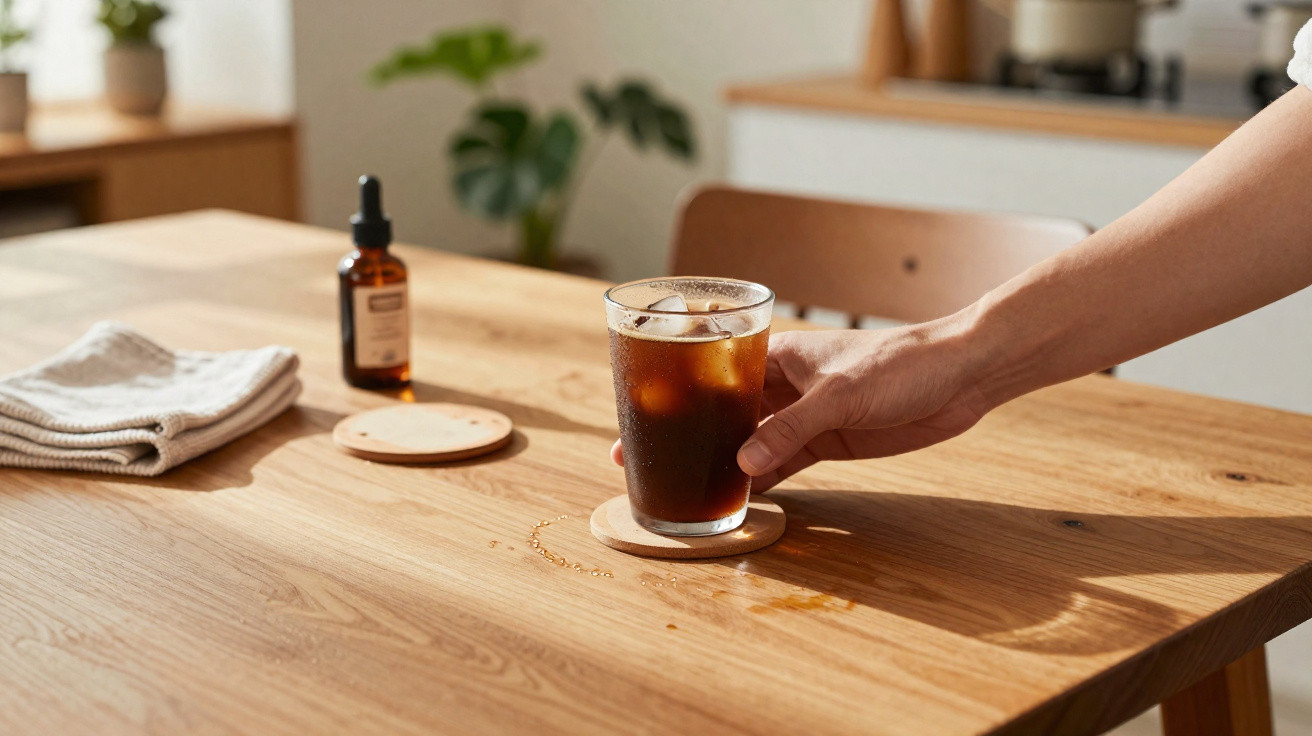
A slow Sunday afternoon: a series hums away in the background and somebody puts down their drink “just for a second”. Then someone else does the same. Next comes a hot mug, followed by a damp bottle straight from the fridge. At first, the wood appears to handle it all. There is no crack, no fuss and no immediately visible catastrophe.
A few weeks on, the light falls at a different angle and the problem becomes clear. There is a pale ring or a cloudy mark that interrupts the grain. You scrub at it, switch cleaning products and perhaps even blame the children. It will not shift. The harm has already worked its way in, unnoticed.
The worrying part is that the behaviour responsible seems utterly innocent.
This small everyday habit that damages solid wood
Wooden furniture is rarely ruined by one dramatic mishap. More often, it is worn down through repetition: a hot mug placed on the dining table while emails are answered; a damp tumbler left on the bedside table each evening; a plant watered on the console table with the thought, “I’ll wipe it later”.
Wood does not make a fuss; it takes it in. It expands slightly, then shrinks again as it dries. The finish softens enough for moisture to get through. From across the room, the table may still look perfect. Look closely, though, and the surface turns hazy, the varnish begins to bubble and the edges start to rise.
This gradual deterioration is caused less by occasional major spills than by the daily combination of heat and condensation sitting directly on the surface. That is the routine quietly eating away at your furniture.
In a photograph, the harm may seem trivial: a white ring in one place, a faintly grey area in another. But for many owners, that minor blemish becomes the first thing they notice whenever they enter the room. One British insurance survey placed a “ruined wooden table” among the most common household regrets, just behind scratched parquet flooring.
Consider Emma, who inherited her grandmother’s walnut table. For years, she used it as she would any ordinary surface: coffee cups without coasters, overheating laptops and scented candles left burning for hours. One winter, she shifted it closer to the radiator to make more room. By spring, the window-facing side had faded, the side nearest the heater had cracked, and white rings covered the middle like the ghosts of past conversations.
No single day caused the problem. It was the accumulation of small, thoughtless decisions that transformed a family heirloom into a restoration job.
Wood remains responsive long after the tree has been felled. It continues to react to humidity, heat and pressure. A mug or plate can soften many finishes, particularly varnish and lacquer. Once that coating is warm, water vapour from a glass or the surrounding air can pass beneath it and become trapped, producing those milky white or pale grey marks.
Condensation from a chilled drink, or a small pool of water beneath a leaking plant pot, acts as a slow-moving invasion. The fibres swell inconsistently, the surface distorts and minute cracks form, allowing in dirt and further moisture. Eventually, the protective coating loses its hold and the timber starts absorbing everything placed on it.
That is why the apparently harmless habit of setting hot or damp items directly on bare wood becomes a long-term assault: subtle, repeated and effective.
Protecting solid wood without turning your home into a museum
The simplest way to stop this damaging routine is to create a barrier between the wood and everyday use. This does not mean a plastic cover reminiscent of the 1980s, but practical items you will genuinely reach for: coasters left on the table, substantial placemats where people usually sit, and a basic drinks tray that catches condensation on a washable surface rather than on oak.
For meals in front of the television or laptop sessions, an inexpensive wooden or cork lap tray can also protect a coffee table. Place plants on a waterproof saucer sized for the pot, with a felt pad beneath it, to prevent both leaks and scratches. A subtle tablecloth for lengthy dinners is not merely decorative: it takes the heat and splashes before they reach the fibres.
The aim is not to treat furniture as untouchable, but to give every daily routine a simple, automatic layer of protection.
Everybody knows the basics: clean up spills quickly, use coasters and avoid direct heat. But life gets in the way. You are tired, the mug goes down wherever it lands, and nobody wants to walk around the sitting room policing every surface with a cloth. Let’s be honest: nobody really does that every day.
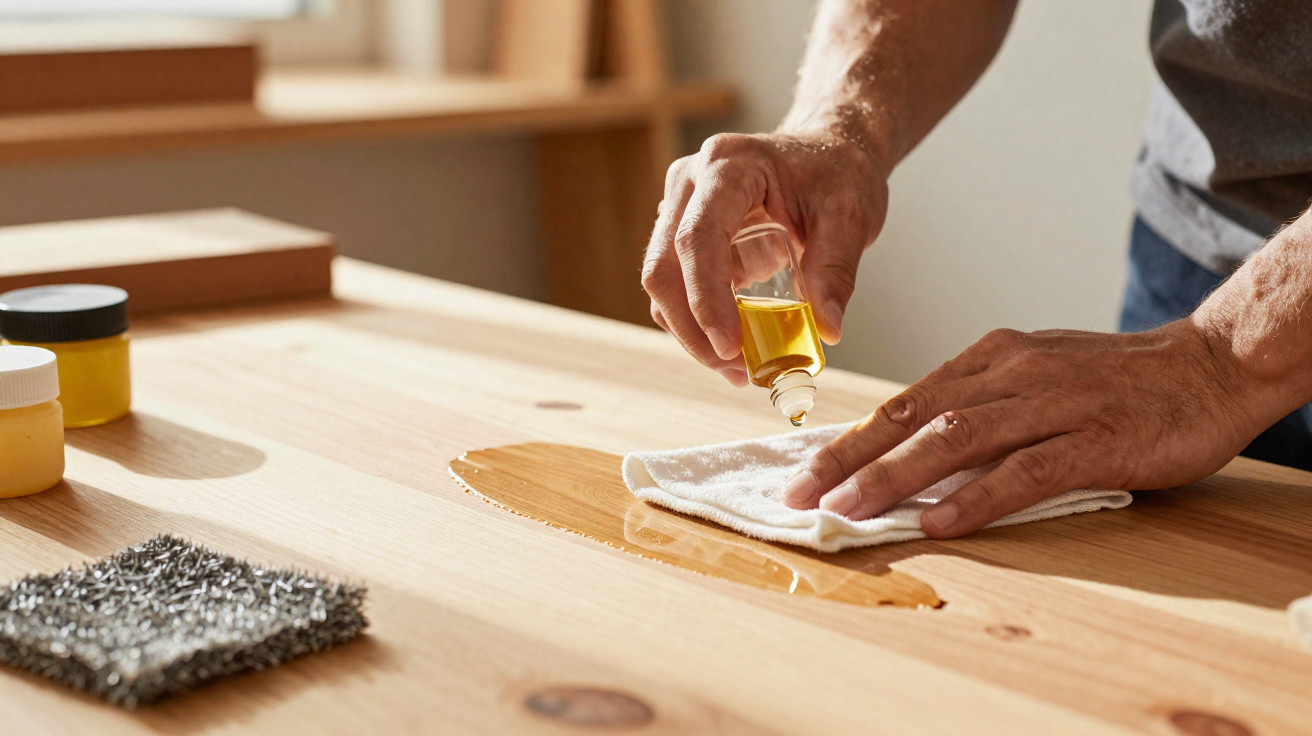
The answer is to make the right choice easier. Keep a pile of coasters precisely where people tend to put down their glasses, rather than in an attractive box three metres away. Pick placemats attractive enough to leave out permanently. If children are hard on furniture, opt for oil-finished tables that can cope with light sanding and re-oiling instead of delicate, high-gloss varnish.
For the same reason, steer clear of harsh cleaners that claim to work on every surface. Many include alcohol or solvents that dry out the finish, leaving it even more vulnerable to heat and moisture. A soft cloth, a little mild soap and regular dusting will do more for wood than any miracle spray.
“Wood doesn’t like extremes,” explains a Paris-based restorer. “Not extreme heat, not standing water, not brutal cleaners. What kills it is the combination of all three, day after day.”
A straightforward checklist on the fridge, or attached inside a sideboard door, can help keep these points front of mind, particularly in a shared household.
- Never place a hot mug or plate straight onto wood – always put something underneath it.
- Lift objects instead of dragging them, as micro-scratches can allow moisture in.
- Remove water rings on the same day, even when they seem very small.
- Position furniture away from radiators and areas of strong direct sunlight.
- Where possible, choose finishes you can maintain yourself, such as oil or wax rather than ultra-gloss coatings.
Looking at your furniture in a new way
Once you understand how wood responds, a table stops being “just a surface”. You notice the decades of meals, children’s homework, late-night laptop use and every cup that has left its trace. Suddenly, putting a hot mug in the same place each day feels less innocent and more like a slow, steady source of wear.
There is no need to panic or encase everything in plastic. Living with wooden furniture means accepting a few marks, but choosing which ones. A scratch from a house move or a pen mark made by a child learning to write tells a story. A collection of white heat rings caused by the same lazy, coaster-free ritual is less appealing.
In practical terms, modest shifts in routine can halt the damage. You might move the coffee area to a sideboard covered by a thick runner. Perhaps the lovely oak table gets a tablecloth on weekday evenings and placemats at weekends. Or you might pay for refinishing once, then protect the renewed surface as carefully as a fresh tattoo.
We have all experienced that flash of anxiety when a visitor puts a sweating glass in the one unprotected spot. That response reveals plenty: deep down, we understand how vulnerable a finish can be. Talking about what you have learnt - the white rings, heat marks and small disasters - may make guests more considerate than any pile of coasters can.
Over time, these decisions add up. A table that receives gentle protection ages like leather, developing a mellow patina alongside a few truthful scars. The identical model, used as a catch-all surface, will eventually warp, stain and end up hidden beneath runners concealing the worst sections. The habit that determines the outcome is small, quiet and sitting right beneath your morning cup.
| Key point | Details | Why it matters to readers |
|---|---|---|
| Hot mugs and plates ruin finishes | Heat softens varnish and lacquer, allowing moisture to penetrate and form white rings or cloudy surface patches. | It explains why marks can appear even after very small spills, and why a basic coaster genuinely prolongs a table’s life. |
| Condensation causes gradual water damage | Cold drinks and plant pots create persistently damp areas that swell the fibres and create micro-cracks. | It encourages readers to reconsider where glasses and plants are placed, preventing the familiar “mystery stain” on bedside tables and console tables. |
| Gentle cleaning is better than multi-surface sprays | Many all-purpose cleaners contain alcohol or solvents that gradually dry and dull wood finishes. | It prevents well-intentioned but damaging cleaning habits, while saving money through the use of soft cloths and mild soap instead of harsh chemicals. |










Comments
No comments yet. Be the first to comment!
Leave a Comment