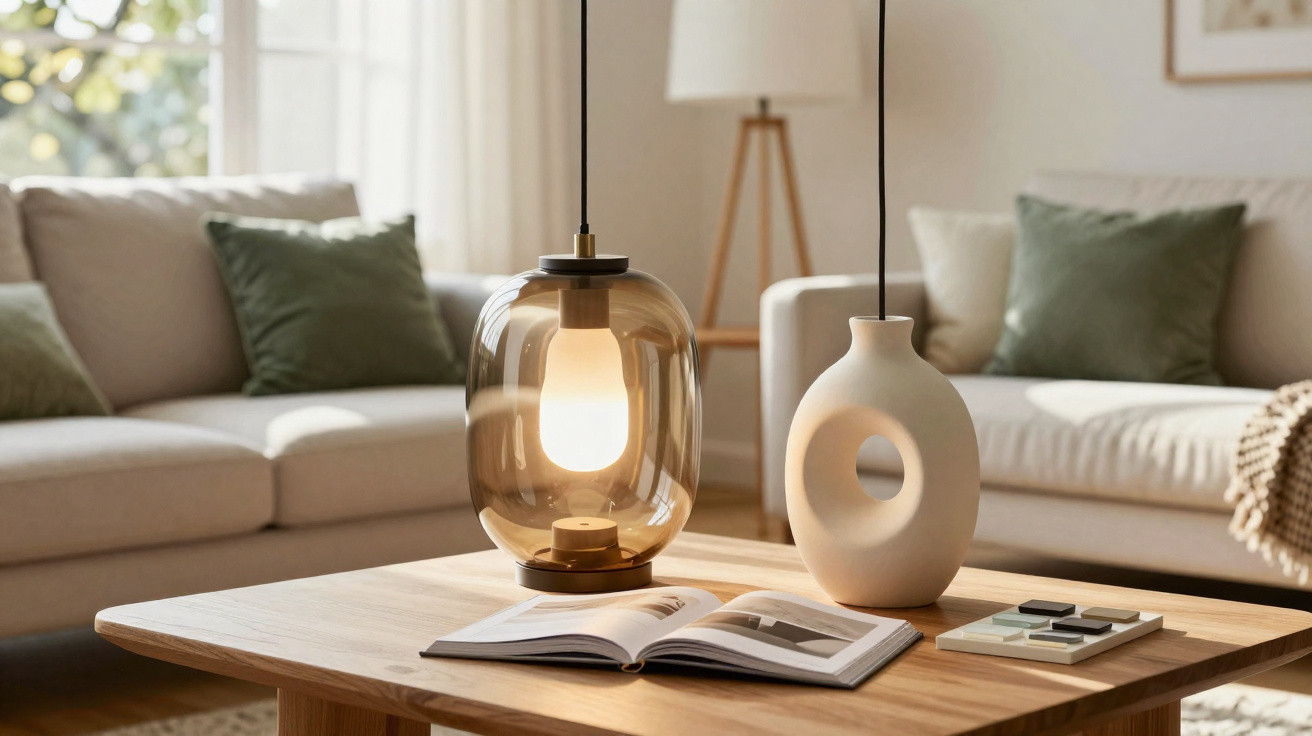
For years, one particular type of lamp epitomised cosy boho style. Now sentiment is shifting: interior professionals are quietly moving away from woven ceiling shades and choosing materials that feel timeless, premium and considerably more elegant. Two options in particular are set to transform living rooms this spring – without major renovation work, yet with a noticeable style upgrade.
Why rattan and similar living-room lamps are starting to feel tired
When the same trend hangs everywhere
A few years ago, a woven pendant light still felt distinctive and faintly exotic. Today, it can be found in cafés, holiday lets, offices, Airbnbs – and, of course, countless living rooms. That ubiquity has diminished its appeal. What once looked like a carefully chosen one-off now often resembles off-the-shelf décor.
Many interior experts say people are once again looking for rooms that appear more personal rather than like a mass-produced Instagram feed. Woven finishes no longer suit every style, especially as they can be highly conspicuous and dominate a room.
“Anyone wanting to elevate their living room is not looking for more décor, but for fewer, better pieces with character.”
A balanced atmosphere comes from allowing a small number of carefully selected elements to stand out, rather than making everything compete for attention at once. This is exactly where the new favourite lamp comes in.
Spring trend: less boho, more understated elegance
Living spaces are moving away from pure “cosy chaos” towards cleaner lines and enduring materials. Sofas, sideboards and tables are gaining smoother surfaces and more pared-back shapes. Beside them, the rustic feel of woven fibres can quickly look busy or makeshift.
The lamps in demand are those that:
- look like design objects during the day,
- cast warm, even light in the evening,
- work with a range of styles, from Scandi to mid-century,
- do not look dated after a single season.
The answer lies in two materials that everyone already knows, but which have rarely been viewed as modern ceiling statement pieces.
The new ceiling star: tinted glass
How coloured glass changes a room’s light
Tinted glass is making a confident return. Whether in warm amber, deep bottle green, pale smoke grey or dark blue, glass creates an entirely different lighting mood in the living room from woven basket shades.
Where woven lamps often let light through unevenly and cast pronounced shadows across the walls, glass produces a softer, more consistent glow. The colour of the glass subtly refracts the light, creating an understated, almost cinematic ambience.
“One well-positioned glass globe can change the mood of a room more than five new cushions and three decorative objects combined.”
It is particularly compelling because, in daylight, a glass lamp can look almost like a floating artwork. By evening, it becomes an illuminated sphere that visually warms the room without overpowering it.
Why tinted glass is so practical day to day
Beyond its appearance, glass offers some very down-to-earth benefits:
- easy to clean – dust simply wipes away, with no weave for debris to get caught in,
- bright – ideal when the living room also serves as a home office or play area,
- budget-friendly – even simple designs can look premium,
- easy to combine – works with wood, concrete, metal and textiles.
Round globe and teardrop shapes are especially popular. Those feeling more adventurous can choose ribbed surfaces, which refract the light more dramatically and make the lamp resemble a vintage vase during the day.
A second alternative: ceramic as a sculptural lamp
Hand-shaped individual pieces instead of mass-produced designs
The other major ceiling trend is ceramic. Many manufacturers are producing hand-shaped lampshades in clay, stoneware or porcelain. Each lamp has slight irregularities: a subtle ripple, a visible tool mark or variations in the glaze.
“It is precisely this imperfection that makes ceramic lamps so appealing – they look more like artworks than mere functional objects.”
Ceramic creates a strong connection with natural materials. Paired with parquet flooring, solid wood furniture, linen cushions and wool rugs, it delivers a warm, grounded feel without slipping into overly rustic kitsch.
How ceramic lamps work in a room
Depending on their shape and finish, ceramic lamps alter the room’s light considerably:
- Matt and unglazed: light is directed more downwards, giving the lamp a calm, architectural presence.
- Glazed and glossy: creates delicate reflections and makes the room feel more lively.
- Translucent porcelain: gives off an exceptionally soft, almost textile-like light.
For anyone who prefers clean-lined furniture, a ceramic pendant lamp offers an intriguing contrast – almost like a small sculpture suspended in the middle of the room.
How to hang the new lamps perfectly
The right height for everyday life
Even the most attractive lamp will look wrong if it does not suit the ceiling height and how the space is used. A few simple guidelines can help:
- Clear walkways: In areas where people pass beneath the lamp, its lower edge should sit around 2 metres above the floor.
- Above the coffee table: Here, the lamp can hang much lower – approximately 1.60 metres above the floor creates intimacy and defines the seating area.
- Larger rooms: Several smaller glass pendants suspended at different heights often create more interest than one large design.
“Several small pools of light usually make a living room feel cosier than one harsh central source in the middle of the room.”
Refining your style with small adjustments
Anyone replacing a woven finish with glass or ceramic should also consider a few related details. This will make the overall scheme feel cohesive:
- Tinted glass works particularly well with brass or black metal. Wall lights, side tables or shelving in similar tones can echo the look.
- Ceramic suits softer companions: linen curtains, thick rugs and sofas with coarse-woven upholstery. This keeps the room warm rather than overly severe.
- Bulbs: Warm-white LEDs with a lower Kelvin rating (for example, 2,700 K) make glass and ceramic feel significantly cosier than cool light.
Which lamp type is worth choosing for whom
| Lamp type | Ideal for | Effect in the room |
|---|---|---|
| Tinted glass | Minimalist, modern or Scandinavian interiors | A contemporary, lighter look with even, warm light |
| Ceramic | Natural, cosy or artistic interior styles | Sculptural, handmade, highly homely and full of character |
If you are unsure, start with a single lamp above the coffee table and see how it changes the room. Many people quickly notice that the new lighting mood makes colours, furniture and even pictures on the wall feel different.
Practical tips for making the switch in spring
Use the trend without buying everything new
There is no need to replace an entire living room. A small set of changes is often enough:
- remove the old woven light and replace it with a glass or ceramic pendant,
- fit suitable dimmable LED bulbs,
- add two or three accessories in the same material, such as a vase, bowl or wall hooks,
- coordinate textiles such as cushions or curtains with the colour of the glass or ceramic.
This quickly creates a harmonious look without requiring you to spend your whole budget at once.
Why investing in lighting pays off long term
Lamps are among the furnishing pieces that can last for many years. Choosing high-quality materials delivers two benefits: the room gains stylistically, while the pressure to replace items is greatly reduced. Glass and ceramic in particular show very little visible ageing and generally outlast short-lived living-room colour trends with ease.
So, if you are already planning to refresh your living space, a new ceiling lamp is a good place to begin in spring. Its impact is often so substantial that other intended purchases may suddenly feel unnecessary, because the new light has already made the room feel completely different.













Comments
No comments yet. Be the first to comment!
Leave a Comment