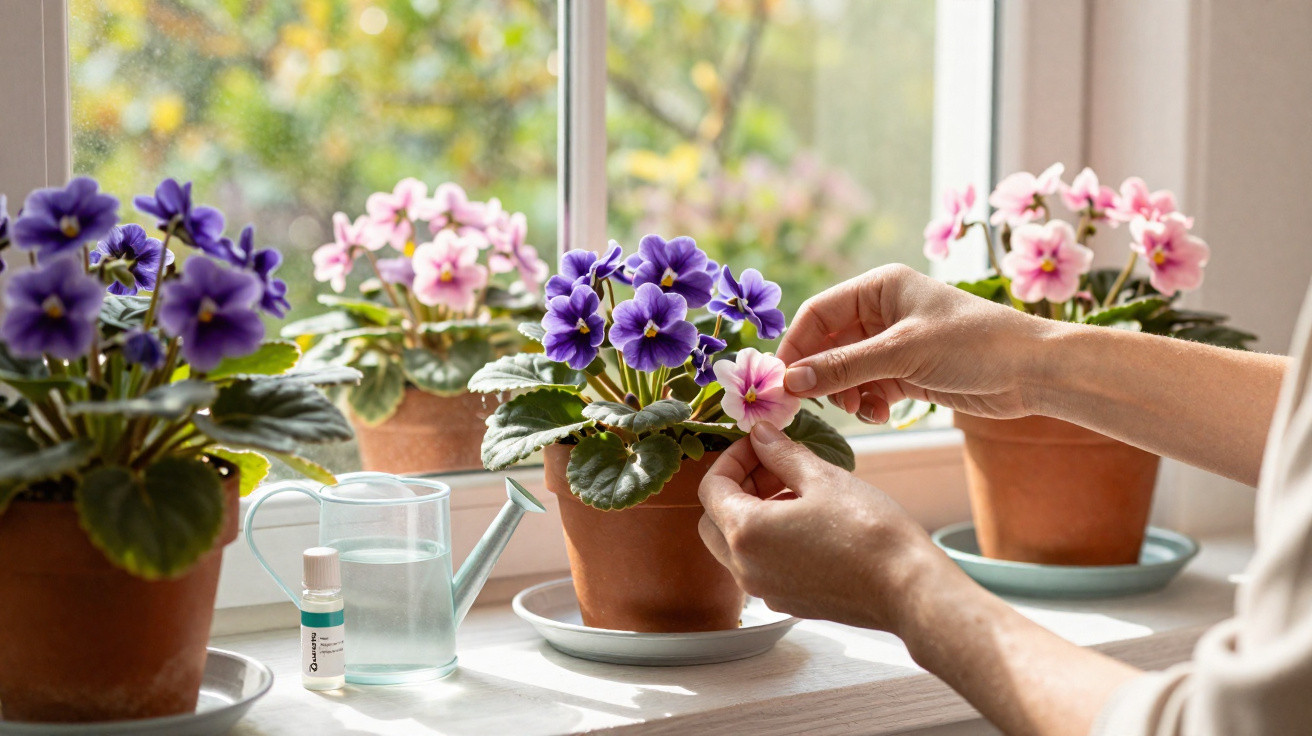
African violet is the small, velvety windowsill diva that, when cared for properly, can flower for almost the entire year. Spring is particularly important: it needs a special March routine combining light, water, nutrients and a little “cosmetic” care to keep producing fresh blooms continuously into summer.
Why African violets suddenly pick up pace in March
Following the dark winter months, African violets enter an active growth period in March. Longer daylight hours, rising temperatures and a slightly adjusted watering and feeding routine act as a signal to begin flowering again.
“Anyone who gets the conditions right in March can enjoy an almost continuously flowering violet until summer – often with very few setbacks.”
The key is to prevent the plant from remaining in dim conditions while also protecting it from scorching spring sunshine. It requires a little more water and nutrition now, though never excessive amounts. Old leaves, exhausted compost and dust can hinder growth far more than many people realise.
The perfect light and temperature conditions on the windowsill
African violets appreciate bright conditions but cannot cope with harsh, direct sun. In March, sunlight is often already strong, even when it still feels cool outdoors.
The ideal location in March
- East- or north-facing windows: bright conditions without intense midday sunshine
- West- or south-east-facing windows: position the plant around 30 cm away from the glass and use a light curtain to filter the sun
- No direct midday sun: the soft, hairy leaves can scorch quickly
Turning the pot slightly every one to two weeks stops the leaf rosette from leaning towards the window. This helps the plant retain a compact, well-shaped appearance.
The leaves provide a useful indication of whether the light level is suitable:
- Leaves reach noticeably in one direction or the plant barely flowers: too little light
- Leaves become yellowish or look bleached: too much sun
- Leaf edges become dry and develop brown marks: often caused by direct sun or overly dry air
Warmth is welcome, heat stress is not
During March, African violets are happiest at temperatures between 18 and 24 °C. Night-time temperatures can be around four to five degrees lower. Keep these important rules in mind:
- A spot directly above a radiator is unsuitable because the air becomes too dry.
- The plant does not tolerate draughts from an open window well.
- After repotting, slightly cooler conditions are acceptable for a short period; around 16 °C encourages root development.
“When light and temperature are balanced, the violet quickly responds with fresh, compact growth and new buds.”
Watering in March: more moisture, with a delicate touch
Throughout winter, many African violets manage with very little water. As light levels increase from March onwards, however, their water requirements rise too – although the plant almost never forgives waterlogging.
How to tell when it is time to water
The root ball should remain lightly moist at all times, never wet. A simple finger test is helpful:
- The surface and the first 1 to 2 cm of compost are dry: it is time to water
- The compost still feels cool and moist: wait a little longer
Lukewarm water, roughly at room temperature, is ideal. Cold water may leave marks on the leaves and can cause the plant to droop temporarily.
Watering methods that keep the leaves dry
African violets strongly dislike water on their leaves or in the centre of the plant, especially in cooler conditions. For this reason, many indoor gardeners use the soak or saucer method:
- Place the pot in a saucer or shallow bowl of water.
- Leave it for 15 to 20 minutes, until the root ball has absorbed sufficient water.
- Allow the pot to drain thoroughly; do not leave water sitting permanently in the saucer.
This approach keeps the foliage dry while allowing the roots to receive enough air. If watering conventionally from above, pour very carefully around the edge of the pot only.
Feeding African violets in spring: a gentle nutrient boost
From March, African violets become hungrier again. After a relatively lean winter period, they benefit from regular fertiliser, but only in modest quantities.
“Too much fertiliser produces plenty of leaves but fewer flowers and, in extreme cases, can even scorch the roots.”
Suitable options include:
- Liquid fertiliser with a balanced nutrient ratio, for example 20-20-20
- Specialist African violet fertiliser with an adapted formula
Always add fertiliser to the watering water, never apply it undiluted to the roots. These feeding schedules are well established:
- every two to four weeks at a weak dilution
- or once a month at a slightly stronger dilution, while always staying below the manufacturer’s stated dose
- or every four to six weeks when using highly concentrated specialist products
When in doubt, feed a little less but do so consistently over several months. Pale, weakly growing plants with no obvious cause generally respond well to a slightly increased but regular fertiliser application.
Repotting, cleaning and rejuvenating: the March routine for strong growth
March is the perfect time to give an African violet a brief “spring clean”. This lays the groundwork for vigorous new growth and flowers that last longer.
When a new pot is worthwhile
The plant prefers to be slightly snug around its roots and does not require a large pot. Even so, repotting every one to three years helps replace depleted compost. Signs that it is needed include:
- Roots growing out through the drainage holes
- Compost settling heavily and drying out very quickly
- The plant looking tired despite receiving the right care
Choose a shallow new pot that is only slightly larger than the existing one. Important features are:
- Drainage holes in the base
- A thin drainage layer of expanded clay or gravel
- Loose, free-draining compost, such as houseplant compost mixed with perlite
Leaf care and pest checks
In March, remove old, yellow, limp or damaged leaves. They drain the plant’s energy unnecessarily. Proceed as follows:
- Gently pull leaves downwards if they come away easily
- Or cut them off at the base with clean scissors
- Do not remove more than around one third of the foliage in one go
Afterwards, inspect the undersides of the leaves closely. Mealybugs, spider mites and other pests occasionally hide there. A soft brush can remove dust from the hairy leaves, allowing them to photosynthesise freely once more.
Propagating African violets in spring: new plants from a single leaf
March is an excellent month for multiplying African violets. A healthy leaf can produce new miniature plants within just a few weeks.
Step by step: growing a plant from a leaf cutting
- Select a strong, undamaged leaf.
- Cut it off with clean scissors or a knife, leaving a stem section measuring 3 to 5 cm.
- Insert the leaf into a light growing medium, such as a peat and perlite mix, or place it in a glass of water.
- Keep it bright but out of direct sunlight, and maintain slight moisture.
Depending on conditions, tiny plantlets will appear at the base of the leaf after six to eight weeks. These young plants can later be moved into their own small pots. Rooting a few leaves every March gradually creates a small collection of varieties, or ensures there is an occasional gift ready for plant-loving friends.
Common mistakes in March and how to avoid them
Many problems begin in spring, when care routines are changed too abruptly. This brief overview of sensitive points helps guide the plant safely through the transition:
- Suddenly giving much more water after a long dry period: increase watering gradually instead.
- Applying fertiliser at the full manufacturer’s dose after a break: begin with half strength.
- Moving the plant straight into full sun: acclimatise the leaves to brighter light step by step.
- Soaking the centre of the plant while watering or misting: this can easily lead to rot.
Careful observation helps identify difficulties early. Soft, translucent-looking leaves usually indicate root rot, while dull foliage lacking shine may result from drought or nutrient deficiency.
Why this March routine pays off in the long term
With good care, an African violet can live for ten years or longer. Each year, March marks the beginning of a long flowering cycle. Giving your plant a little attention now will often reward you with an almost uninterrupted display of blooms on the windowsill well into summer.
The plant is suitable for beginners because it stays compact and does not need a balcony or garden. Experienced indoor gardeners value the wide range of varieties, from tiny miniature specimens to striking giant rosettes with bicoloured and double flowers. It all begins with a few understated yet deliberate tasks in March: more light without scorching, considered watering, gentle feeding, fresh compost and a little cosmetic care.

















Comments
No comments yet. Be the first to comment!
Leave a Comment