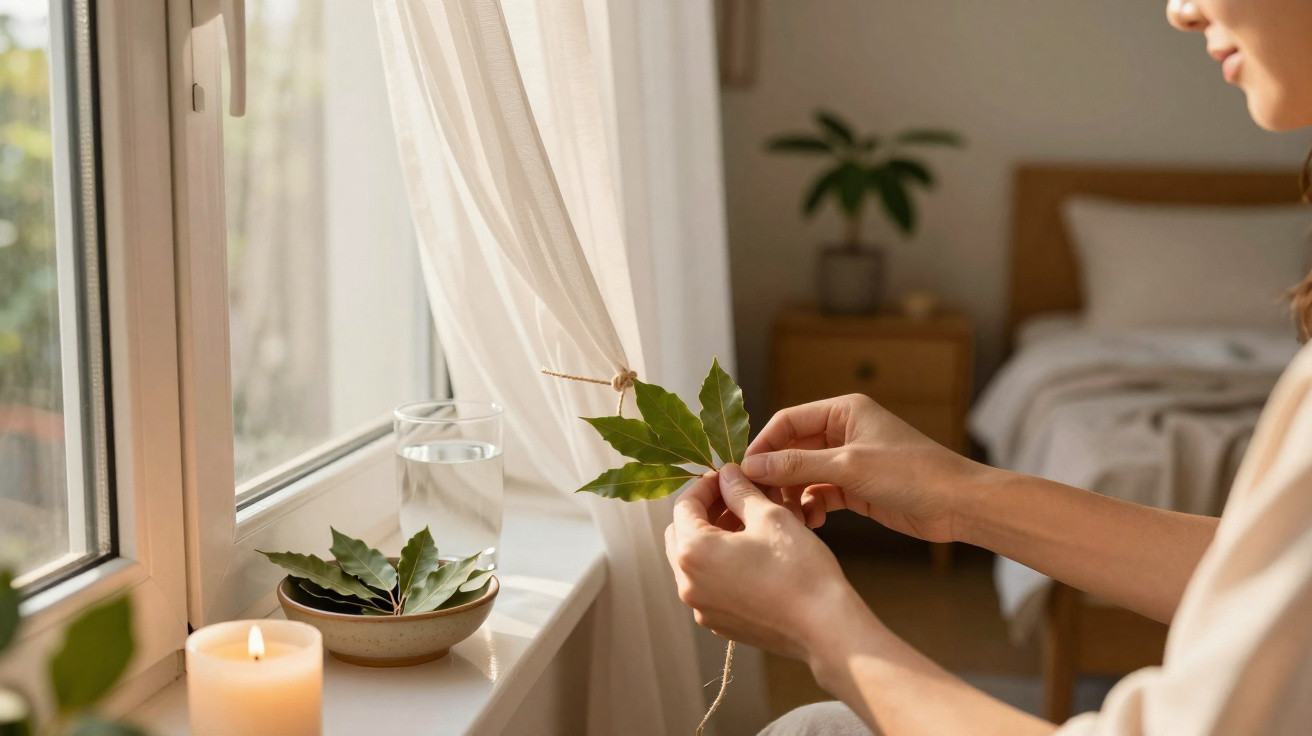
Hanging bay leaves in the bedroom window is a household practice becoming more common in several countries, including the UK. It brings together folk tradition, care for the home environment and the search for straightforward ways to make a bedroom more pleasant, whether for the fragrance, the symbolism of protecting the home or as a natural addition to an organising routine.
What is the purpose of hanging bay leaves in the bedroom window?
Placed close to an open window, bay leaves give off a delicate scent as air moves around them, helping to mask unwanted smells and make the room feel cosier, particularly in the evening. They are generally used alongside ventilation, cleaning and changing bed linen, rather than relying solely on fragranced sprays or artificial scents.
In many folk traditions, bay is also regarded as a symbol of protection, renewed energy and domestic harmony. For this reason, a sprig in the bedroom window may become part of a home's sentimental decoration. The custom therefore combines a practical aromatic benefit with a subjective sense of emotional comfort for people who appreciate simple daily rituals.
Does hanging bay leaves in the bedroom window actually work?
When it comes to fragrance, the effect is straightforward: dried bay leaves that have been kept in good condition gradually release their distinctive aroma when exposed to a breeze. A bedroom is likely to feel more pleasant when this is paired with daily airing, sunlight through the window and a basic routine for keeping the sleeping area tidy.
As for insects, bay is often said to be a possible natural repellent because its strong smell may bother some creatures. However, it is only an additional measure and does not replace insect screens, regular cleaning, proper waste management or products recommended by professionals, especially in areas where mosquitoes are more prevalent.
How can you hang bay leaves in the bedroom window safely?
To make the most of bay leaves in the bedroom, choose leaves that are clean, thoroughly dried and free from signs of mould. This prevents moisture from causing unpleasant odours or deterioration. A practical option is to prepare small bundles or use fine fabric pouches, which allow air to pass through while limiting the spread of leaf fragments around the home.
Once the leaves are ready, a few simple steps can keep their use safe and make later replacements easier:
- Set aside between 5 and 10 fully dried bay leaves.
- Tie the leaves together with thread, string or durable ribbon.
- If preferred, place them in a small breathable cloth pouch.
- Hang the bundle near the window, ensuring it does not touch hot light fittings or other heat sources.
- Make sure it is positioned where it can be easily reached for cleaning and replacement.
What care is needed for using and disposing of bay leaves?
Over the following weeks, bay leaves gradually lose their fragrance and can become brittle, darker or noticeably scentless, signalling that they should be replaced. Many people renew the bundle every few weeks, adapting the timing to the climate and the amount of ventilation in the bedroom.
The old leaves can be disposed of with organic waste or placed directly in the soil of a garden, vegetable patch or plant pot. They should not be reused in cooking, as they have been exposed to dust and particles carried in by the wind. In this way, bay leaves in the window remain a simple, low-cost and intriguing gesture that combines attention to scent, a welcoming feeling and a touch of tradition in a daily resting space.















Comments
No comments yet. Be the first to comment!
Leave a Comment