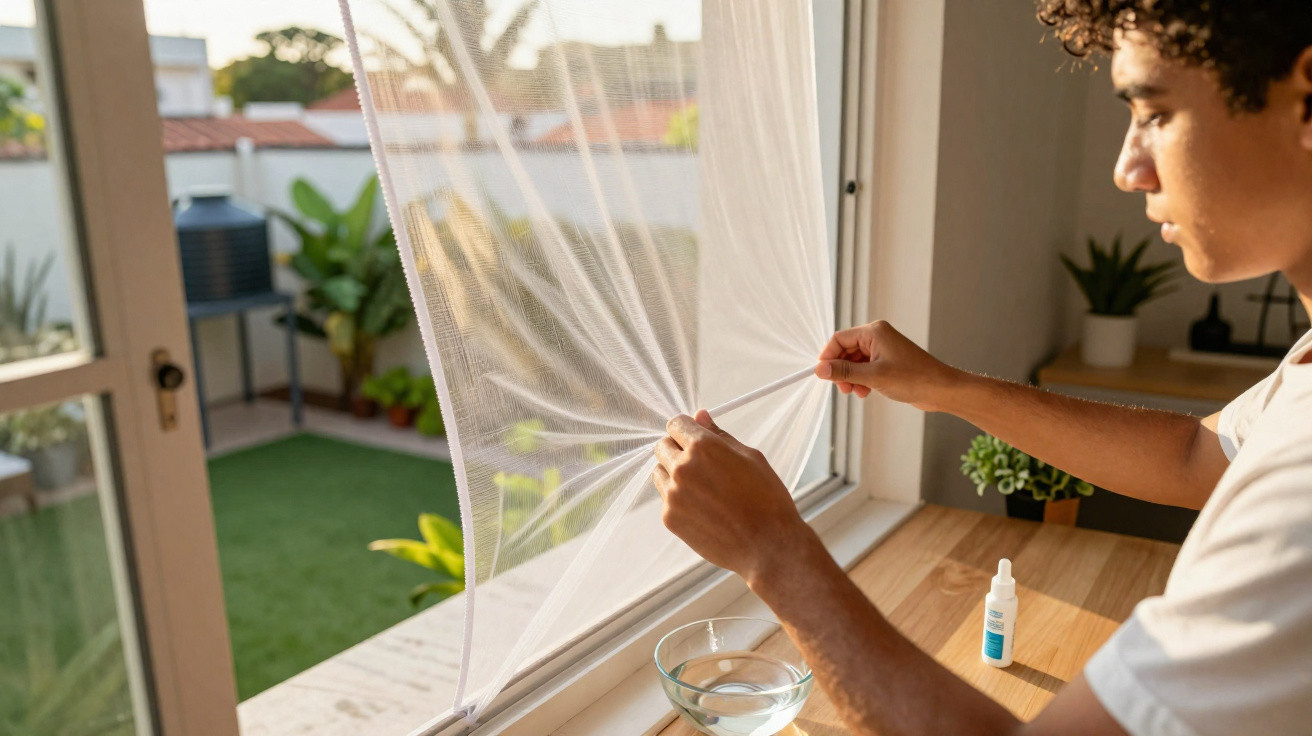
The simplest way to stop mosquitoes getting into the house is not to scent the rooms, but to close off their access routes. Insect screens, sealed gaps and properly fitted doors limit the number of these insects entering, particularly during periods of hot weather and dengue.
Why do mosquitoes get into the house so easily?
Mosquitoes take advantage of tiny openings around windows, doors, drains, pivot windows and gaps near the floor. On hot days, homes are kept more open for ventilation, creating easy routes for these insects as they search for shelter and food.
Aedes aegypti is described as a mosquito adapted to urban settings and human homes. Its closeness to houses makes it essential to block entry points and remove places containing standing water.
The main areas requiring attention are:
- Windows: well-fitted screens reduce entry while still allowing ventilation.
- Doors: rubber seals and draught strips close gaps close to the ground.
- Gaps: small spaces in walls and window frames can also provide a route in.
- Garden: exposed containers increase the risk of breeding sites.
- Hot weather: warmer periods encourage mosquitoes to move around inside the home.
How do insect screens help protect the home?
Insect screens act as a physical barrier, allowing air to enter without giving insects an open route inside. They are useful in bedrooms, kitchens, utility rooms and windows left open for longer during the day and night.
The key is to check that the screen is securely fixed at the sides, with no tears or loose sections. Even a small gap can compromise some of the protection, especially in ground-floor homes or properties near gardens, rubbish and wet plants.
What should be sealed besides windows?
Doors with a gap underneath are among the most common entry points, especially when they are close to corridors, gardens or outdoor areas. Door seals, self-adhesive rubber strips and straightforward adjustments can restrict this access without requiring major work or expense.
A simple barrier against mosquitoes
Blocking mosquitoes starts with small entry points
Screens, rubber seals and door adjustments reduce insect movement without relying only on chemical products.
Protection is improved when drains, the garden and containers around the home are also kept free from accumulated water.
It is also worth checking rarely used drains, pivot windows, gaps in frames and openings around pipework. These details can be overlooked in everyday life, yet they provide enough of a route for mosquitoes to enter even when the house appears closed and protected.
Before the hottest period begins, check for:
- Tears or loose edges in insect screens.
- Gaps beneath external doors.
- Drains without covers or that are not used regularly.
- Openings around windows, pivot windows and utility areas.
Why is this care connected to dengue?
Aedes aegypti is known to transmit diseases including dengue, zika, chikungunya and urban yellow fever. Since it adapts well to human homes, protecting household entry points must go hand in hand with tackling breeding sites and water.
A physical barrier reduces nuisance in the rooms, but it does not solve the problem if containers holding water remain outdoors. Plant saucers, buckets, gutters, bottles and poorly sealed tanks can still provide suitable conditions for eggs and larvae.
Simple measures can make a difference in daily life:
- Empty any containers that may collect water.
- Keep water tanks and bins tightly covered.
- Clean gutters, outdoor drains and plant saucers.
- Inspect screens and seals regularly in hot weather.
How can this trick become a daily habit?
The best approach combines outdoor prevention with indoor protection. When considering mosquitoes indoors during hot weather, the central aim is to reduce access points, hiding places and breeding sites through routine and attention.
Ultimately, the simple trick is to close off the route before the mosquito gets in. Properly installed screens, sealed gaps, adjusted doors and the removal of standing water make the home safer, better ventilated and more comfortable during the hot months.













Comments
No comments yet. Be the first to comment!
Leave a Comment