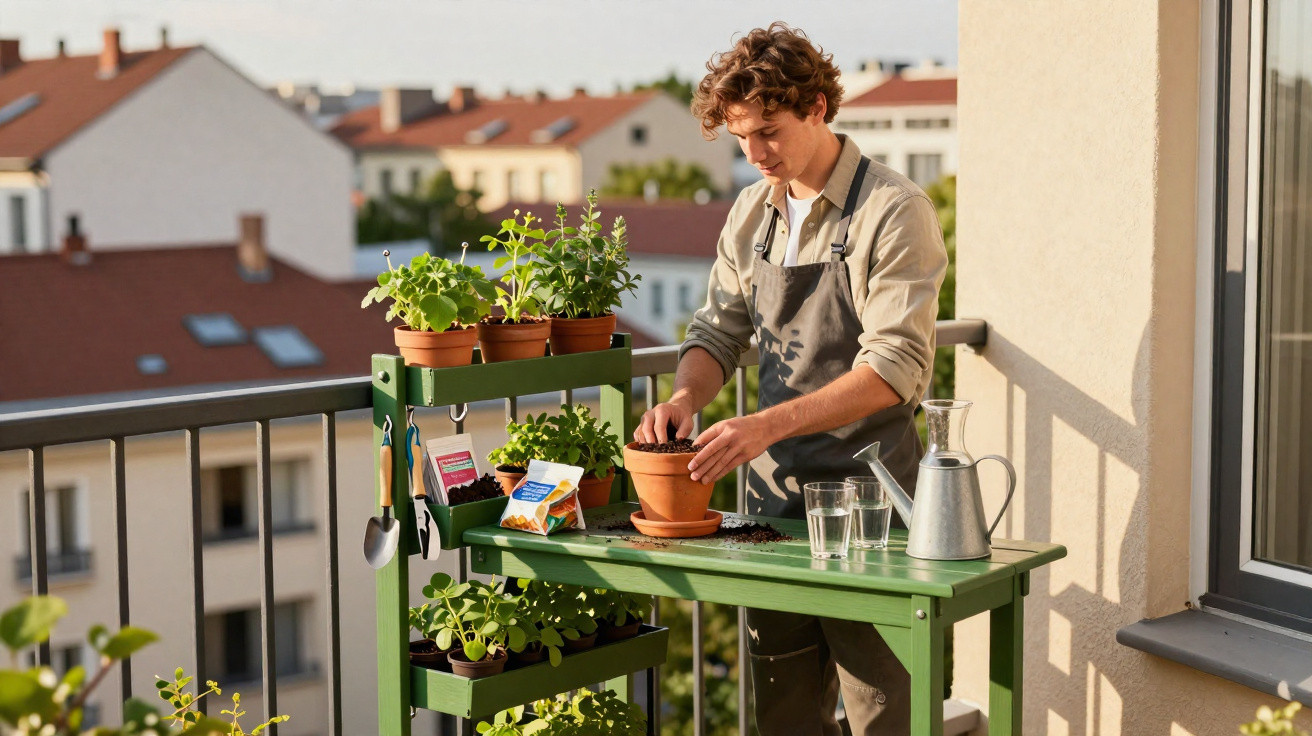
Anyone with a mini garden, narrow courtyard or just a few square metres of terrace will know the issue: pots, compost, watering cans, tools and decorations pile up until a favourite spot turns into a cluttered storage area. Lidl is now offering a piece of garden furniture from its Parkside range designed to tackle exactly this problem – priced at around €39.99 and packing a surprising number of functions into a compact footprint.
Why the new garden feature makes a noticeable difference to small spaces
The principle is straightforward: rather than working on the ground or using up the garden table, all the “messy work” moves to a dedicated workbench. Essentially, this furniture is a compact garden table designed specifically for repotting and handling compost.
“The workbench creates a clearly defined gardening zone – and lets the rest of the space return to being a living area.”
Its key benefit is the working height. Anyone normally crouching on a concrete floor or bending over garden chairs will quickly notice the strain this puts on their back and knees. The Parkside table raises the work area to a height similar to a kitchen worktop. Plants can therefore be repotted, bowls planted up or window boxes prepared without continually bending down.
The top is made from galvanised metal. Damp compost, water, fertiliser residue and minor scratches have little effect on it. After planting, a quick wipe with a damp cloth is usually enough to make the furniture presentable again. This ability to switch between a “workstation” and a tidy piece of garden furniture is precisely what makes it appealing in compact courtyards.
Better organisation with shelves and hooks instead of floor clutter
Another everyday advantage becomes obvious quickly: the table brings order to cluttered outdoor areas. Two wooden shelves sit beneath the worktop. They provide space for bags of compost, empty pots, a watering can and buckets – items that would otherwise be left somewhere on the floor and constantly get in the way.
Metal hooks fitted to the side can hold gloves, secateurs, a spray bottle or a small hand brush. There is no need to rummage through boxes or search the shed when a plant suddenly needs moving.
- Tools hang within easy reach on hooks.
- Bags of compost can be kept dry on the bottom shelf.
- Empty or planted pots fit on the middle shelf.
- The top work surface remains clear for the current project.
The result is simple but noticeable: the floor becomes visible again, there is a clear route through the small space, and the courtyard feels larger without gaining a single square metre.
Parkside garden table: compact dimensions for tight corners
The Parkside garden table is clearly aimed at people with limited outdoor space. Its length is below 1 metre, while its depth is around 40 cm. This means it can be placed directly against a house wall, along a fence or in a terrace corner without dominating the area.
The frame is wooden, with metal caps reinforcing the feet so they do not immediately suffer when the ground is damp. According to the manufacturer, the wood is pre-treated with a water-based lacquer intended to protect it from rain and UV radiation. Combined with the metal top, this creates furniture that can remain outdoors when placed in a reasonably sheltered position.
| Feature | Description |
|---|---|
| Length | under 1 metre |
| Depth | approx. 40 cm |
| Frame material | wood treated with protective lacquer |
| Work surface | galvanised metal |
| Features | 2 storage shelves, metal hooks at the side |
| Intended use | terrace, small courtyard, balcony |
The furniture is priced at around €39.99, depending on the store and promotion. For this, buyers receive more than simply a surface to put things on: it is a complete mini gardening station with storage, a work area and room for decorative items.
How the garden table changes a compact urban outdoor space
In practice, the difference is especially clear in courtyards of around ten square metres. Beforehand, pots and compost bags may be left beside the door, the watering can blocks the way, and the barbecue has to be moved whenever repotting is needed. Once the table is assembled, much of this changes:
- Position the table along a wall or balcony railing.
- Use the bottom shelf for heavy bags of compost, fertiliser and buckets.
- Keep pots, plants and baskets on the middle shelf.
- Hang secateurs, gloves and spray bottles from the hooks.
- Use the top as a work surface – or as a seasonal display area.
The usual garden table is then left free for coffee, a laptop or an evening meal. All planting tasks take place solely at the workbench. Once the job is done, everything returns to its designated place rather than being scattered around the courtyard.
“Anyone who wants to view their outdoor space as an ‘additional room’ needs zones that can be separated – this table addresses exactly that.”
Year-round uses, from repotting station to summer bar
The furniture becomes particularly interesting once the main repotting season has finished. During high summer or autumn, the table can quickly be repurposed. A few ideas that suit its dimensions include:
- a herb bar with pots of basil, mint and thyme;
- a small bar counter with glasses, carafes and crates of drinks underneath;
- a place for lanterns and candles on long summer evenings;
- an overwintering spot for sensitive container plants close to the house wall.
This keeps the furniture useful throughout the year rather than leaving it as an abandoned workbench. A simple routine is recommended to help it last: wipe the top briefly after “compost-heavy” jobs, check the feet occasionally for moisture damage, and apply a fresh coat of water-based lacquer every few years if the wood fades or becomes rough.
Who will benefit most from buying it
The garden table is aimed primarily at people with:
- small urban gardens or back courtyards;
- narrow terraced-house patios;
- balconies where the dining table has previously doubled as a work surface;
- a love of gardening and frequent repotting, but no desire to work while crouching down.
Anyone with a large garden, their own shed or a fixed workbench is more likely to see the table as an addition. For urban gardeners, however, it can become a central piece of furniture because it solves several issues at once: a lack of worktop space, clutter from items left lying around, and the feeling that there is hardly any room in the courtyard.
Points to consider when positioning the table
Location matters if the table is to remain enjoyable to use for a long time. A relatively level surface is ideal, ensuring that it does not wobble. Set directly against a house wall, the furniture is protected from the wind and can also be positioned within easy reach of a water connection or outdoor socket. Those with only an exposed balcony should check that rainwater drains away properly and that the feet are not left permanently standing in water.
If heavy containers or wet bags of compost will often be placed on it, take care during assembly, tighten every screw securely and do not load the table beyond its weight limit. According to the product description, it is stable enough for many typical gardening jobs, but the ground is a more suitable permanent storage place for very heavy concrete planters.
What the trend for garden tables reveals about small gardens
The popularity of this kind of discount furniture shows how much the use of outdoor areas has changed. Many people in German-speaking countries no longer have a traditional garden, but instead have hybrid spaces: a narrow strip beside a terraced house, a courtyard between the garage and kitchen, or a fourth-floor balcony.
Instead of large equipment and bulky cabinets, mobile, compact items are becoming increasingly important. A slim garden table with storage fulfils several roles at once: work area, storage unit and decorative feature. Anyone who organises their few square metres intelligently gains considerably more usable space – without paying more rent or making structural changes.
This is exactly where Lidl’s Parkside furniture comes in: it brings a little workshop logic to the mini garden, separates work from relaxation, and can make even narrow courtyards feel like an additional living area again.












Comments
No comments yet. Be the first to comment!
Leave a Comment