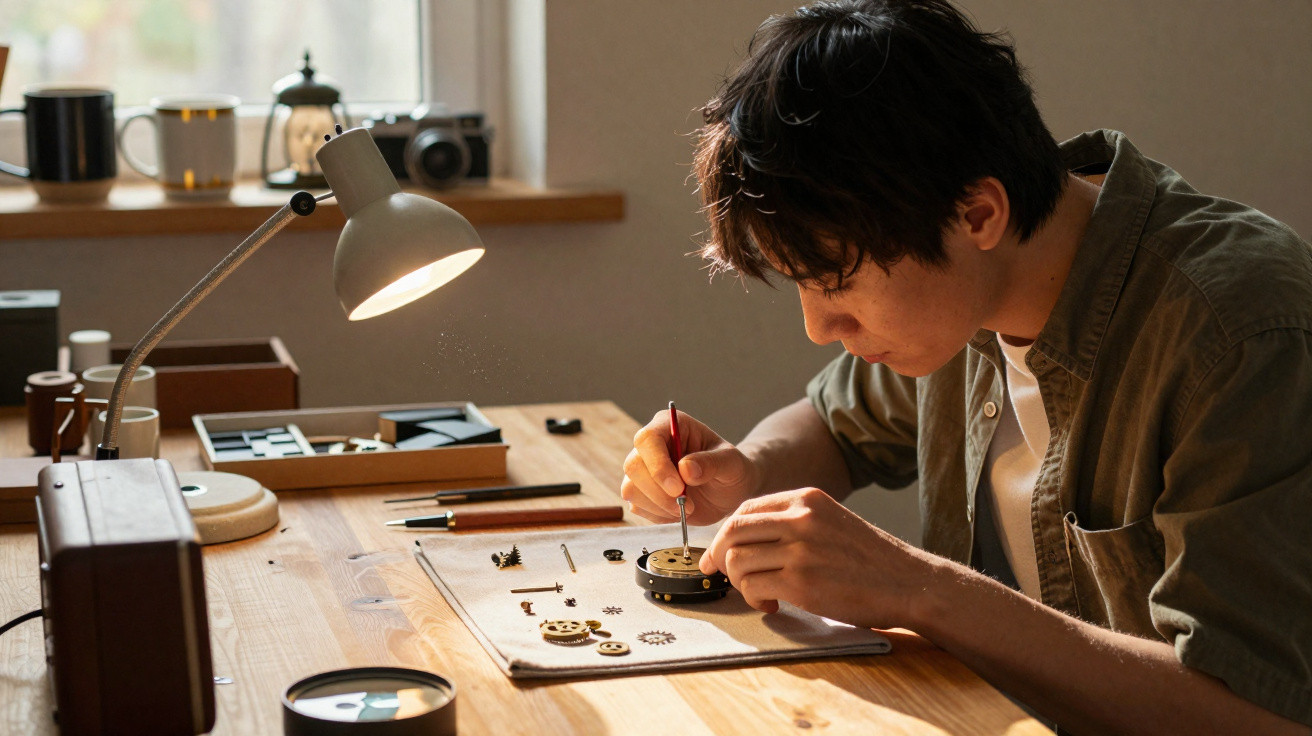
The screwdriver slips once, then a second time. On the kitchen table, an old lamp still refuses to switch on, while an open toaster reveals wires, crumbs and one tiny missing screw. Many people would already have put the lot into a bag for the tip. Others remain there, brow furrowed, driven by that odd urge to understand what is stopping it from working. They are not merely doing DIY to save a few pounds: they are looking for the breakthrough, the small action that makes things work again. This almost intimate connection with a broken object says a great deal about how they deal with setbacks. A commonplace repair often conceals a rare quality.
When faced with a fault, some people see a puzzle above all else
We all know the moment when a wobbly piece of furniture, a jammed zip or a temperamental coffee maker seems to taunt us first thing in the morning. Someone who enjoys repairing things does not necessarily respond calmly at first, but they return to the issue after taking a breath, finding a part or examining it more closely. Where others see a final failure, they see a series of small possible attempts. The difference is less about manual skill than the ability to endure the discomfort of not succeeding straight away.
The same scene is often seen in community repair workshops: a bicycle arrives with a slipping chain, its owner tries an adjustment, gets it wrong, tries again and eventually asks for advice. A 2020 study by the University of Bath into practical activities and wellbeing suggested that regular creative practices were associated with a stronger sense of self-efficacy. It is not magic, of course. Yet fixing a hinge or gluing a sole back on provides tangible proof that effort can change a situation that appeared stuck.
Psychology often refers to perseverance: the ability to sustain effort despite setbacks. Among DIY enthusiasts, it is quietly practised through a stripped screw, poorly translated instructions or paint that dries badly. Every minor obstacle requires them to slow down, observe and adapt. Failure becomes less an embarrassment than a source of information. Over time, the person learns that a first attempt is not a verdict, but simply the beginning of a somewhat messy diagnosis.
Patience is often built through small repairs
To develop this instinct, the easiest approach is to choose a modest repair with little at stake: tighten a handle, replace a tap washer or sort out a sticking drawer. Allow enough time, clear a corner of the table and accept that the object may remain dismantled for a few hours. Taking photographs of each stage before removing a part is enormously helpful, especially once every screw starts to look alike. The mind relaxes when it knows it can retrace its steps without starting everything again.
A common mistake is trying to complete a repair quickly, as though every DIY job should take fifteen minutes between two appointments. Let us be honest: nobody really does that every day. As tiredness builds, patience can swiftly turn into irritation, leading us to tighten too hard, cut too short or miss a step. It is better to stop than force a fragile part. That is not giving up; it is recognising that clear judgement is also part of practical skill.
Patient people are not those who never get annoyed; rather, they know how to create space between their frustration and their next decision. One amateur repairer captured the idea particularly well:
“When it does not work, I no longer ask myself whether I am useless. I ask what the object is trying to show me.”
This mindset can be developed through a few simple principles:
- take a break before dismantling anything further;
- test one hypothesis at a time;
- keep components in order;
- ask for help without feeling ashamed.
Repairing objects, and changing your relationship with failure
What happens during DIY often extends beyond the drill and the toolbox. Successfully repairing an everyday item brings a form of practical confidence, far removed from grand speeches about motivation. You can see the result, touch the handle that no longer wobbles and hear the appliance start up again. That experience can carry over into other areas: a difficult case file, a tense conversation or learning that is progressing too slowly. The person does not assume everything will be easily resolved; they simply know that a problem may deserve several attempts.
There is also something reassuring about not throwing something away immediately. At a time when replacement often seems easier than understanding, repairing puts time back into objects and nuance back into our reactions. An old radio, a chair found at a grandparent's home or a child's toy does not need to be perfect to hold value. Giving these items a second chance can remind us that our own mistakes do not entirely define us either.
This uncommon patience is not reserved for enthusiasts with a workbench in their garage. It can emerge while sewing on a crooked button, examining a plant for damaged leaves or assembling a shelf twice because the first one was upside down. Perhaps that is the essential point: accept the small disorder of learning without fooling yourself. A failed repair is sometimes simply a failed repair. But it almost always leaves you with one more piece of knowledge in your hands.
| Key point | Detail | Added value for the reader |
|---|---|---|
| Patience in the face of setbacks | The DIY enthusiast treats a fault as a problem to investigate. | Turn frustration into curiosity. |
| Small attempts matter | Testing just one solution at a time prevents confusion. | Save time and reduce irreversible mistakes. |
| Repairing builds confidence | Restoring an object makes effort visible and tangible. | Strengthen the sense of being able to act in everyday life. |











Comments
No comments yet. Be the first to comment!
Leave a Comment