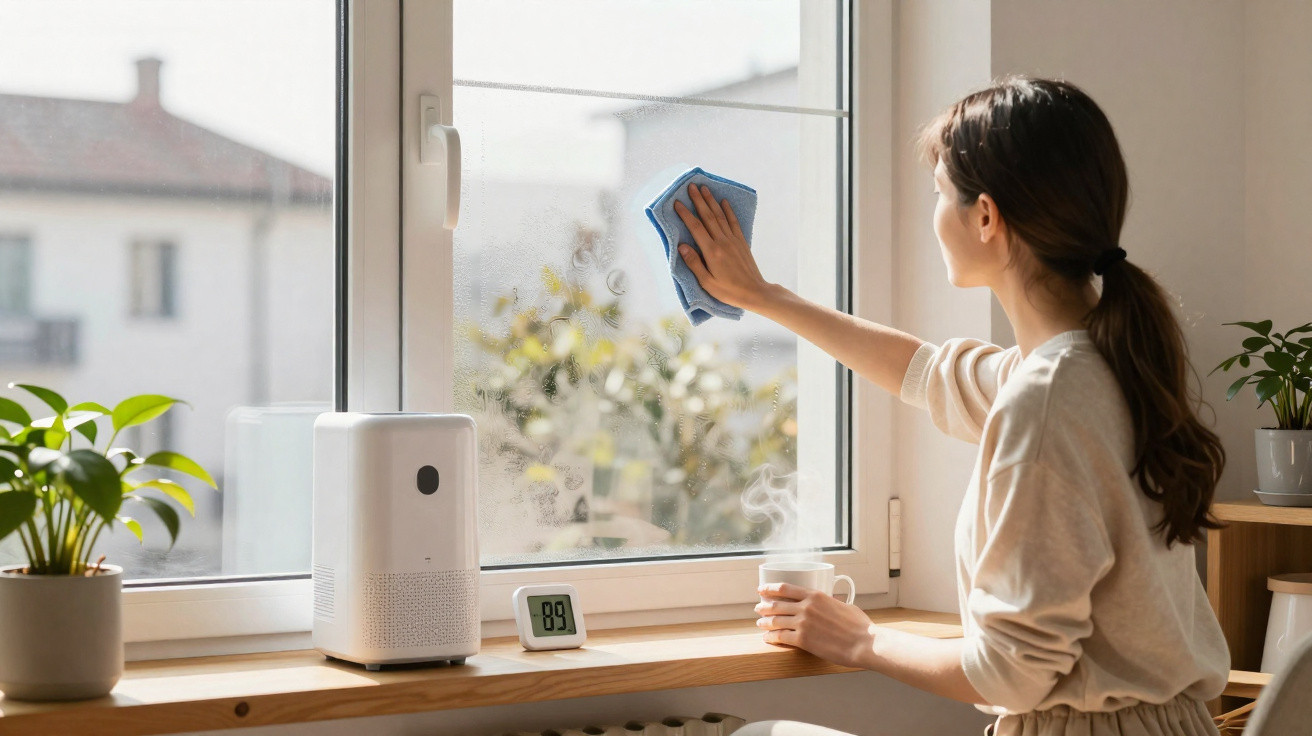
What may appear harmless can become a genuine health hazard.
Many people only notice excess moisture indoors when droplets begin gathering on their windows. Yet this is far more than a minor cosmetic issue: persistently damp frames, wallpaper or silicone seals provide ideal conditions for mould. It can be difficult to remove and may affect the respiratory system, skin and even the immune system. A few targeted steps can address the causes without requiring a full renovation.
Why windows mist up in the first place
Misted-up panes result from a straightforward physical process: warm air can hold substantial moisture. When it meets a much colder surface, it cools rapidly. The air can no longer retain the moisture, so water forms as droplets - usually on windows first.
Humid indoor air + a cold window surface = condensation, which encourages mould and damage.
Common everyday sources of moisture include:
- Cooking without a lid or extractor fan
- Taking a hot shower or bath with the windows shut
- Drying wet laundry indoors
- Keeping many plants in a poorly ventilated room
- Several people occupying a small room, such as a bedroom
The poorer the air circulation and the colder the window reveals and external walls, the more quickly condensation will develop - particularly during autumn and early winter.
Ventilating and heating properly: the most important factor
The most effective way to prevent wet windows is to combine sensible ventilation with heating. Many people avoid opening windows because they are concerned about heating bills. This often has the opposite effect: more moisture, a greater risk of mould and, ultimately, higher energy use because the building fabric cools down and needs reheating.
Air rooms briefly and fully rather than leaving windows on tilt
Tilted windows provide only limited air exchange while mainly cooling the window reveals. This can actually make the condensation problem worse.
A better approach is to:
- Air rooms fully 2–4 times a day for around 5–10 minutes
- Open windows wide and, where possible, create cross-ventilation by opening opposite windows or doors
- Turn radiators down briefly during this time, then turn them back on afterwards
This quickly removes humid air outdoors while keeping the walls largely warm.
Maintain steady, moderate room temperatures
Large temperature fluctuations encourage condensation. For instance, a living room may be heated to 23 degrees during the day before dropping to 16 degrees overnight. During this period, moisture is more likely to settle on cold surfaces.
Instead:
- Keep living areas consistently at around 20–21 degrees
- Keep bedrooms cool but not freezing: 17–18 degrees is usually sufficient
- Keep internal doors between warm and cold rooms closed wherever possible
Rather than continually turning the heating off and back up, it is worth maintaining a stable, slightly lower comfortable temperature.
Bedroom condensation: humid air overnight
Condensation is especially common in bedrooms in the morning. Over a night, two people release several hundred millilitres of water through breathing and perspiration. If the window remains shut and the heating is off, the air cools considerably - creating ideal conditions for droplets on the glass.
Useful routines include:
- Fully ventilating the room for 5–10 minutes immediately after getting up
- Setting the heating to a low level at night rather than switching it off completely
- Avoiding drying laundry in the bedroom
- Not positioning beds directly against icy external walls during the day
Anyone regularly seeing wet silicone seals or mildew marks on the wall in the morning should consider whether a dehumidifier would be useful in that room.
Kitchen: remove steam while cooking
Cooking produces a considerable amount of water vapour in a short time. A serving of pasta, a large pot of soup or regular bread-making can add up to several litres of water entering the indoor air each day.
How to keep the kitchen drier
- Switch on the extractor fan - use a clean filter in recirculation mode; external extraction is even better
- Use saucepan lids to keep steam inside the pan
- Open the window wide during cooking and immediately afterwards
- Keep the kitchen door shut so humid air does not spread through the home
Cross-ventilating the kitchen for two or three minutes after cooking noticeably reduces humidity and takes pressure off the rest of the home.
Bathroom: do not simply throw open the door after showering
After a hot bath or a quick morning shower, the bathroom is often completely steamed up. Many people instinctively open the door afterwards, carrying that moisture into the hallway, bedroom and children’s room.
A better method is to:
- Open the bathroom window wide while the mirror is still misted up
- If there is no window, leave the extractor running until the steam has cleared
- Keep the shower curtain or enclosure closed so steam spreads less through the room
- Dry wet tiles, grout and silicone using a squeegee
This means significantly less moisture reaches other rooms, reducing condensation on windows.
Technical support: using dehumidifiers selectively
Some homes have a structural moisture problem, such as poorly insulated older properties, basement flats or rooms without adequate ventilation options. In these cases, a dehumidifier can provide noticeable relief.
| Type | Advantages | Disadvantages |
|---|---|---|
| Electric dehumidifier | High output, adjustable target humidity, often with a display | Requires electricity, produces noise, purchase cost |
| Moisture absorber with granules | No electricity required, can be placed flexibly, inexpensive to buy | Limited effect, granules need replacing regularly |
A humidity level of approximately 40 to 60 per cent is advisable. A basic hygrometer costs only a few pounds and reveals how humid the air really is - often more reliably than instinct.
Protecting windows better: films and simple measures
Moisture always settles where temperatures are lowest. Anyone with very old single glazing or draughty frames will struggle to prevent condensation entirely. However, several simple measures can reduce the effect.
- Apply thermal film to the inside of panes to raise the surface temperature slightly
- Do not press curtains or blinds directly against the glass, allowing air to circulate
- Wipe water from frames with a cloth in the morning rather than allowing it to dry there
- Check seals and replace them if necessary
Anyone who simply leaves condensation in place every morning risks discoloured seals, crumbling plaster and mould spores in the air over time.
Humid air and health: more than an appearance issue
Mould often begins in window recesses, behind furniture or in corners where air barely circulates. Its spores can then spread unnoticed through the indoor air. People with asthma, allergies or weakened immune systems are often particularly sensitive, experiencing symptoms such as coughing, irritated mucous membranes or headaches.
It is therefore worthwhile tackling the issue early rather than waiting until black marks become visible. Anyone who regularly finds condensation should take a critical look at their household routine: when do they cook, shower and ventilate? How much do temperatures vary? Where might a small dehumidifier be beneficial?
Practical rules of thumb for everyday life
Here is a brief overview of practical guide values that work well for many households:
- Fully ventilate rooms several times a day, especially after cooking and showering
- Lower room temperatures only moderately instead of turning heating off entirely
- Check humidity regularly with a hygrometer (target: 40–60 per cent)
- Do not ignore wet surfaces; dry them promptly
- Dry laundry outdoors where possible, or in well-ventilated rooms
Taking these points seriously protects more than just your windows: it safeguards the whole home and supports your health over the long term.













Comments
No comments yet. Be the first to comment!
Leave a Comment