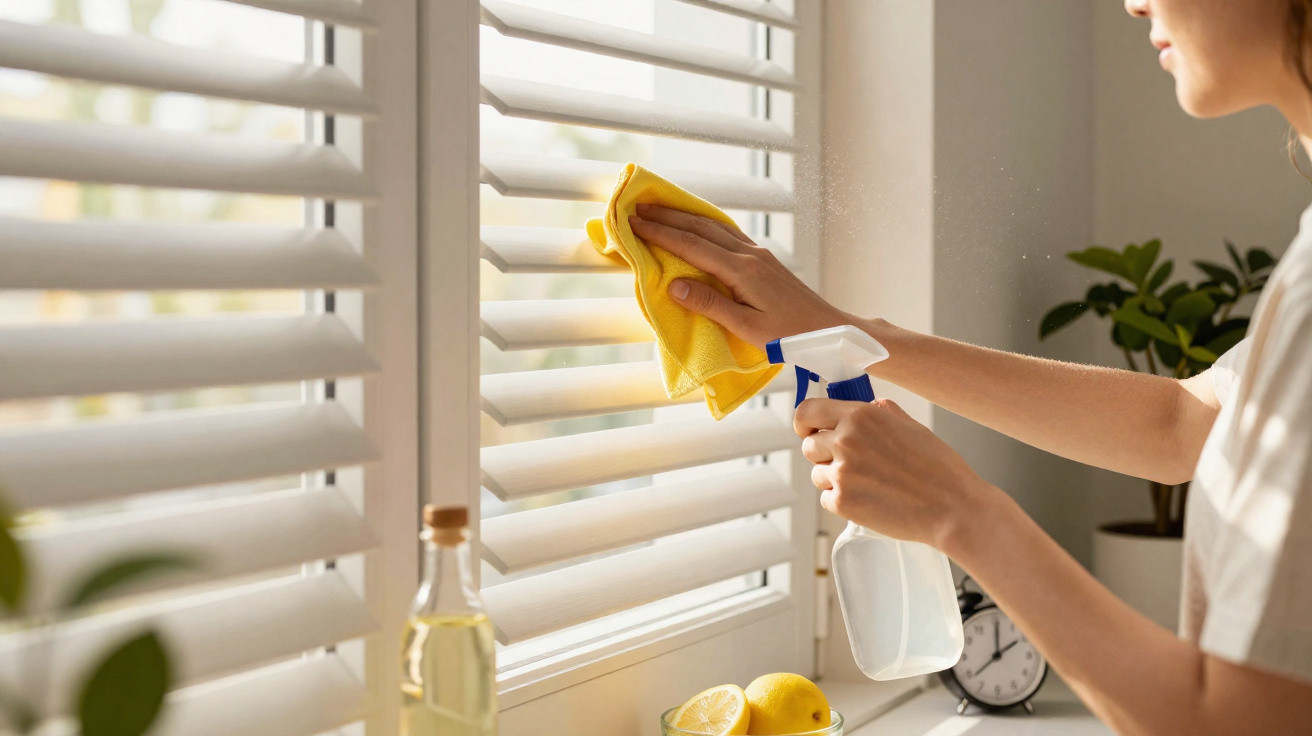
Roller blinds collect dust, light grease and everyday residue in places that many people notice only when sunlight hits the window. As part of a domestic cleaning routine, this often becomes a job that gets put off. Yet, with just a few supplies and the right motion across the slats, you can achieve visible results quickly without taking the blind apart.
Why does dirt stick to the slats so quickly?
Roller blinds are exposed to airflow, moisture and continual contact with airborne particles. In kitchens and utility rooms, the build-up is more likely to become greasy. In bedrooms and living rooms, dust settles in the gaps, on the cord and inside the rolled section, so these areas need particular care during cleaning.
In practice, maintenance tends to fall short when cleaning is carried out only on the surface. Running a dry duster over the blind can spread debris, particularly on PVC, aluminium or synthetic-fabric surfaces. Among the most effective cleaning tips, the best approach is to remove the dust first, then use a lightly dampened cloth and dry the blind promptly.
What is the quickest homemade solution for this task?
For most situations, the simplest mixture works well: warm water with a few drops of mild washing-up liquid. It helps loosen light grease without damaging the finish. For roller blinds fitted to a kitchen window, this method reduces the dull appearance that can develop on the slats.
Before you begin, gather the right items so that you do not lose time halfway through:
- a clean microfibre cloth
- a small bucket of warm water
- mild washing-up liquid
- a soft brush or an old toothbrush
- a dry cloth for finishing
How can you carry out domestic cleaning in minutes without dismantling anything?
Quick domestic cleaning relies more on the correct order than on force. Start by closing the blind partway to make its surfaces easier to reach. Next, remove dust using a dry cloth or a vacuum cleaner with a brush attachment. Only then should you wipe it with the homemade solution, working from top to bottom and following the direction of the slats.
If dirt has built up in corners, use the soft brush only for these detailed areas. Afterwards, wipe with a dry cloth to prevent water marks and excess moisture from reaching the mechanism. This process is particularly effective for DIY cleaning, as it avoids dismantling, creates less mess and leaves the window ready in just a few minutes.
Which mistakes can stain the blind or make it harder to maintain?
Many stains are caused by using too much product rather than too little. Excess water can run into the roller mechanism, concentrated detergent can leave residue, and rough scourers can scratch the finish. On more delicate materials, including some painted surfaces or treated screens, this can shorten the item’s lifespan.
To avoid having to repeat the job, watch out for these common maintenance mistakes:
- using bleach or a strong degreaser without testing it first
- scrubbing with the abrasive side of a sponge
- spraying water directly onto the mechanism
- skipping drying after using a damp cloth
- allowing heavy dirt to build up for weeks
How can you keep roller blinds looking clean for longer?
Roller blinds respond better to brief, regular maintenance than to occasional heavy washing. Wiping them weekly with a dry cloth, followed by damp cleaning every fortnight in the most exposed areas, already limits the build-up of dust, grease and marks. At a window facing a busy road, this interval may need to be shorter because of soot.
Within the household routine, this means treating the blind as part of maintaining the window and the room’s ventilation. When domestic cleaning follows the right schedule, the slats move more smoothly, the finish stays even, and DIY changes from an improvised task into practical maintenance care.














Comments
No comments yet. Be the first to comment!
Leave a Comment