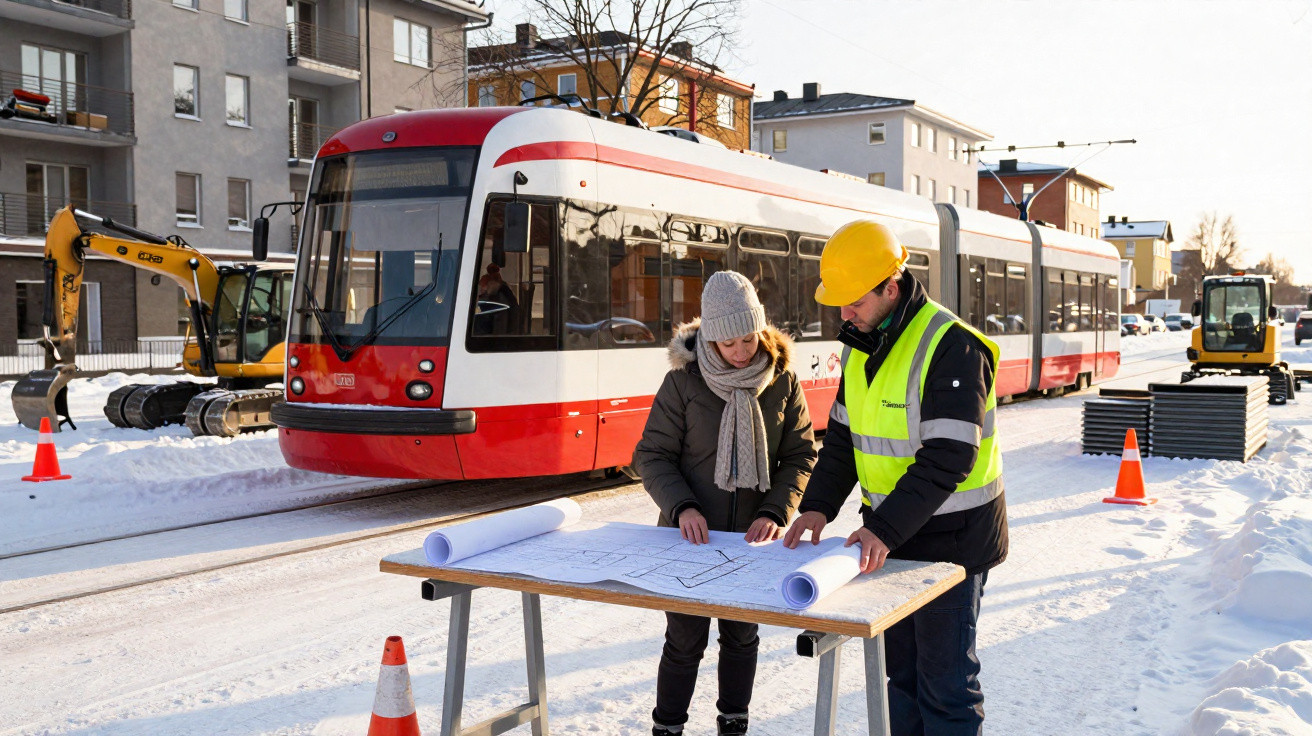
Along Vantaa’s frozen streets, this subdued Nordic suburb is preparing for a change that will reach far beyond transport.
Beside Helsinki Airport, Finland’s fourth-largest city is set to turn an ambitious infrastructure gamble into a new urban landscape. A French construction giant will lead one of the scheme’s most challenging elements.
A €420 million commitment to a new tram corridor
Via its Finnish subsidiary Destia, French construction group Colas has won the contract for the western section of Vantaa’s new light rail route. The initial phase is valued at €230 million, rising to roughly €420 million across the project’s full duration; the complete tramway scheme carries a €750 million price tag.
The Vantaa tramway will stretch roughly 19 kilometres, linking historic Tikkurila to Helsinki Airport while reshaping whole districts along the way.
This is more than a conventional rail contract. Vantaa’s planners see the route as central to the city’s future growth. It will link Tikkurila, Vantaa’s historic and administrative centre, with Finland’s principal international gateway. A tunnel will be constructed beneath the existing railway station, while trains continue operating above the construction site.
The work extends across a wide range of infrastructure: new rail tracks, reconstructed roads, new cycle routes and a comprehensive renewal of buried networks. Water mains, sewers, electricity lines and telecommunications cables will be replaced or improved. Beneath what may appear to be a straightforward pair of rails, the city will renew systems on which its 250,000 residents depend.
A city looking towards 2050 rather than next winter
Situated north of Helsinki, Vantaa was long considered a secondary city centred on its airport. During the past ten years, however, it has become an important residential and logistics centre, home to more than 10,000 businesses and over 100,000 jobs. Much of this activity is concentrated around Aviapolis, the fast-growing business district beside the airport runways.
By 2050, local authorities expect the city to gain a further 60,000 residents and 30,000 jobs, with much of that expansion focused along the tram route. Meeting that ambition will require more than adding several bus services.
The tramway is designed as a development spine: homes, offices and services will cluster around stops, cutting car dependency and shortening daily journeys.
With a direct connection to the national rail network at Tikkurila and to long-distance flights at the airport, the route will integrate local districts with national and international travel. Families should find it easier to reach schools, employment and services without needing several cars. Businesses, meanwhile, may see Vantaa as a more appealing location than a car-reliant city on the urban fringe.
When Finnish planners seek to secure a particular pattern of development, they often favour rail. A permanent tram alignment signals to investors that a corridor is here to stay, unlike a bus route that can be altered. Such certainty can attract housing schemes, office developments and mixed-use buildings, supporting frequent services and higher-quality public areas in return.
Vantaa tramway construction in Nordic winter conditions
Laying rails at −15 °C
Destia, an infrastructure business formerly owned by the state before it joined Colas, already knows the demands of major Helsinki-area transport projects. The company contributed to the Kalasatama–Pasila scheme, a significant urban rail and road corridor in the Finnish capital.
The Vantaa tramway presents an additional set of challenges: closely built-up neighbourhoods, an operational railway station that cannot close, and prolonged winters in which temperatures regularly fall far below zero.
Concrete reacts differently at −15 °C. A pour completed too late in the day may crack while curing. Wind can remove heat from temporary shelters within minutes, while moisture freezes on steel reinforcement. These conditions require Colas and Destia to divide the project into precisely timed, closely controlled phases in which every hour matters.
- Track slabs and structures require thermal protection while they cure.
- Diversions of utility networks must be completed in limited overnight periods so that services remain operational.
- Heavy equipment needs winter-ready hydraulics and fuel systems.
- Traffic plans must operate alongside snow-clearing work.
Engineers commonly schedule the most temperature-sensitive activities for the milder periods either side of winter. The coldest months can then be used for prefabrication, protected rail welding, or insulated utility connections.
A French group experienced in cold, heat and permafrost
Colas brings worldwide experience to this near-Arctic environment. Operating in around 50 countries, the group undertakes approximately 45,000 projects annually, spanning Gulf deserts and Alpine tunnels. Its international reach has compelled it to develop techniques for nearly every type of climate and ground condition.
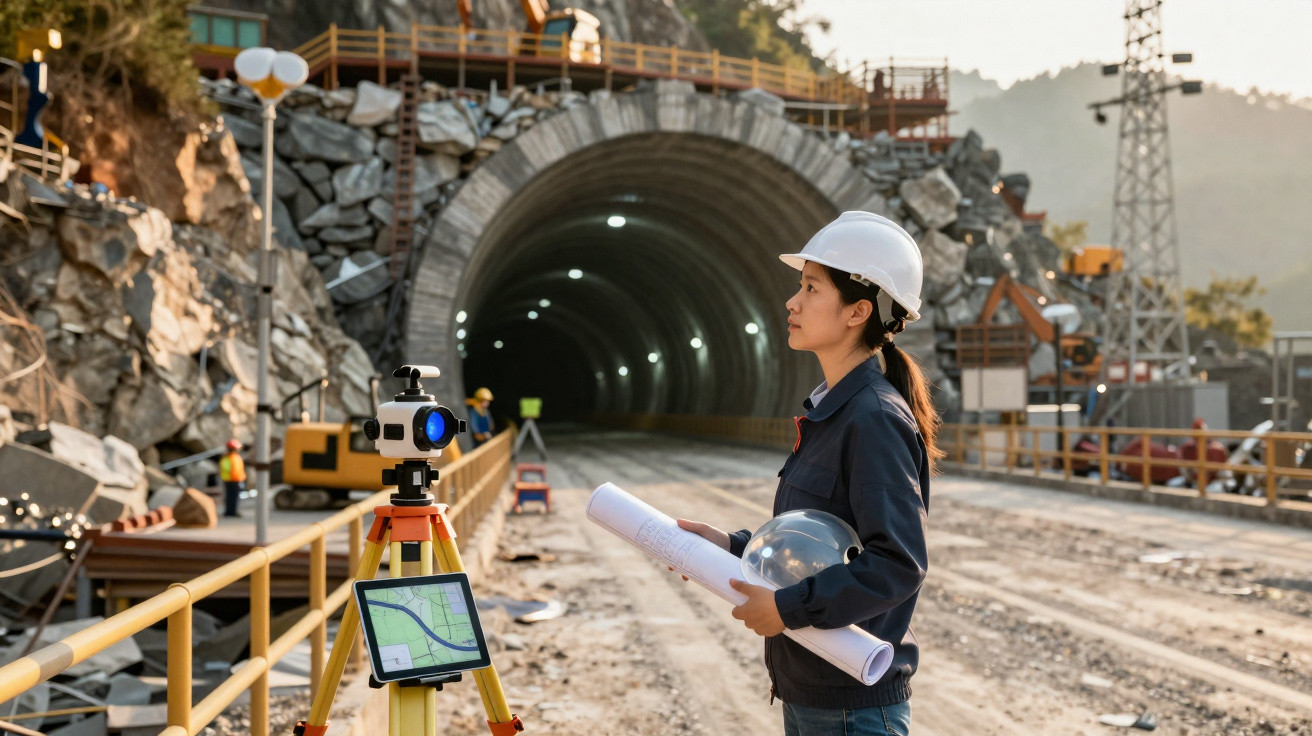
In Saudi Arabia, Colas installed track for the Haramain freight line in desert heat exceeding 50 °C. In Alaska, its teams built roads over permafrost, where errors in insulation or drainage can lead to long-term ground failure. In Quebec, crews modernise runways within narrow winter work periods, at times transporting materials along frozen roads or by air when snow blocks normal access.
| Country | Project type | Challenging condition | Key technical response |
|---|---|---|---|
| Finland (Vantaa) | Urban tramway | Deep winter, live station, dense city | Phased works, winterised concrete and utility upgrades |
| Saudi Arabia | Freight railway | Extreme heat, sand intrusion | Stabilised ballast and temperature-resistant components |
| Alaska | Roads on permafrost | Frozen, unstable subgrade | Thermal insulation and careful drainage |
| Quebec, Canada | Runway upgrades | Polar winters, remote sites | Seasonal logistics and just-in-time supply |
| France (Alps) | Tunnel modernisation | Confined spaces, safety constraints | Ventilation, restricted working hours, staged closures |
Decades of work on extreme sites give Colas a playbook for adapting materials, pacing and machinery to each climate, instead of forcing a one-size-fits-all method.
Why Finland is choosing trams rather than only metros
Helsinki already has both a metro network and a longstanding tram tradition. Vantaa, in contrast, has historically depended on buses, cars and commuter rail. Moving towards a dedicated tram corridor indicates a new priority: reliable rail capacity along a defined growth route, rather than further increases in road capacity.
Trams are well suited to this scale for several reasons:
- They cost less and can be delivered more quickly than underground metro routes.
- They influence street life because rails and stops are visible at ground level rather than hidden below it.
- They can provide frequent services without the visual intrusion associated with elevated railways.
For Vantaa, each of these factors is significant. The city aims to reduce car traffic on cross-city routes while continuing to carry workers to Aviapolis and residents to Tikkurila and the airport. Street-running tracks also provide the rationale for upgrading pavements, crossings and cycle lanes, work that is often included within the same contract.
What the scheme means for residents and passengers
Everyday life beside a changing corridor
The construction period will last several years, meaning residents will live with the works before receiving its benefits. Roads will become narrower, bus routes will be altered, and noise barriers will appear and move along the alignment. Local businesses may experience reduced footfall during some phases, followed by an increase when new stops open nearby.
Authorities generally seek to reduce disruption through phased delivery plans, temporary pedestrian crossings and clear information. For those who currently drive to work, the tramway may initially seem an impediment. In time, provided that services remain frequent and fares are integrated with rail and bus networks, some journeys could move to public transport and relieve congestion at major junctions.
Passengers using Helsinki Airport will receive a different kind of improvement. Rather than depending on taxis, private shuttle services or one rail connection, they will have a second high-capacity route serving neighbourhoods and workplaces, rather than only the central station.
Climate targets and the less visible value of street works
Finland’s national climate targets require cities to reduce transport emissions. Replacing thousands of car journeys with tram travel contributes to this goal, particularly because Finland’s electricity grid relies heavily on renewable and low-carbon generation.
A further benefit is less obvious. When streets are excavated for a substantial tram project, a city gains an unusual opportunity to update its underground infrastructure in a single coordinated operation. Renewing old water mains cuts leakage. Improved sewers can cope with heavier rainfall associated with climate change. Fresh ducts for fibre and electricity make future upgrades less expensive and less disruptive.
This layered model of infrastructure, with rail above and utilities below, can deliver benefits for decades beyond the initial noise and traffic diversions that residents encounter first.
What to monitor next: schedules, risks and potential copycat schemes
The central issues now concern timetable and budget management. Delays caused by winter, material-cost inflation or unforeseen conditions beneath Tikkurila station could put pressure on spending. Public scrutiny will intensify if partial closures or diversions continue beyond the periods promised.
For other medium-sized European cities managing similar expansion around airports and logistics centres, Vantaa’s tramway will provide a test case. Should it successfully move commuters out of cars, support new housing and contain disruption, mayors from the Baltics to Scotland will watch closely.
From an engineering perspective, one practical lesson is clear: delivering sophisticated rail projects in severe climates depends less on spectacular machinery than on planning and sequencing. Colas and Destia must maintain careful coordination, robust winter solutions and close collaboration with rail operators to keep Tikkurila functioning while the ground beneath it is transformed.
For people living along the future route, the project provides a live preview of urban life in 2050: more nearby services within walking distance, fewer traffic lanes, and travel structured around rail rather than exhaust fumes. The coming winters in Vantaa will reveal how rapidly that ambition can endure real cold, traffic and everyday impatience.










Comments
No comments yet. Be the first to comment!
Leave a Comment