
The argument began with a coffee table.
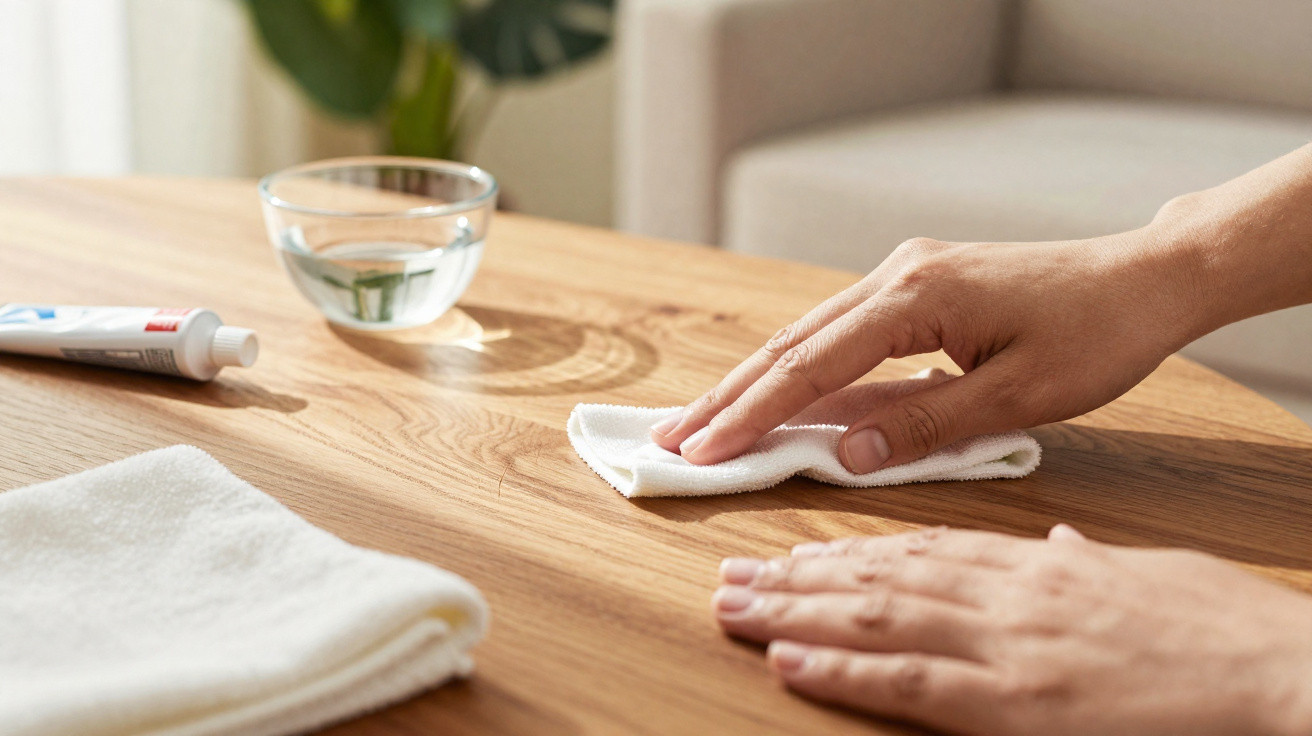
It was not an ordinary table, naturally, but a heavy, polished slab of Amazonian hardwood-the sort that seems to retain the memory of the tree it came from. Emma brushed her fingers across its surface with a small, pleased smile. Across from her, her sister Lena simply looked at it, her eyes tightening as though she had entered a crime scene.
“Wait,” Lena said, placing a hand on the dark grain. “Is this… rainforest wood?”
All at once, the room felt more confined. The houseplants, candles and soft beige sofa-all those cosy Pinterest touches-faded into insignificance. A framed print on the wall read, “Protect What You Love.”
Lena glanced from the slogan to the table.
Then at Emma.
And the real question arrived, hanging in the room like a storm cloud:
What are we prepared to destroy simply to make our living room look the way we want?
When cosy decor quietly crosses a line
Step inside any Instagram “warm minimalist” flat and the trend is almost tangible. Honey-toned timber. Enormous live-edge tables. Dark, exotic flooring resembling melted chocolate. Captions promise “sanctuary” and “self-care”, while the comments repeatedly ask: “Where’s the table from?”
Hardly anyone asks which forest had to disappear for that room to be possible.
The appeal is powerful. You scroll, save the image and imagine that same gentle light falling across your own dining table. Then you notice a comment somewhere below: “Brazilian walnut,” “rosewood,” “Amazonian hardwood.” At that point, the beautiful image cracks slightly, and the cosy look begins to resemble a transaction.
Comfort in here.
Cost out there.
A couple in Berlin whom I interviewed last year told the story with a grimace. They had saved for months to purchase a “statement” dining table from a boutique brand. Its description called it “tropical hardwood from South America”, carefully sidestepping the word “rainforest”.
They shared a photograph anyway. The table was stunning-the kind that suddenly makes inexpensive chairs seem deliberately chosen. Likes poured in. Then a friend from their climate activist circle wrote: “Congrats on the deforestation!”
The resulting thread divided their friendship group almost overnight. Some said the planet was already doomed, so people should enjoy their lives while they could. Others maintained that every purchase was political, particularly one so conspicuous. The table remained.
Not every friendship did.
That is the uneasy logic lurking beneath the throws and atmospheric lighting. Rainforest wood has become a shortcut for “real”, “authentic” and “luxury that feels earthy”. Brands sell the idea that you are bringing a fragment of wild nature into your safe, carefully arranged home.
What supply chains quietly reveal is more brutal. Ancient trees can be worth more when turned into coffee tables than when left standing within their ecosystems. Once that truth takes hold, buying rainforest wood can seem less like neutral “taste” and more like an act of radical self-prioritisation.
The planet will adapt over millennia. You simply want your living room looking good before the next dinner party.
From selfish comfort to conscious choices (without living in an empty white box)
If the aesthetic has already won you over, there is a kinder way to pull it apart. Begin by putting one direct question to every wooden object you bring into your home: where did this tree actually grow? Do not settle for the country stated on the label. Ask about the forest, region and ecosystem.
Seek certifications such as FSC, but do not leave it there. Request documentation from the seller rather than accepting marketing language such as “ethical” or sustainably sourced. Genuine transparency tends to include particulars: species names, forest concessions and partner communities.
Then reverse the approach. Rather than seeking something “exotic”, look again at local timber. Oak, ash, beech and maple can develop just as much richness and character when properly finished. Combine them with texture, textiles and lighting, and a room can still suggest “sanctuary” without something dying out of view.
The uncomfortable reality is that many people prefer not to ask too much. The answers can spoil the glow. You have finally saved enough for that dream table, and suddenly somebody wants to discuss illegal logging and Indigenous land rights. That is where defensiveness starts to emerge.
You may hear remarks such as, “My one table won’t change anything,” or “Corporations are worse, I’m just decorating.” It is an entirely human response. It is painful to discover that something you love may rest on harm.
Let’s be honest: almost nobody reads every sourcing report before pressing “add to cart”.
A gentler response is to view guilt as information rather than a judgement. If hearing “rainforest wood” gives you that slight knot in your stomach, it need not destroy your aesthetic. It is a signal, asking what sort of comfort you truly want to live with.
“Every object in your home tells a story,” said Ana, a Brazilian environmental lawyer I spoke with. “The question is who pays the price for that story - you, or someone far away with less power and fewer options.”
- Ask real questions at the store: Rather than asking, “Is this sustainable?”, say, “Which forest did this come from? Do you have the certification number?” An imprecise response is already a response.
- Start with what you already own: Before purchasing “green” replacements, take stock of the timber already in your home. The most sustainable table is usually the one that avoids landfill.
- Consider reclaimed and vintage first: Old-school furniture, salvaged beams and second-hand pieces often offer more character than newly cut rainforest wood, without adding fresh damage.
- Talk about it out loud: If somebody compliments your furniture, tell them its sourcing story. Subtle social pressure travels faster than any awareness campaign.
The friendships, fractures, and quiet negotiations behind one pretty table
Ultimately, the argument is not really about timber. It concerns what we decide matters most when nobody is formally keeping score. One friend may shrug and say, “The planet will survive, I need my aesthetic.” Another hears the unspoken message: “My comfort matters more than your future.”
Within families, the strain can become sharper still. Parents who spent years teaching their children to recycle may unpack rainforest hardwood flooring “because they last forever”. At Christmas dinner, grown-up children either hold their tongues while staring at the glossy boards beneath them-or they do not, and the disagreement becomes a new family ritual.
The divide is louder online. Influencers displaying rainforest wood worktops receive a flood of likes, followed by comments accusing them of eco-hypocrisy. Some dig in, dismissing critics as “haters”. Others quietly alter their captions to say “ethically sourced” while keeping the same suppliers.
Others take a more exposed route: they acknowledge their mistake. Publicly, they write, “I bought this before I learned more. I wouldn’t buy it again.” Such posts do not spread as widely as a flawless kitchen reveal. Yet they reach somewhere more profound. People understand the experience of changing their minds while the object they regret remains fixed to the wall.
There is no tidy answer here, nor a perfect shopping list capable of solving everything. A home is invariably a collage of compromises: budget, taste, culture, convenience and blind spots. The question that remains after the coffee-table dispute has been forgotten is both quieter and more persistent.
When you are sitting alone in soft evening light, with your hand on that smooth wooden surface, what type of comfort do you really experience? One founded on not knowing. One founded on looking away. Or a more peaceful, slower form of comfort, created by objects whose stories you can repeat without flinching.
That decision shapes more than your living room.
It shapes the sort of person you become when you invite the world in.
| Key point | Detail | Value for the reader |
|---|---|---|
| Rainforest wood carries hidden costs | Despite glossy branding, many “exotic” items originate in fragile ecosystems and travel through opaque supply chains | Helps you understand decor choices as moral decisions rather than mere style preferences |
| Questions change the purchase | Asking about species, origin and certification uncovers greenwashing and puts pressure on sellers to improve | Provides a simple script for shopping more consciously without needing a PhD in forestry |
| Alternatives still feel cosy | Local species, reclaimed timber and vintage furniture can produce the same warm aesthetic | Allows you to retain the “sanctuary” atmosphere while cutting guilt and long-term impact |










Comments
No comments yet. Be the first to comment!
Leave a Comment