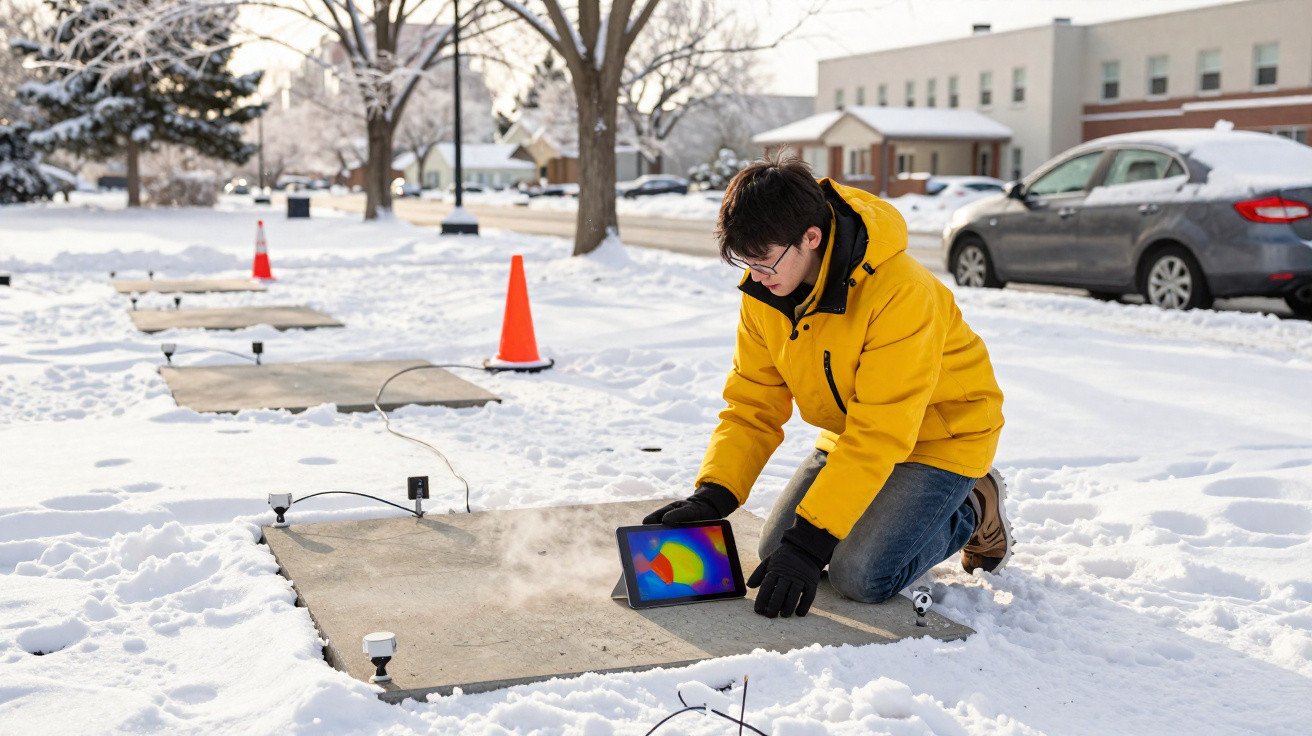
A low-key trial in East Lansing is pointing towards a different approach to winter roads.
On a modest section of Michigan State University’s campus, four ordinary-looking concrete slabs are being used to explore a major question: could roads eventually withstand winter themselves, without snowploughs, salt lorries and continual repairs? Researchers believe they may be able to, and are putting the idea through its paces during the state’s severe freeze-thaw conditions.
A living laboratory beneath Michigan snow
The outdoor experiment faces the weather conditions drivers fear most: deep snow, ice, slush and dramatic temperature fluctuations. Rather than deteriorating under those pressures, this concrete has been created to react to them. It can warm its own surface using energy taken from its environment, while also repairing tiny cracks before they become potholes.
This “smart pavement” aims to heat, bend and heal, cutting winter crashes, salt use and constant road closures.
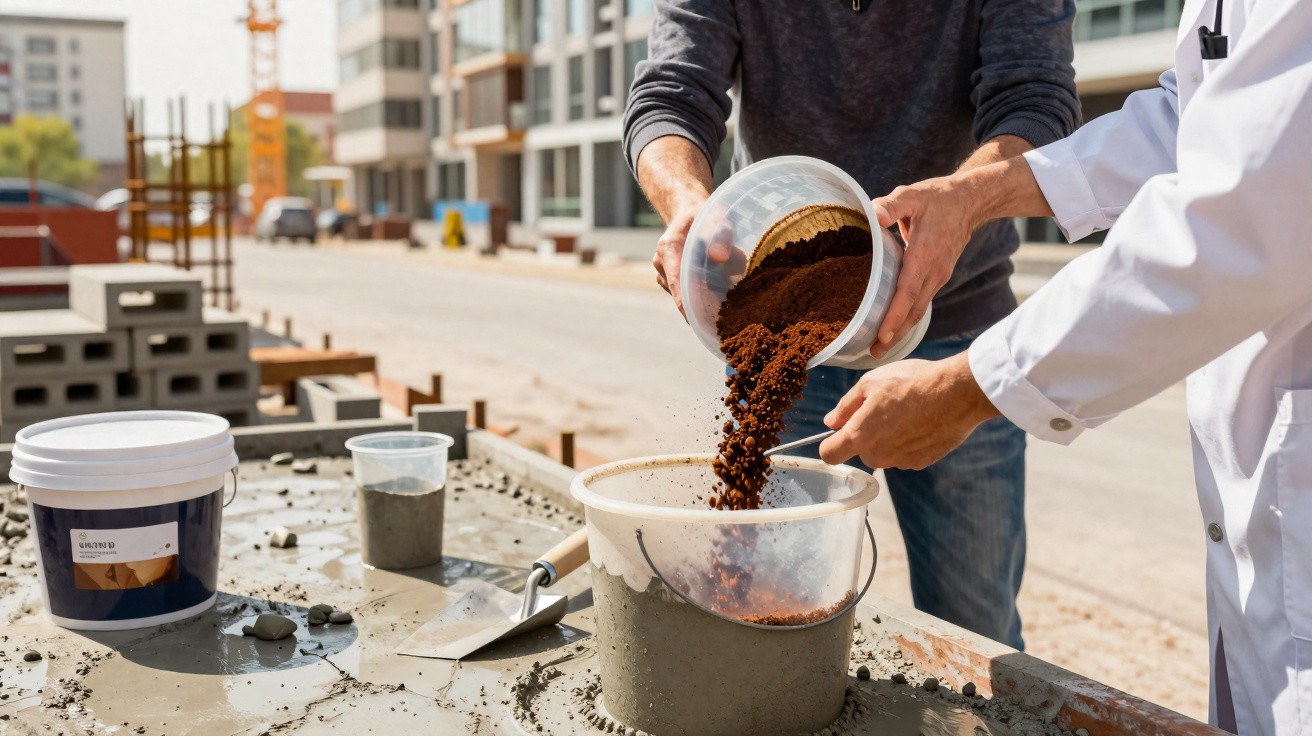
The Michigan State University (MSU) research group cast four slabs last month, using a slightly different formulation for each. Wires and sensors placed within them send back live information on how the concrete responds to snow, damp, loading and changes in temperature. The researchers are seeking the mixture most able to endure a Michigan winter while providing a safer surface for drivers and pedestrians.
The current trial area is limited in size, but the issues it addresses are substantial: can infrastructure adjust to tougher winters and shrinking maintenance budgets, rather than breaking down under their effects?
How self-heating concrete works
Conventional heated paving typically uses electrical cables or pipes filled with warmed liquid. MSU’s slabs take another route. They capture and transfer heat from their surroundings, functioning rather like a rechargeable thermal battery beneath your tyres.
Capturing heat from the air
When conditions are milder, with air temperatures reaching roughly 7°C (about 45°F), or when sunlight warms the surface, the concrete takes in energy. Special components within the mixture enable it to retain that heat. As temperatures fall and snow arrives, it releases the stored warmth gradually, raising the surface above freezing for long enough to loosen ice bonds and melt light snow cover.
Instead of power cables, the slabs rely on environmental energy: sunlight and slightly warmer air get banked, then pushed back out as heat when the surface needs it most.
Initial laboratory findings indicate that, in certain conditions, this melting capability could match standard road salt, without creating the chemical run-off that damages vehicles, bridges and groundwater systems.
Flexible, self-healing concrete
The material acts very differently from the rigid paving slabs familiar to most motorists. It contains fibres and selected particles that allow a small degree of movement rather than abrupt failure. Researchers call it “ductile” concrete: it flexes under pressure when ordinary pavement would split.
Testing suggests that the slabs can support around 2,000 pounds - approximately half the weight of a small car - without cracking. Where microcracks do develop, at widths smaller than a human hair, minerals in the mixture respond to moisture and slowly close them. This self-healing mechanism is intended to prevent minor defects from becoming potholes capable of damaging tyres and suspension components.
| Property | Conventional concrete | MSU test slabs |
|---|---|---|
| Crack behaviour | Rigid, prone to wide cracks | Flexible, microcracks self-heal |
| Winter performance | Surface ices, needs salt and plows | Stores heat and helps melt snow/ice |
| Maintenance cycle | Repairs every 6–24 months typical | Targeting spans around a decade |
| Environmental impact | Heavy salt, frequent rebuilding | Less salt, fewer rebuilds expected |
Why winter roads need rethinking
States such as Michigan spend heavily every year in response to winter weather, funding snowplough fleets, salt storage, overtime work, emergency road repairs and crash responses. Motorists bear costs as well, through vehicle damage, delays and increased taxation to fund repeated resurfacing.
Freeze-thaw conditions intensify the damage. Water enters small cracks, then freezes and expands, forcing the opening wider. As this happens repeatedly, pieces of pavement break away and a hairline flaw becomes an uneven pothole. Local authorities are then forced to patch the same areas again and again before ultimately replacing entire sections.
Every pothole starts as a tiny crack. If those cracks seal themselves before water settles in, the maintenance bill looks very different.
MSU’s approach targets both aspects of this process. A warmer road surface should reduce the amount of water that freezes on or within the pavement. At the same time, the self-healing mixture responds when moisture enters microcracks, sealing them early. The goal is a surface that remains sound for around ten years with only limited maintenance, rather than needing frequent emergency work.
What the four MSU slabs will test this winter
Each MSU slab has a distinct formulation, varying its fibre levels, conductive additives and binders. Monitoring them alongside one another during the same storms should show the researchers which compromises are suitable for real roads.
- One slab may be designed to store the greatest possible amount of heat to tackle ice.
- Another may concentrate on exceptional flexibility for bridge decks.
- A third could reduce costs while still improving safety compared with standard concrete.
- The fourth could operate as a control, more closely resembling materials used today.
Embedded wiring records changes in temperature, moisture readings and strain. Cameras and physical inspections track how rapidly snow clears from each slab and whether fine cracks emerge after the snow has melted.
Data gathered this season will be taken directly back to the laboratory. Within a year, the team intends to improve the formulation and pursue bigger pilot installations on functioning roads or footways. Campus bus stops or hospital entrances, where icy ground presents an immediate hazard, could be among the first locations.
Costs today, savings over time
Flexible, self-heating concrete is more expensive to install than a conventional slab. Fibres, specialist additives and stricter quality-control requirements increase the initial cost. This creates a straightforward question: who will fund it?
The researchers maintain that the financial case only becomes clear over a longer period. Should a road surface last around a decade between substantial repairs, transport departments could reduce repeat resurfacing, lane restrictions and emergency patching. Spending on labour and materials would fall, as would disruption to traffic.
A higher upfront pour might replace years of patching, lane closures and salt runs, shifting budgets from short-term fixes to long-term resilience.
The wider consequences are particularly relevant in densely populated urban areas. Fewer roadworks could mean fewer rear-end collisions in queues, less time lost by commuters and lower emissions from engines left idling. Municipal authorities could also plan budgets more reliably instead of being pushed from one severe winter to another.
Beyond Michigan: where this technology may appear first
Even if the MSU slabs perform strongly, complete motorways are unlikely to be the first real-world application. Cities would more probably begin with smaller locations where ice is particularly problematic and traffic volumes can justify the expense.
Potential early adopters
- Airport runways, taxiways and essential access routes.
- Hospital entrances and emergency-service vehicle routes.
- Bridges and flyovers, which freeze sooner than nearby roads.
- Steep city streets where vehicles commonly lose traction.
- Bus stops, cycle lanes and pedestrian crossings in busy areas.
In cold coastal locations or mountain passes, self-heating surfaces could work alongside established measures, including targeted electric heating at especially dangerous points. The broader concept - pavement able to manage its own temperature and damage - could suit many settings, from snowy Canadian cities to northern European transport hubs.
Risks, unanswered questions and the next steps
Many uncertainties still need resolving. The slabs must demonstrate that they can withstand repeated de-icing cycles for years rather than merely one winter. Engineers also need to establish how the materials respond to heavy lorries, tyre chains and snowplough blades. Cities will require clear procedures for repairing or replacing sections without removing the self-healing properties.
Environmental issues also remain. Reduced salt use and less reconstruction appear beneficial, but the complete lifecycle of these new materials - including manufacture and recycling - requires detailed assessment. Highway authorities will additionally monitor any changes to skid resistance as the surface heats and cools beneath real traffic.
Despite these open questions, the MSU project suggests a broader change in road engineering. Rather than treating road surfaces as inactive materials that crews must rush to rescue, engineers are starting to view pavement as an active system with its own feedback loops. Alongside connected vehicles and improved weather forecasting, this approach could alter how northern regions manage winter-driving risk well before the next generation of motorists takes the wheel.








Comments
No comments yet. Be the first to comment!
Leave a Comment