Sunlight cut through the sitting-room window, falling like a spotlight across the centre of the hardwood floor. It revealed every smear, faded area and tiny scratch that had somehow seemed invisible the previous day. The owner stood holding a half-used mop, with one wet sock, staring towards the cupboard where an old tin of wax and a bottle of vinegar waited like weary relics from a different time. The floor was not awful. It simply did not look… right. It lacked the glossy, mirror-like boards seen in property adverts and influencer videos. Something was missing, and it was not another cleaning-aisle product. It was sitting in the pantry, inside something most people only drizzle over food.
The pantry ingredient hiding in plain sight
The unlikely hero here is neither wax, polish nor vinegar, but everyday olive oil. The same bottle kept beside the hob for roasted vegetables and Tuesday-night pasta can help hardwood floors regain the rich, glassy glow that people spend heavily trying to achieve. Applied sparingly and carefully, it can nourish tired timber, reduce the appearance of scratches and restore a subtle, costly-looking lustre. This is not an artificial plastic shine, but a warm, natural finish that shifts with the light.
Plenty of homeowners discover the idea by accident. They may spill a few drops of olive oil while taking a salad through the dining room, wipe it up with a cloth and spot that the board looks unexpectedly improved. Deeper. Richer. Darker. One small section suddenly resembles something from a design magazine, while the remaining floor appears flat and grey. That is often the “aha” moment. Some then try it on one plank, photograph it, enlarge the image and compare before with after, only to discover that their kitchen bottle has more potential than expected.
There is straightforward reasoning behind the result. Hardwood is fundamentally a natural, porous material. In time, it becomes dry, receives scuffs from shoes and pets, and loses some of the oils and finish that originally gave it its glow. Vinegar removes grime and old residue, but it does not replenish anything. Wax may build up, hold onto dust and leave the surface unpleasantly sticky. Olive oil works in another way. When used in a thin film, it enters microscopic pores, makes fine scratches less obvious and changes the way light bounces from the surface. Rather than seeming coated, the floor can look as though it has had a long drink of water.
How to use olive oil to make hardwood floors shine like glass
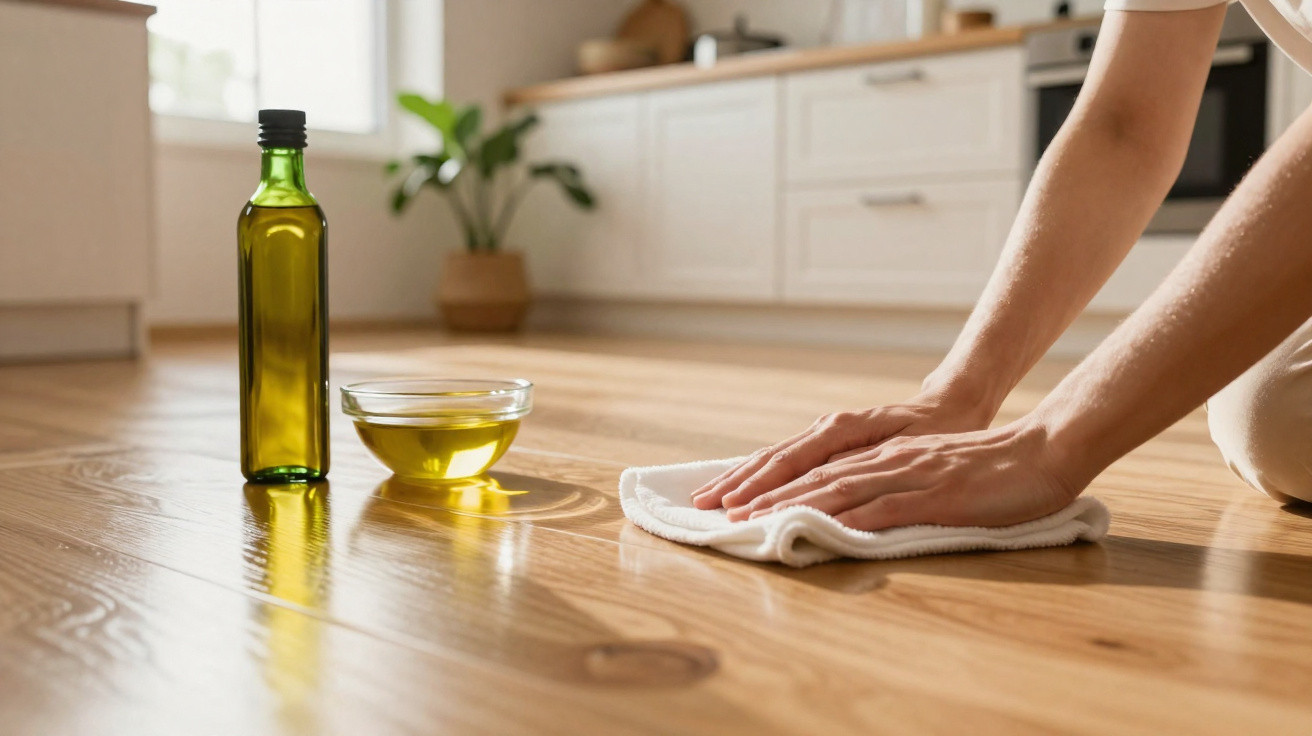
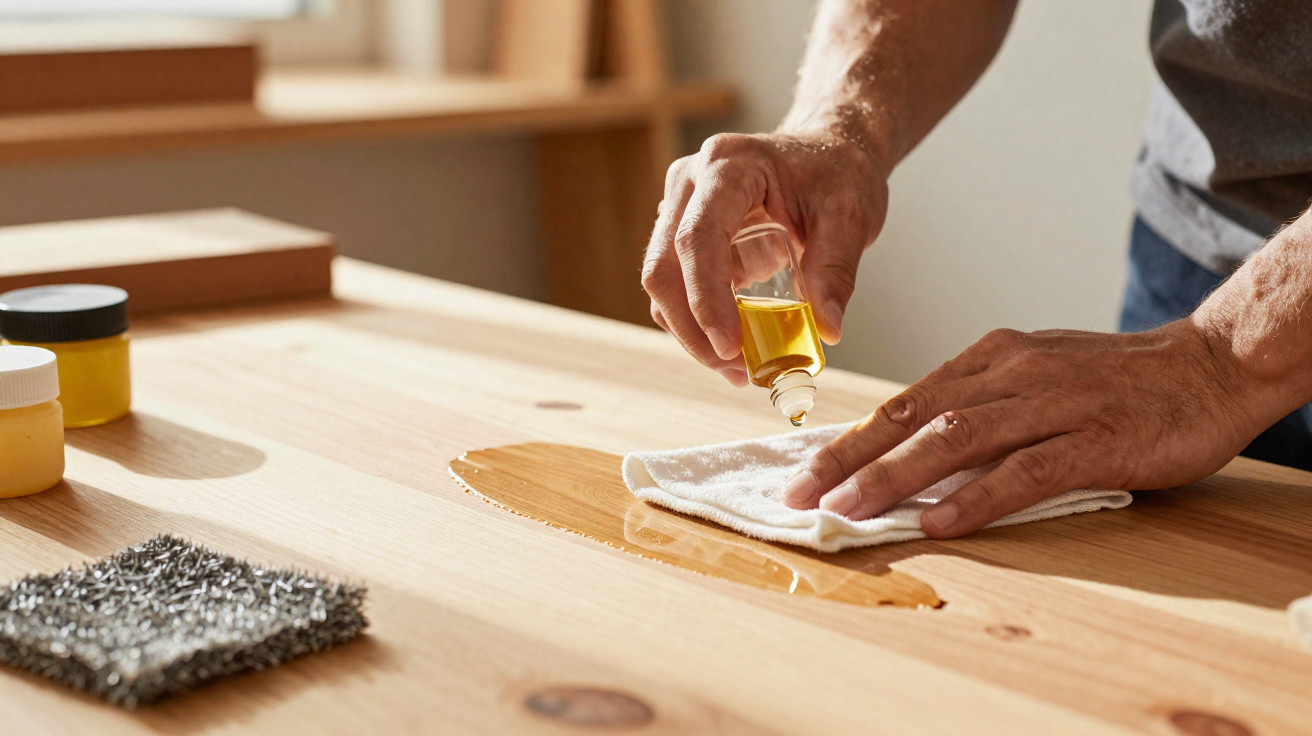
The process is reassuringly uncomplicated. Begin with a floor that is clean and dry: sweep it, then lightly mop it using a mild, non-abrasive cleaner. Next, prepare the mixture in a small bowl, using approximately one part olive oil to one part lemon juice or gentle, colourless vinegar. The acid helps remove residue, while the oil brings back the glow. Moisten a soft microfibre cloth with the blend, wring it out until it is nearly dry, then treat a small section at a time in the direction of the wood grain. The aim is not to saturate the boards, but to leave the faintest nourishing layer over them.
After applying the mixture to one area, use another clean, dry cloth to buff it. This is when the change becomes visible. The dull look recedes, the wood grain appears more defined and the surface begins to catch shapes and light like a still pond. It will not resemble high-gloss laminate - and that is precisely the point. The finish has the feel of something both polished and lived-in, like a carefully maintained old table. Let’s be honest: nobody really does this every day. Even so, doing it monthly, or before visitors arrive, can alter the feel of the entire home.
Olive oil is not the main problem; using far too much is. An excessive amount can leave a greasy layer that draws in dust and becomes a slipping hazard. Some people pour half a cup directly onto the floor and spread it around as though they were seasoning a roast. That is where the trouble starts. Use a minimal amount, almost reluctantly. Before treating a visible area, test it in an inconspicuous corner behind the sofa. Floor finishes respond differently, and certain modern polyurethane-sealed floors do not require additional oil at all. If you rent your home, restrict the treatment to that test patch - and perhaps take a photograph for your own quiet satisfaction.
“Treat your hardwood floors like good leather boots,” says one London flooring specialist. “Clean gently, feed them occasionally, and don’t drown them. They’ll pay you back for decades.”
- Choose a soft microfibre cloth rather than an abrasive sponge.
- Test the mixture in an unseen area before using it elsewhere.
- Buff for longer than seems necessary - this is where the glass-like effect develops.
- Avoid pools of liquid, as moisture is wood’s enemy.
- For pale boards, use light, cold-pressed olive oil.
Why this “quiet” olive oil trick feels so satisfying
There is something unexpectedly grounding about kneeling with a cloth and working oil into timber that has supported years of footsteps. Practically speaking, it saves money and avoids the smell of harsh chemicals. At a more personal level, it introduces a slower pace, where care is not handed over to a spray bottle that promises instant miracles. On a good day, the floor starts to mirror the room back at you, like it’s part of the family rather than just background. The change is not merely visual; it can affect the atmosphere of the room.
Most of us have experienced guests arriving and saying, “Your floors look amazing, did you get them redone?” while we smile quietly, aware that the answer involved less than a mugful of pantry basics and an evening podcast. This kind of uncomplicated advice spreads quickly among neighbours, through WhatsApp groups and in late-night chats where someone admits they have scrubbed with neat vinegar for years and wondered why everything still appears tired. The most shareable tips can sometimes be the ones that seem almost implausibly simple.
When handled lightly, olive oil can feel like a small rebellion against the belief that every shine needs a branded bottle with a lengthy ingredients list. It is no replacement for professional refinishing, nor will it repair deep gouges or water damage. However, as a routine for reviving hardwood that is a little dull and worn-looking, it delivers far more than its modest status suggests. The next time sunlight cuts across your floor and highlights every streak, you may find yourself looking to the kitchen shelf instead of the cleaning aisle.
| Key point | Detail | Benefit for the reader |
|---|---|---|
| Olive oil as a floor booster | A thin layer blended with lemon juice or mild vinegar revives wood | Provides an affordable, accessible route to a glass-like shine |
| Application method | Treat small sections, follow the grain and buff thoroughly | Lowers the chance of streaking, greasy areas and slippery patches |
| Limitations and care | Test hidden areas first; it is not suitable for every finish or frequent overuse | Helps prevent damage while allowing you to benefit from the technique |










Comments
No comments yet. Be the first to comment!
Leave a Comment