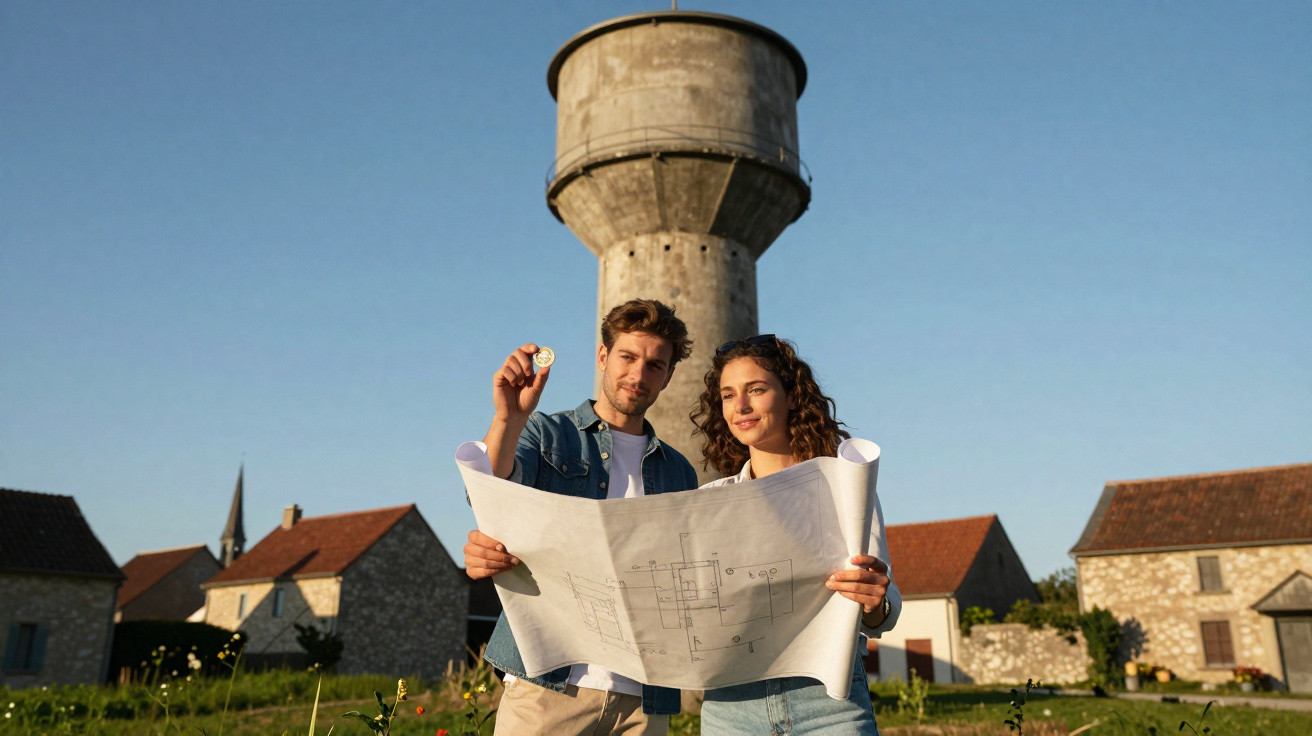
In a remote community, the local authority is offering an unusual structure for a symbolic price – with an unexpected motive behind the sale.
A solid concrete cylinder, 15 metres tall, stands in the middle of the countryside: an old water tower in La Chapelle-Baloue, in the Creuse department, is for sale. Rather than commanding the six-figure sum one might expect for such a structure, it can be bought for the price of a coin from your pocket. Anyone who takes it on will acquire not only a piece of infrastructure history, but also considerable responsibility.
A water tower for the price of a bread roll
The small community in central France has opted for a radical solution: the water tower, which dates from the period after the Second World War, is being offered for one euro. There are no notary fees, with the council effectively transferring both the plot and the building for a token amount.
“The council wants to get rid of the tower without having to pay dearly to demolish it – and hopes someone will come up with a creative idea.”
The concrete tower occupies a plot of almost 80 square metres and has been redundant since the drinking-water network was modernised. Its internal equipment no longer serves a purpose, maintenance is costly, and its former role as a utility structure has come to an end.
The offer is particularly appealing to the tower’s immediate neighbours. They will receive priority when applying, allowing them to enlarge their existing plots. However, the council makes clear that anyone with a convincing proposal has an opportunity as well – even if they do not live within sight of the tower.
Why the council would rather sell than demolish the water tower
Initially, the town hall considered a different approach: demolition machinery rather than a sale contract. Yet the estimated cost of dismantling was sobering. Controlled blasting, disposal and restoration of the site would have cost around €100,000. For a small rural community, that is a sum capable of burdening its budget for years.
“Rather than paying €100,000 for demolition, the council is virtually giving away the tower – and saving a great deal of money in the process.”
The people responsible therefore looked for another option. The water tower is intended to pass into private ownership, along with its risks but also all the possibilities offered by such an unusual structure. The aim is not to make money, but to preserve the building and find it a useful new purpose. The former relic of the old water network is deliberately being described as getting a “second chance”.
Such symbolic sales occur repeatedly in France. Local authorities transfer disused railway stations, schools or technical structures for one euro in order to avoid vacancy, vandalism and high demolition bills. In return, they expect the buyer to invest time, money and ideas.
What prospective buyers need to know
The catch behind this one-euro bargain becomes clear on closer inspection: the real expenditure lies not in the purchase price, but in the work required on the building. The tower is a specialist structure rather than an ordinary detached house. Ladders, narrow access points, concrete walls and areas that are difficult to reach will deter many buyers.
Once a purchaser has been found, the council will empty the water reservoir. What remains will be a tall, empty concrete cylinder on the site, technically out of service and without any facilities suitable for residential use. Anyone planning a loft, studio or holiday accommodation here would effectively be starting from scratch.
Which uses could realistically be considered
France has around 16,000 water towers. Only a fraction of them – fewer than one hundred – are currently suitable for residential conversion, whether because of their location, structural stability or accessibility. The La Chapelle-Baloue tower is not automatically one of these exceptions, although it could be converted with substantial effort.
Typical ideas often discussed for structures of this kind include:
- Converting it into a spectacular holiday let with 360-degree views
- Using it as an artist’s studio, photography studio or rehearsal space
- Creating a small viewing platform or private mini observation tower
- Providing storage or archive space for businesses or associations
- Combining a tiny house at the base with the tower as a landmark
All such plans face limitations: fire safety, structural stability, thermal insulation, accessibility, stair arrangements and the installation of windows. Many parts of a water tower can only be altered by specialist firms, while planning permissions frequently take months to obtain.
One-euro bargain or a bottomless pit?
Anyone imagining a romantic tower project should take a sober look at the figures. Even basic protection of the structure – sealing the roof, repairing concrete damage, securing access and renewing guardrails – can cost tens of thousands. Conversions for living accommodation or public access quickly cost substantially more.
“The water tower’s real price lies in renovation, conversion and ongoing costs – not in the symbolic euro.”
There are also continuing expenses: property tax, insurance, regular structural-safety inspections, and maintenance of access routes and ladders. Connections for electricity, water and drainage are not guaranteed either, and may have to be installed again from scratch.
On the other hand, a structure like this offers something that is difficult to buy with money: uniqueness. Those prepared to invest seriously will gain a distinctive property that could be used as holiday accommodation, an event venue or a creative calling card. Particularly in the age of Instagram and Airbnb, an unusual location can generate attention that would otherwise be hard to achieve.
Why water towers are so sought-after – and so complicated
Water towers shape the landscape in many regions. For decades, they formed the core of drinking-water supply systems: the reservoir at the top, the technical equipment below. Modern systems and underground reservoirs have made many towers redundant, but they remain highly visible landmarks.
Architects and property enthusiasts are drawn to these buildings for several reasons:
| Factor | What it means for buyers |
|---|---|
| Architecture | Striking silhouette, industrial aesthetic and rare floor plans |
| Location | Often positioned on elevated ground with wide views across the landscape |
| Symbolic value | A link to engineering history and the development of water supply |
| Marketing | Strong recognition value for tourism projects |
However, there are hard realities to consider: narrow shafts, very few windows, difficult insulation, complicated utility connections and strict safety requirements. The combination of height and public access in particular creates numerous obligations, including those relating to fire safety and escape routes.
What such a purchase means for German buyers
Although the offer is in France, the case is also intriguing for buyers from German-speaking countries. Anyone who has always dreamed of an exceptional property project could find an entry point here. However, local legal advice, a thorough review of building regulations and a realistic cost plan are essential.
Several key questions are useful before even making an enquiry:
- What exactly is my intended use – living space, holidays, business or a hobby?
- How high can my realistic total budget be, including the conversion?
- Do I have access to architects and construction firms experienced in specialist structures?
- Am I prepared to commit to lengthy planning and approval processes?
- How often will I realistically be able to be on site?
Insurers also approach such specialist properties cautiously. Building insurance for a former water tower is more complicated than cover for a standard house. The same applies to liability issues once visitors enter the site or a tourism use is planned.
Between risk and appeal: why the council is taking this step
For La Chapelle-Baloue, the symbolic sale is primarily a way to free itself from a problem. The local authority avoids an expensive demolition, reduces its responsibility and at the same time improves the likelihood that the tower will not fall into disrepair. Instead of an empty structure slowly crumbling away, it hopes for a project that gives the village a new focal point.
For investors, the move remains a bold one. The one euro may look like a bargain, but in reality it merely opens the door to a demanding building adventure. Anyone with a fondness for unusual property, a sound financial base and plenty of patience could still benefit in the end – not necessarily financially, but through a project people will be talking about for many years.







Comments
No comments yet. Be the first to comment!
Leave a Comment