
The sink gave it away. Everything else in the kitchen seemed presentable: worktops had been wiped, dishes were neatly stacked and a candle was doing its best in the corner. Yet the stainless steel bowl at the centre of it all looked dull and streaky, covered in that indistinct grey film that makes the whole room seem worn out. You turn on the tap and go over it again with a sponge, but nothing improves. It still appears as though last week’s washing-up and yesterday’s coffee have been sitting there for years.
Then somebody on social media casually suggests, “Just rub it with half a lemon.” You dismiss it, because it sounds like one of those cleaning tricks nobody has properly tested in a real kitchen. Still, there is a lemon half drying out in the fridge. You squeeze it, wipe it across the surface and, suddenly, the metal comes alive.
That leaves you wondering what else this little citrus fruit can do for stainless steel.
Why stainless steel sinks become dull in the first place
Before the lemon transformation, there is the unglamorous truth of everyday sink use. Stainless steel is durable, but it is not indestructible. Each splash of hard water, drop of washing-up liquid and coffee mark left for “just a minute” creates microscopic deposits. Eventually, the surface loses its crisp, mirror-like reflection and becomes cloudy grey.
What you can see is not conventional dirt. It is a build-up of layers: minerals, soap scum and cooking grease in the air. Together, they form a fine, stubborn coating that stays put even after you think you have scrubbed it away.
Think of a hectic weekday evening. You rinse pasta starch into the drain, pile up oily pans and refill a water bottle with hard tap water. Nothing about that feels particularly dramatic, yet the sink absorbs the impact every time. Then it air-dries: droplets evaporate, quietly leaving calcium marks and faint rings behind. By the following morning, in brighter light, the steel looks weary and almost… chalky.
A quick pass with a washing-up cloth seldom removes those layers. They have attached themselves to the metal through gradual daily accumulation, which an ordinary cleaning routine tends to glide over.
At a microscopic level, stainless steel has a fine, invisible chromium oxide coating that prevents rust. This layer is invaluable, though it cannot stop residue clinging above it. Hard-water mineral deposits are alkaline, and soap residue tends in the same direction. As these mildly alkaline films accumulate, they reduce shine by scattering light rather than reflecting it clearly.
A mild acid such as lemon juice breaks down and dissolves those persistent deposits, removing the film that causes dullness and allowing the steel’s natural protective layer to catch the light once more. The sink has not become “new” - you can simply see what was concealed beneath the build-up.
How lemon juice revives a stainless steel sink
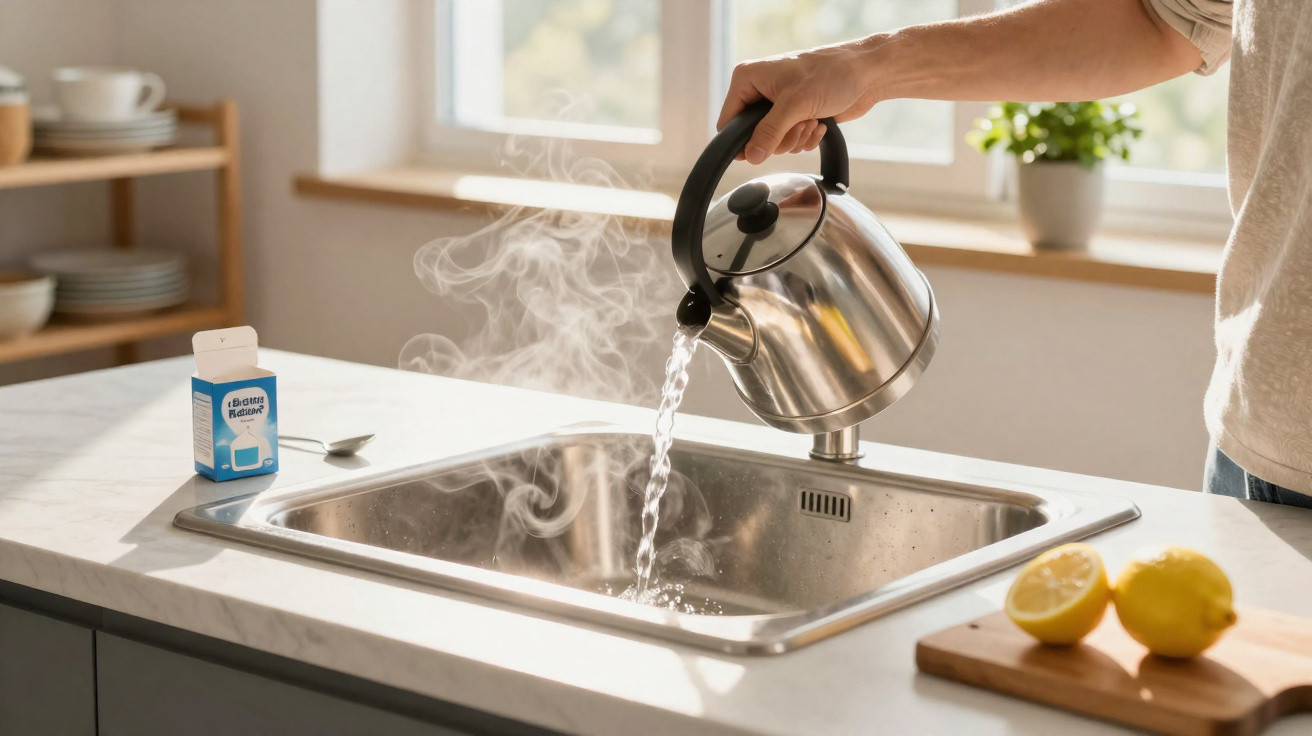
The most straightforward approach is almost ridiculously low-tech. Take half a fresh lemon, a small bowl of lemon juice or even the rather sorry end of a lemon wedge left over from last night’s drinks. First rinse the sink with warm water to remove crumbs and loose debris. Next, rub the cut face of the lemon directly over the steel, making circular movements from the edges towards the drain.
Leave the lemon juice on the cloudiest patches for a few minutes, rinse it away thoroughly with warm water and buff the sink dry using a soft cloth or microfibre towel. It is that final hand-buffing stage that reveals the sudden shine.
Many people prefer to scatter a light layer of bicarbonate of soda over the damp sink before using the lemon. When the lemon juice meets the soda, it fizzes and creates a mild abrasive paste that lifts fingerprints, faint stains and the greasy residue that often gathers around the drain. The combination is strangely satisfying: a small science experiment built into the cleaning routine.
The important thing is to polish rather than sand. Use light pressure, small circular motions and patience. Allow the acidity to do most of the work instead of relying on arm strength.
This is where many of us go wrong: we tackle a dull sink with unsuitable products. Harsh scouring powders, wire wool and chlorine-heavy cleaners promise miracles in 30 seconds. They may produce a momentary gleam, but over time they can scratch or compromise stainless steel’s protective layer. That is when odd rainbow marks or tiny specks of rust can start appearing.
Honestly, nobody deep-cleans their sink every day. That is why a gentle, food-safe acid such as lemon juice can be such a welcome option. It tackles mineral deposits and soap film without attacking the metal beneath. You regain brightness without risking long-term damage.
“Lemon juice is like a reset button for stainless steel - strong enough to cut through the film, gentle enough to use where you prepare food,” says a professional cleaner I spoke with, who swears by citrus for busy family kitchens.
- Use fresh lemon or bottled pure lemon juice
Avoid sugary lemon drinks and flavoured syrups. You need genuine citric acid, not a sticky coating. - Always rinse and dry after using lemon
There is no benefit to leaving acid on the surface for hours, and doing so may be counterproductive over time. - Test gently on brushed finishes
On finely brushed or decorative stainless steel, use a light touch and follow the grain to avoid making swirl marks. - Combine with bicarbonate of soda for heavy dullness
The fizzing paste works well on sinks that have had little more than a speedy sponge-clean for months. - Finish with a tiny drop of oil
A barely noticeable amount of olive or mineral oil on a cloth, wiped over the dry sink, helps prevent water marks from immediately returning.
More than a cleaning trick: a small ritual of control
There is something unexpectedly reassuring about taking a leftover lemon and changing a tired-looking sink in ten minutes. The rest of the home may still be chaotic, emails may remain unanswered and laundry may be waiting, but the stainless steel gleams like it belongs in a hotel kitchen. That flash of reflected light says that, at least here, you are in control.
Most of us know the feeling: a sink’s condition somehow reflects our own mental overload. A lemon, a cloth and a few unhurried circles may be a domestic task, but they can also feel like a way to reset the day.
Once you have watched lemon juice remove the grey haze from stainless steel, you no longer see it simply as salad dressing or a flavouring for tea. It becomes a quiet, versatile helper: freshening the drain, reviving a chopping board and brightening the sink after a long week. You may even begin keeping leftover wedges from drinks or recipes in the fridge “for the sink later”.
That is the real change. It is not about achieving a flawless, influencer-style kitchen, but about a small habit that says: I can alter how this space feels with something I already own.
| Key point | Detail | Value for the reader |
|---|---|---|
| Natural descaling power | Lemon’s mild citric acid breaks down mineral and soap deposits that make stainless steel dull | Restores shine without harsh chemicals or scratching the surface |
| Simple, low-cost method | Requires leftover lemon halves, optional bicarbonate of soda and a soft cloth | Simple to repeat each week, making cleaning a quick, low-effort ritual |
| Gentle on stainless steel | Works alongside the metal’s protective layer rather than removing it | Extends the life and appearance of your sink while keeping it food-safe |















Comments
No comments yet. Be the first to comment!
Leave a Comment