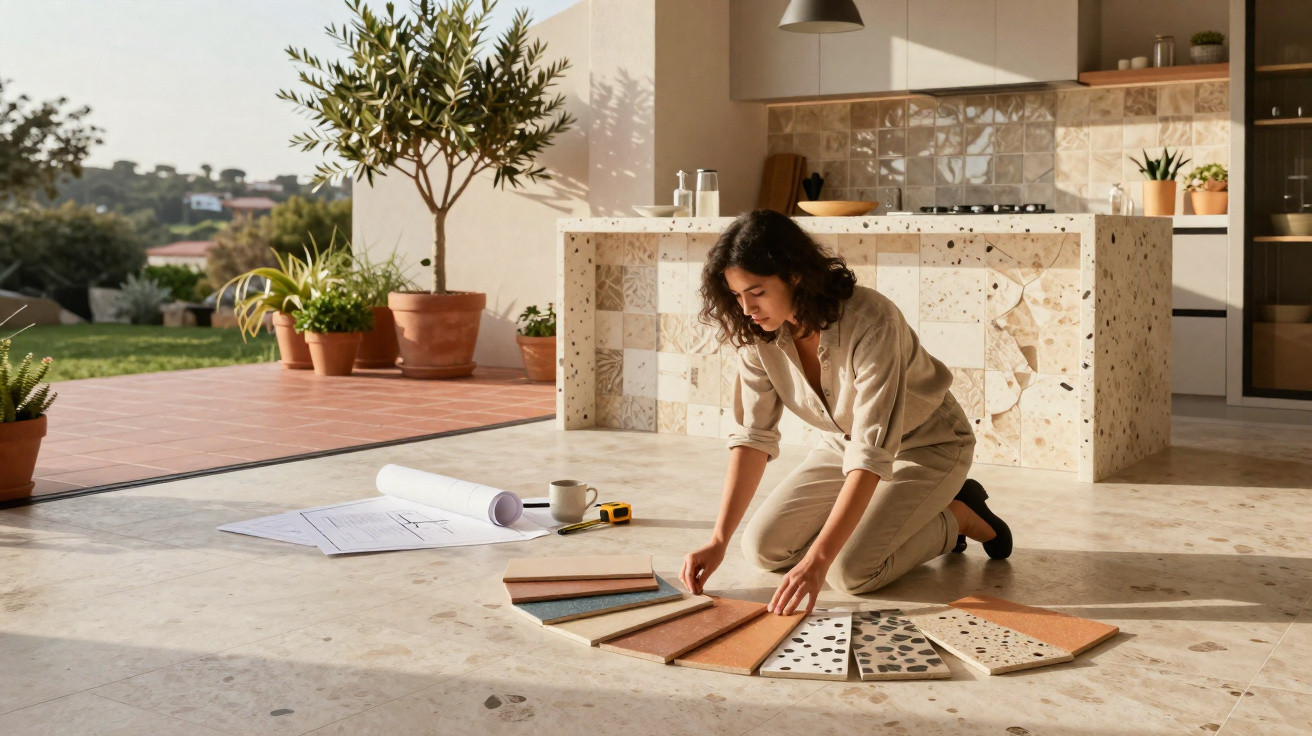
Anyone still automatically choosing wood-effect tiles today is missing a whole wave of compelling alternatives. Stone, terrazzo, Moroccan ceramics and XXL formats are reshaping the way we plan floors and walls. The latest trends place greater emphasis on authentic materials, tactile textures and colours that give rooms emotional impact.
Why wood-effect tiles are losing their dominance
Tiles with a timber grain once had an obvious advantage: they looked warm, were easy to maintain and worked in almost any setting. Yet this very ‘works everywhere’ appearance is now becoming too bland for many self-builders and renovators.
“In 2026, character, tactility and a clear design standpoint matter more than mere imitation.”
Interior trendsetters are increasingly turning back to materials that do not pretend to be something else. Genuine stone looks, artisanal ceramics, deliberately visible grout lines and expressive colours feel more honest – and that is precisely in tune with the current mood.
Stone-effect tiles with character: natural appeal rather than imitation
Natural-stone-look tiles are becoming hugely important. The focus is less on the cool marble luxury of the 2010s and more on stones with a lively, warm appearance.
Travertine: Mediterranean character indoors and out
Travertine-effect tiles are particularly sought after. Their warm beige shades and irregular veining evoke southern European villas and hotel lobbies.
- Ideal for living and dining spaces
- Especially calm-looking in large slab formats
- Works well alongside wood, linen fabrics and wicker
- Also suitable for patios where the material is designed for outdoor use
For anyone wanting a calm, timeless foundation, stone-effect tiles create a long-lasting result. Minor pattern variations make surfaces feel more alive while also concealing dirt and signs of wear more effectively than sterile plain tiles.
The return of terracotta: warm floors with potential for patina
Terracotta-look coverings are another winner for 2026. Their characteristic earthy reds and orange tones are returning, though in more contemporary combinations.
Terracotta-style tiles bring immediate warmth to a room. They create an almost southern European sense of living in kitchens, living areas and loggias. Matt surfaces with subtle clouding and colour variation, reminiscent of handmade tomette tiles, are particularly in demand.
“Choosing terracotta is a clear move away from the uniform, cool Scandinavian look and towards more homely floor designs.”
The effect becomes especially interesting when these floors are paired with minimalist furniture, black accents and contemporary lighting. This creates a blend of retro charm and present-day design.
Terrazzo reimagined: from period-building corridors to a design statement
For a long time, terrazzo was viewed as a nostalgic flooring material associated with schools and stairwells. In its updated form, it is now among the most sought-after finishes for kitchens, bathrooms and hallways.
Terrazzo-effect tiles feature scattered coloured chips, ranging from restrained to boldly colourful. They can therefore achieve very different effects:
- Fine, small flecks for understated, elegant surfaces
- Large, contrasting inclusions for graphic impact
- Pale base colours for airy rooms
- Dark versions for a luxurious, almost hotel-like feel
Terrazzo is hard-wearing, easy to care for and forgiving of small everyday marks because of its pattern. These qualities make it particularly appealing in heavily used areas such as family kitchens and hallways.
Zellige and more: artisanal ceramics create emotional accents
Handcrafted-looking glazed wall tiles are a major theme. Zellige-style ceramics in particular – small, slightly irregular tiles with a highly glossy glaze – create striking focal points in bathrooms, kitchens and alcoves.
“Every subtle edge, every unevenness and every variation in the glaze contributes to a lively overall look.”
Their appeal lies precisely in that imperfection. Perfectly uniform surfaces can quickly feel clinical, whereas subtly varied tiles refract light and produce vibrant reflections. These finishes are particularly well suited to kitchen splashbacks, shower areas and small wall sections in cloakrooms.
XXL tiles: calm surfaces instead of a patchwork effect
Large-format tiles remain a key trend. Sizes of 80 × 80, 100 × 100 or even 120 × 120 centimetres create surfaces that are almost free of grout lines. This makes rooms appear both larger and more premium.
XXL tiles are especially popular in:
- Bathrooms – for level-access showers with a continuous finish
- Open-plan living and dining areas – to connect zones visually
- Lofts and long hallways – to introduce a sense of visual calm
Fewer grout lines also mean less dirt build-up and easier cleaning. However, designers should account for weight and cutting requirements: large formats demand experienced installers and very thorough subfloor preparation.
Colours for 2026: bold yet grounded
Restrained colour palettes are becoming less influential. Rather than relying solely on grey and beige, the focus is shifting towards warmer, more emotive shades. On-trend options include:
| Shade | Effect | Suitable rooms |
|---|---|---|
| Muted red with a hint of rose | Welcoming, subtly playful | Hallway, living area, stairways |
| Bright yellow | Fresh, energising | Kitchen, utility room, children’s bathroom |
| Deep midnight blue | Elegant, calming | Bedroom, dining area, home office |
| Combination of brown and dusty pink | Soft, contemporary, homely | Living room, boutique-style bathrooms |
Rather than experimenting with vivid primary colours, the trend favours softened, slightly powdery tones. They are easier to coordinate with furniture and textiles, and feel more enduring than short-lived fashion colours.
Texture and relief: tiles you can see and feel
Flat, high-gloss surfaces are facing competition from textured tiles. Gently raised patterns, fine grooves, waves and three-dimensional embossed forms add a new dimension to walls and, in some cases, floors too.
“Relief tiles turn a simple wall into a design feature – almost like an artwork.”
These products work particularly well on shower walls, behind basins or across feature surfaces in living spaces. Combined with indirect lighting, they create intriguing shadows and reflections. Matt, slightly rough finishes recall raw concrete, clay or natural stone and are an excellent fit for calm, minimalist interiors.
What self-builders and renovators should consider now
Anyone planning to update floors or walls in 2026 will face a vast selection. A few practical considerations can make the decision easier:
- Clarify how the space will be used: How heavily will the area be used? A hallway and kitchen need different properties from a guest room.
- Assess the light conditions: Dark tiles can soon feel oppressive in small north-facing rooms, while pale stone-effect surfaces can open them up.
- Consider cleaning requirements: Deeply coloured, high-gloss finishes show water droplets and dust sooner than matt, veined coverings.
- Plan the grout colour: Contrasting grout highlights the tile grid, while tone-on-tone grout makes the surface appear calmer.
- Keep the future in mind: It is better to use unusual patterns on smaller wall areas and opt for more timeless choices across large floor surfaces.
How trends can be combined effectively
Interior design becomes exciting when materials are mixed deliberately. Current projects offer a few examples:
A kitchen, for instance, may have a calm natural-stone-effect floor paired with a splashback of irregular, glossy ceramic tiles. This delivers a clear, functional work area while also creating an emotional focal point.
In a bathroom, an XXL concrete-effect floor can be combined with a strip of terrazzo on the wall behind the basin. The room retains a generous visual feel but gains an individual touch.
Why authenticity is setting the tone
All these movements reflect a shared desire: rooms should feel less like showrooms and more like real life. Materials with visible texture, small irregularities and a natural appearance suit this approach far better than flawless imitations.
Wood-effect tiles are not disappearing altogether; they are simply losing their position as the standard solution. Anyone building or renovating today can use the opportunity to experiment more with stone looks, artisanal ceramics, XXL formats and bold colours. The result is homes that not only look contemporary, but also tell a distinct story – that of the people who live there.











Comments
No comments yet. Be the first to comment!
Leave a Comment