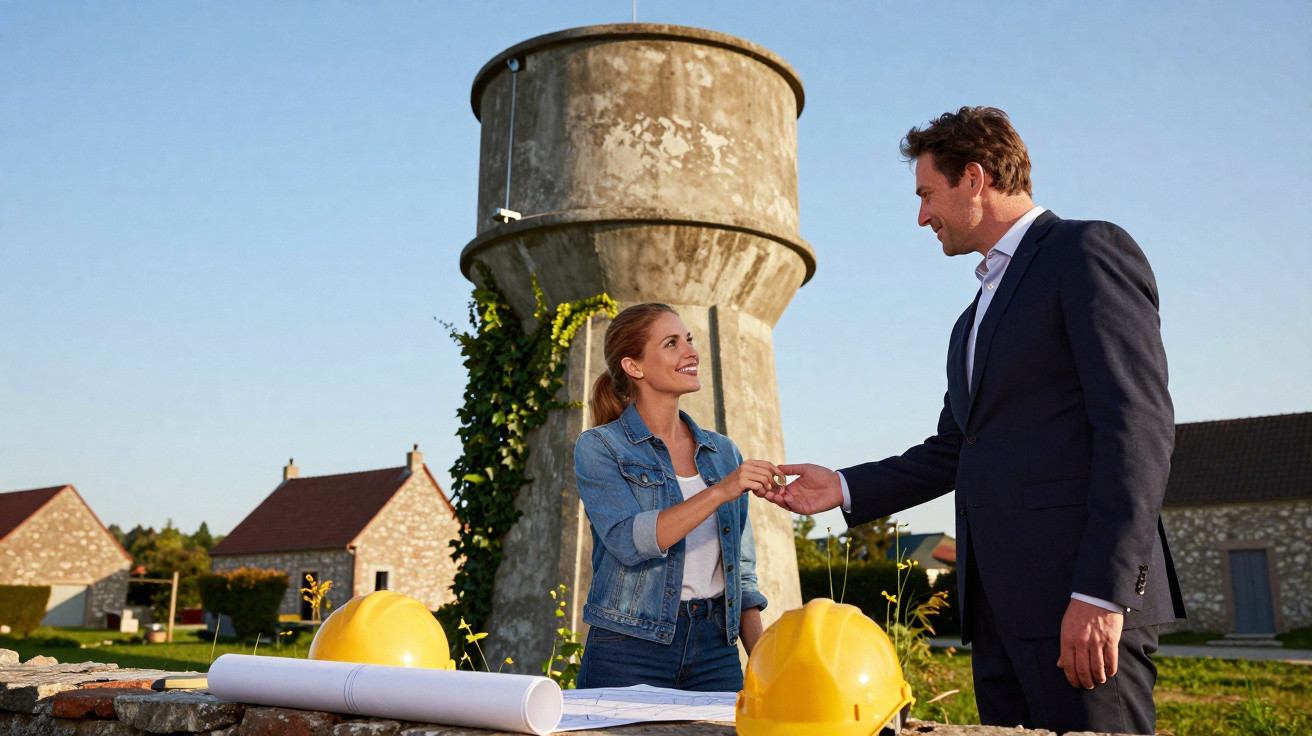
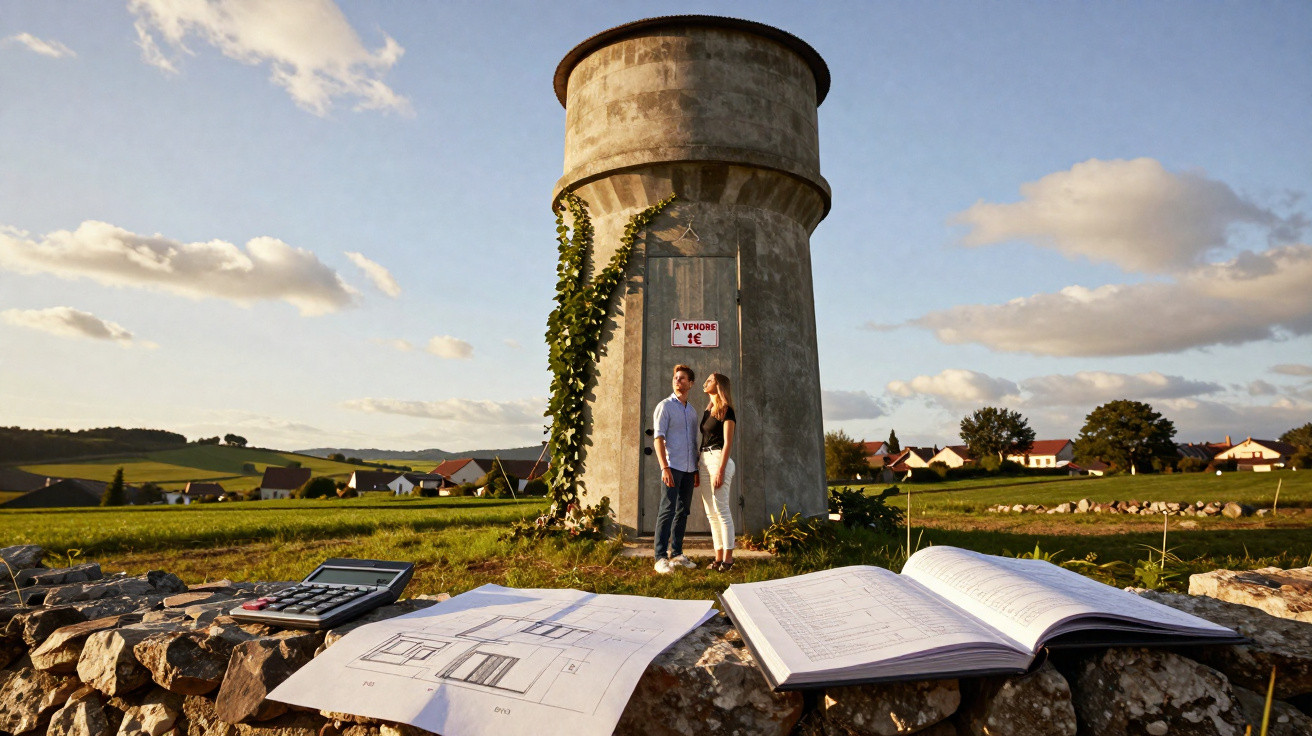
A property priced at no more than a bread roll may sound like an internet joke, but it is real in this case. The municipality of La Chapelle-Baloue, in the Creuse department, is offering its former water tower for exactly €1. There are no notary fees, but buyers will need imagination, the confidence to take on a conversion and a realistic budget for renovation and a new purpose.
A water tower for the symbolic €1
Standing on the edge of the small rural municipality, the tower is approximately 15 metres high. It was built after the Second World War and supplied drinking water for decades. The village has since modernised its network, leaving the old structure technically redundant while it continues to generate maintenance costs.
Rather than allow the concrete giant simply to deteriorate, the municipality has taken a radical approach: it is selling it for €1. Interested parties have until 31 March to submit a written offer alongside their project proposal. The price is fixed; the deciding factor will be the plan for its future use.
“The purchase price is barely relevant – what matters is who can give the grey tower a credible new life.”
Because the tower directly borders private plots, its immediate neighbours have priority rights. They could extend their land or create an unusual addition to their property. However, the local authority is not excluding other applicants and will consider every serious proposal.
Why the municipality wants to dispose of the tower
Demolition was initially considered as an alternative. However, an assessment quickly showed those responsible just how expensive that option would be. Dismantling the substantial concrete structure was estimated at roughly €100,000 – a cost that would have placed a considerable strain on the budget of the small municipality.
Selling it for a symbolic sum addresses several issues at once:
- The municipality avoids the substantial cost of demolition.
- The risk posed by a utility structure slowly falling into disrepair is reduced.
- Local built heritage is retained and could, at best, gain a new purpose.
- A creative scheme could raise the village’s profile and attract new visitors.
A municipal official responsible for water supply sums up the thinking broadly as follows: it is better to make a resident happy and preserve part of the village’s history than to spend a large amount of taxpayers’ money on demolition.
Renovation rather than demolition: what buyers will actually face
For all the attention-grabbing appeal of its €1 price tag, the real expense lies in the conversion. The tower has been out of service since the water network was upgraded. Its pipes, equipment and internal layout do not meet current residential or safety standards. The municipality will hand over the building “as seen”, apart from emptying the water tank.
Structural challenges
Water towers are engineered for a single purpose: storing water and keeping it at a specified height. Anyone intending to use one for living, working or tourism will need to make major alterations. Future owners may face typical requirements such as:
- A structural assessment of the concrete construction
- Installation of new floors, staircases and window openings
- Thermal insulation and weatherproofing
- Entirely new electrical and water systems
- Fire-safety requirements, escape routes and secure access
Anyone planning a tower loft, an artist’s studio or holiday accommodation will therefore need more than ideas. They will also require substantial capital and patience when dealing with planning authorities.
Potential uses between aspiration and reality
Europe already has several successful examples of converted water towers, from which realistic options can be drawn. Possible uses for the structure in La Chapelle-Baloue include:
| Use | Appeal | Challenges |
|---|---|---|
| Holiday loft | Panoramic views, distinctive accommodation | Strict requirements, high interior fit-out costs |
| Studio or office | Quiet location, striking architecture | Access, heating and natural light are complex |
| Viewing platform | Potential tourist attraction | Safety, liability and visitor numbers |
| Extension of a private plot | Extra garden space, storage, perhaps a hobby room | Limited internal space, limited use |
“The symbolic purchase price may make headlines – but it is the proposed use that determines whether the tower becomes a showcase project or a problem property.”
Why water towers are becoming sought-after character properties
According to various estimates, France still has around 16,000 water towers. Only a very small proportion are even remotely suitable for use as homes or workplaces, and fewer still are actually converted. Even so, striking projects continue to emerge, attracting architecture enthusiasts and holidaymakers.
The attraction is obvious: a tower stands above its surroundings, offers far-reaching views and has an unconventional layout. Those who live or work in one occupy something genuinely unique. There is also an emotional dimension, as many people regard such structures as part of everyday history that should not simply disappear.
On the other hand, the financial realities are stark. Renovating historic industrial or utility buildings can quickly run into six-figure sums. An apparent bargain may turn into a financial bottomless pit if the structure, foundations or concrete reveal serious defects.
Opportunities and risks for potential buyers
For prospective buyers from German-speaking countries, La Chapelle-Baloue is interesting for more than simple curiosity. Rural parts of Germany, Austria and Switzerland are also debating the future of decommissioned facilities, empty station buildings and former silos.
Anyone considering a project of this kind should assess several points realistically:
- Planning law: Is residential or commercial use legally permitted?
- Infrastructure: What are the transport links, electricity, water, internet access and local amenities like?
- Ongoing costs: What annual expenditure will be required for maintenance and insurance?
- Future value: Is there a realistic prospect of recovering the money invested later?
- Local acceptance: How does the neighbourhood view a conversion project?
The final point in particular can determine success or failure. A tower containing holiday flats may be welcomed in a quiet village – or meet fierce opposition if residents fear noise and increased traffic.
Why municipalities use symbolic sales
The symbolic euro is more than a publicity stunt. Municipalities face a choice between costly demolition, the risks of vacancy or the hope of private initiative. By setting an extremely low purchase price, they make their position clear: the public authority wants to transfer the property, but is willing to support the planning process if someone is prepared to commit to it.
These arrangements are not limited to water towers. Old schools, station buildings, barracks and rectories also occasionally change hands for symbolic sums, subject to conditions requiring the new owner to secure, renovate or put the property to a clearly defined use within a specified period.
For people with practical building skills, solid capital of their own and an appetite for a life project, this can be an opportunity. Those who merely dream of an Instagram-ready viewing balcony, however, can quickly encounter the hard reality of building regulations, cost estimates and planning procedures.
The former water tower in La Chapelle-Baloue illustrates this tension precisely: the romantic notion of having “your own tower” versus the sober figures involved in a complex conversion. The municipality is now waiting for someone who can unite both – vision and a calculator.









Comments
No comments yet. Be the first to comment!
Leave a Comment