
Health is often seen as a matter of diet, exercise and self-discipline. Yet a major US study now suggests that the place where we live has a similarly significant bearing on stroke risk. What matters is the level of development in a neighbourhood – in other words, how many homes, roads, shops, parks and medical practices are located close to the front door.
How a neighbourhood quietly shapes our risk
People often automatically associate city living with noise, stress and exhaust fumes, and therefore with poorer health. However, the latest analysis of more than 25,000 adults in the United States presents a far more nuanced picture.
Researchers at the University of Michigan found that people living in more highly “developed” neighbourhoods – those with denser building patterns and stronger infrastructure – had, on average, around a 2.5 per cent lower risk of experiencing their first stroke.
The study shows that not only our behaviour, but also the built environment, influences whether the blood vessels in the brain remain healthy.
At first glance, 2.5 per cent may seem modest. But for a common condition such as stroke, which is among the leading causes of disability and death worldwide, even a small reduction can mean many emergencies avoided – and fewer people suddenly becoming dependent on care.
What researchers mean by “development intensity”
The study centres on the term “development intensity”. This describes how densely an area is built up and how well supplied it is with local amenities. To measure it, the researchers used satellite data from the United States Geological Survey.
They examined the area surrounding participants’ homes, looking at how much land had been developed and how much remained in its natural state. This produced several categories:
- Low development intensity: extensive open land, large gaps between homes, few shops and hardly any services.
- Medium development intensity: mixed residential areas with some shops, occasional medical practices and comparatively low-density development.
- High development intensity: dense housing, numerous shops, healthcare facilities, schools, restaurants and service providers.
According to the researchers, densely developed areas often offer shorter journeys and easier access to essential services. GP practices, supermarkets, pharmacies, bus stops, cycle routes and parks are frequently within walking distance or a short drive away.
Stroke risk tracked over more than a decade
The analysis draws on the long-running REGARDS study (“Reasons for Geographic and Racial Differences in Stroke”). Since 2003, it has followed tens of thousands of people aged 45 and over for many years.
For this assessment, the researchers linked:
- information on participants’ homes and the development level of their areas;
- health records and stroke events over roughly ten years;
- data on age, income, existing medical conditions and other risk factors.
Particular attention was paid to the south-eastern United States, known as the “Stroke Belt” – an area with especially high stroke rates, particularly among Black American women and men. This made it possible to test whether the link between residential surroundings and risk was also present in areas facing a particularly high burden.
Notably, the benefit associated with more developed neighbourhoods remained even after the team accounted for age, income, lifestyle and health status.
The address on an identity card reveals more about stroke risk than doctors have so far considered in routine care.
Why denser urban neighbourhoods may offer protection
Why might more heavily built-up urban areas be a potential protective factor, despite noise, traffic and fine-particle pollution?
Better care for blood pressure, blood sugar and more
Strokes usually do not develop overnight. They are commonly the result of long-term damage to blood vessels caused by high blood pressure, diabetes and lipid disorders. People with nearby medical practices may be more likely to attend check-ups and receive medication where needed.
- Shorter journeys to the GP make regular health checks easier.
- Hospitals and clinics can be reached more quickly – crucial when every minute matters.
- Pharmacies are often located along everyday routes, making prescriptions more likely to be collected.
More everyday activity, almost without noticing
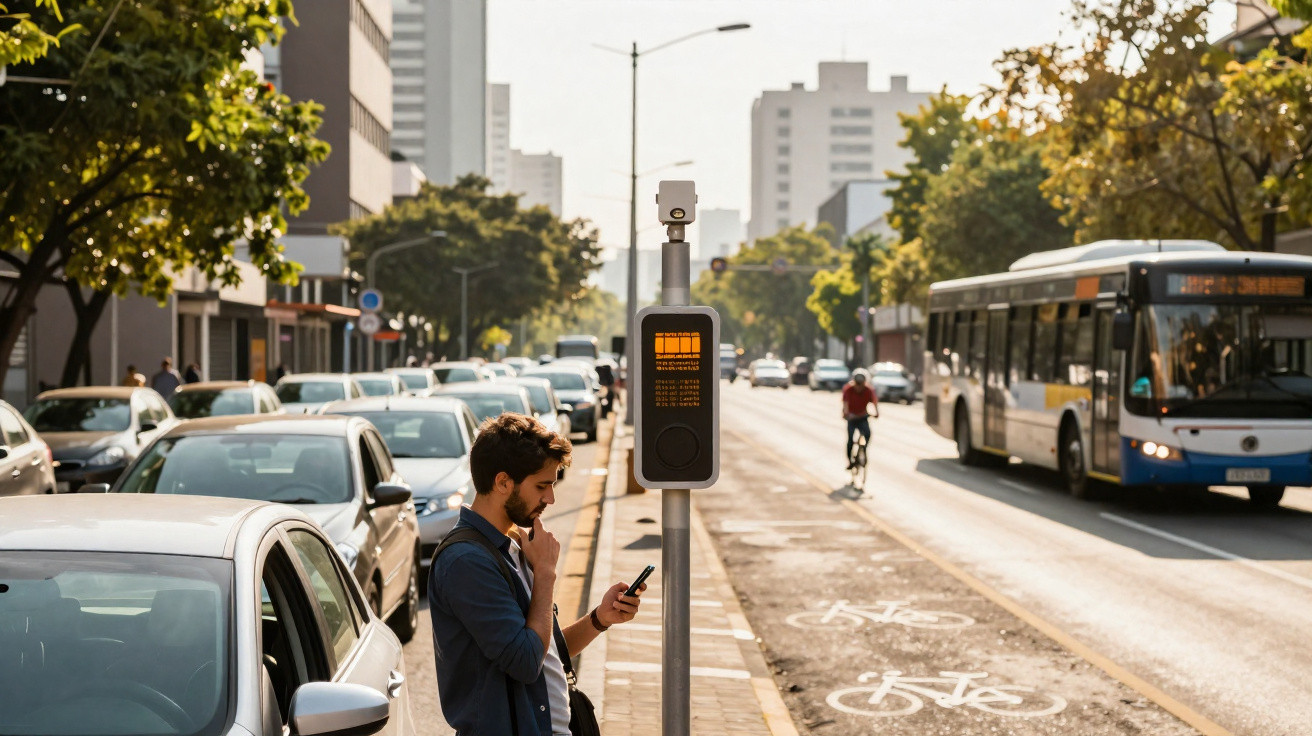
Developed neighbourhoods often include pavements, cycle lanes and parks. Many daily journeys – to the station, bakery or bank – can be made on foot or by bike. This routine movement lowers blood pressure, improves blood lipid levels and helps to keep weight stable.
The picture is often different in sparsely populated areas: distances are longer, walking routes are limited and cycling infrastructure is scarce. Residents are therefore more likely to use a car, even for short trips. That increases time spent sitting and removes calorie-burning movement from daily life – not a favourable combination for blood vessels and the heart.
Healthier food is easier to access
Supermarkets selling fresh fruit, vegetables and wholegrain products are generally located closer together in developed neighbourhoods. In areas with weaker infrastructure, by contrast, petrol station shops and smaller retailers selling heavily processed, salty and sugary products are often more common. A high salt intake raises blood pressure, which increases the likelihood of stroke.
How far people travel in everyday life
The distances considered by the researchers are also revealing. They analysed an area of roughly eight kilometres around each home. This reflects realistic daily journeys for shopping, medical appointments, work, exercise or visiting family and friends.
When someone moves house, both these distances and the availability of local amenities change. The study took this into account, allowing shifts in people’s living environments to be linked more closely with later health events.
What doctors, planners and policymakers can take from the findings
The results are relevant not only to individuals, but to a range of professional groups. The researchers stress that healthcare professionals should pay greater attention to where a patient lives as a risk factor.
Anyone living far from doctors, public transport and food shops brings a structural risk into the consultation room that often remains invisible in the conversation.
The study also gives added support to urban and regional planning. Compact, mixed-use neighbourhoods with short journeys and good connections are not merely more convenient; they also appear to protect the brain’s blood vessels over the long term.
This includes, in practical terms:
- continuous, safe pavements and cycle routes;
- parks and green spaces with seating and paths;
- GP practices, pharmacies and health centres near homes;
- supermarkets with fresh food, rather than only discount supermarkets on the edge of town;
- good local public transport with frequent services.
What the study could not establish
Like any research, this study has limitations. Stress, exposure to noise, air pollution, crime and participants’ previous places of residence were recorded only to a limited extent. Each of these factors can influence health too, either positively or negatively.
Even so, the central finding remains: allowing for these unanswered questions, a consistent benefit for more developed neighbourhoods was still apparent in relation to stroke risk.
What this means for people in German-speaking countries
Although the data comes from the United States, many of the conclusions can be applied to Germany, Austria and Switzerland. Large cities with effective public transport, mixed neighbourhoods and a high density of services have structures similar to the areas described in the study.
Living in a rural community does not automatically mean a person faces a higher risk. The underlying conditions are simply different: longer journeys to the doctor, fewer specialists and limited public transport. People living in such places may benefit especially from developing their own ways to close these gaps, such as arranging regular health checks, sharing lifts or using telemedicine services.
What everyone can do in practice
It is often not easy to change where you live. Even so, there are ways to recreate aspects of the “city effect”:
- Build in movement: make journeys that can be completed in 10–20 minutes on foot or by bicycle.
- Combine essential trips: arrange medical appointments, shopping and errands so they can be completed on the same day with as little driving as possible.
- Plan food shopping intelligently: deliberately choose places where fresh produce is available, even if they are slightly further away.
- Use the community: neighbourhood groups, sports clubs and walking groups can make it more likely that people remain active.
For anyone planning a move, it can be worthwhile to assess the infrastructure in the prospective neighbourhood: Is there a GP practice within easy reach? How far away is the nearest supermarket? Are there safe routes to get there, including for children and older people?
The essence of these new findings is that health depends not only on individual willpower, but also heavily on local structures. People living in an environment that makes healthy choices easy gain small advantages day after day – and, almost incidentally, reduce their risk of one of life’s most serious emergencies: stroke.
















Comments
No comments yet. Be the first to comment!
Leave a Comment