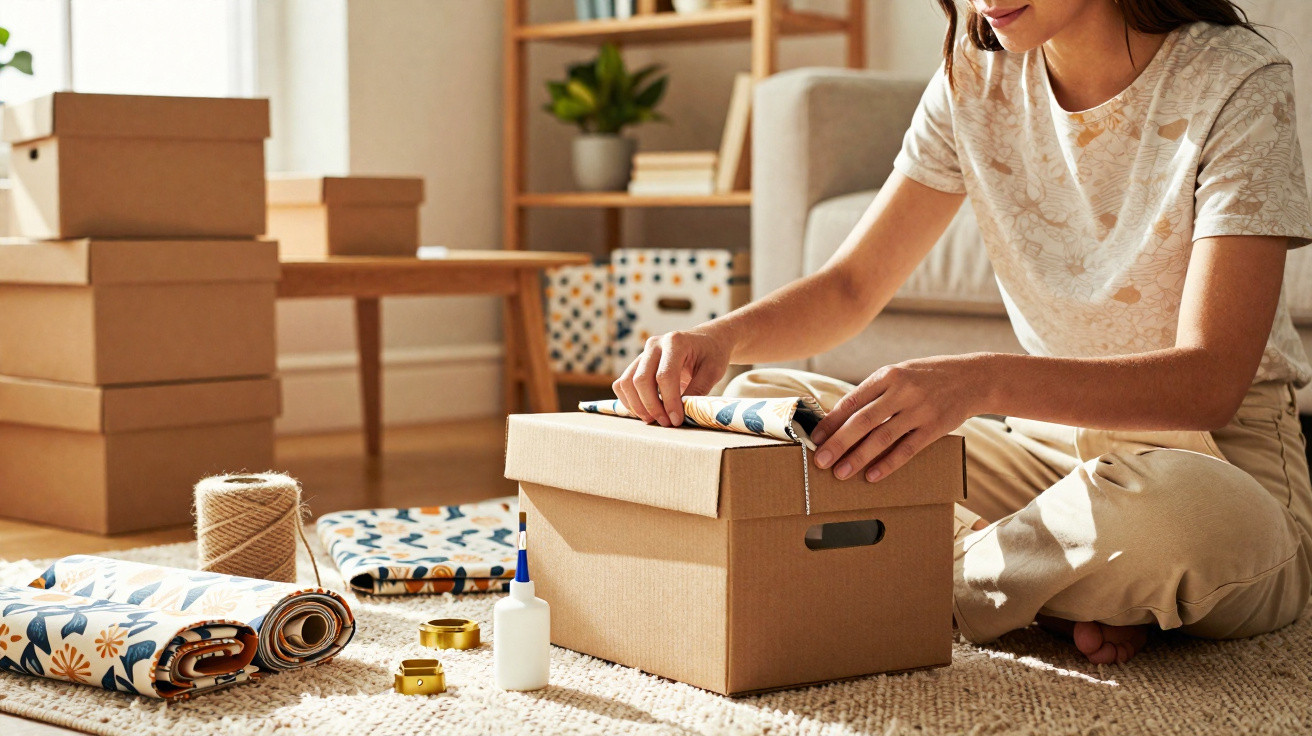
Anyone who receives parcels regularly will know the issue: cardboard boxes pile up, while drawers overflow with old tea towels, bed sheets or shirts. Throwing them away feels wasteful, yet they are no longer really needed. This is where a straightforward but clever craft idea comes in, turning leftovers into favourite practical décor pieces while also making a statement against plastic waste.
Why cardboard and fabric work so well
Cardboard is lightweight, sturdy and abundant in almost every home, usually left over from online deliveries. Paired with fabric offcuts, it creates a material combination that can look surprisingly premium. This is particularly true when simple natural fibres such as cotton, linen or jute are used instead of synthetics.
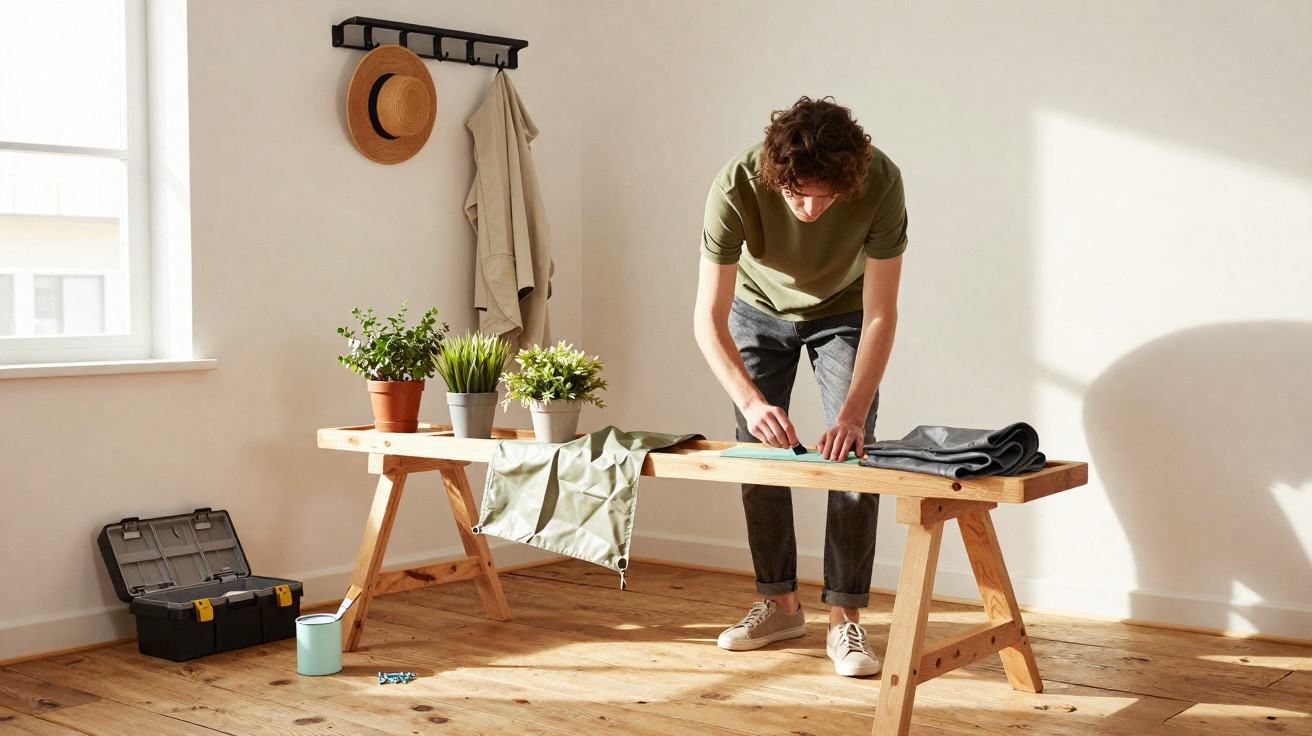
With a craft knife and a fabric offcut, a delivery box becomes a design piece – with no additional purchase and no guilty conscience.
The environmental case is clear. Plastic storage boxes, baskets and organisers sold in shops are often made from newly manufactured plastic. According to international environmental organisations, the global volume of plastic is growing rapidly, while the proportion of recycled plastics remains minimal. Ideally, every homemade cardboard storage box replaces one such plastic item.
Upcycling cardboard and fabric in the living room
Upcycling means enhancing used materials so that they become something new with greater usefulness or a more attractive appearance. It is therefore about more than reusing something; it is about improving it. That is exactly what happens when a stained tablecloth becomes the covering for a stylish storage box.
Part of the appeal is that every piece becomes one of a kind. No two baskets look alike, and every box carries the story of its fabric – whether it is a shirt from a first job or a sheet from a first shared home.
Step by step: turning cardboard into a decorative box
Materials most people already have at home
- Sturdy cardboard (for example, from parcels)
- Fabric offcuts (cotton, linen, jute or blended fabrics)
- Scissors or a craft knife
- Ruler or tape measure
- Multipurpose glue or hot glue
- Optional: cord, ribbon or wide gift ribbon
How to make the box
The basic method is simple and, after one or two attempts, soon becomes almost routine:
- Cut the cardboard: Mark out and cut a rectangle in the desired size. This will form both the base and the side walls.
- Cut out the corners: Remove small squares from all four corners. The width of these squares determines the finished height of the box.
- Prepare the folds: Carefully score the side walls along the edges, using the back of a pair of scissors, for example. This makes them easier to fold upwards later.
- Cover the outside with fabric: Cut the fabric slightly larger than the cardboard, apply glue and press it on smoothly. Carefully smooth out any creases.
- Finish the inside: Use the same fabric, or deliberately choose a contrasting pattern. If preferred, leave the inside as bare cardboard for a more rustic effect.
- Secure the edges: Fold the side walls upwards. Small holes can be punched at the corners and threaded with cord. Tying firm knots at the corners keeps the shape stable.
A few knots at the corners – and the flat cardboard turns into a soft box that holds its shape.
This basic shape can be adapted in every direction: taller, shallower, with handles, with a lid or as an open organiser for shelving.
Where a homemade box can prove useful
The finished piece is not only attractive but also remarkably practical. Depending on its size, it can find a place in many different rooms.
| Room | Possible use |
|---|---|
| Kitchen | Bread basket, holder for tea bags, napkins or spice packets |
| Hallway | Tray for keys, sunglasses and post |
| Bathroom | Storage for cosmetics, cotton pads and hair ties |
| Bedroom | Organiser in the wardrobe or on a chest of drawers |
| Children's room | Box for colouring pencils, small figures and trading cards |
| Home office | Organiser for cables, charging plugs, pens and note paper |
These boxes quickly create a calmer overall look, especially on open shelves or exposed clothes rails. Since they cost very little to make, it is easier to create several versions with a coordinated appearance.
Design tips for a premium look
A few simple touches help ensure that the finished result looks like intentional design rather than a makeshift solution:
- Choose a colour scheme: Coordinate the shades, such as natural tones in beige, sand and white, or bold contrasts in navy blue and mustard yellow.
- Use patterns sparingly: One patterned fabric per room is enough. Plain colours create a calmer look elsewhere.
- Keep edges neat: Once the glue has dried, trim away protruding fabric cleanly to give the boxes a more polished finish.
- Add details: Cord handles, small cardboard labels or wooden tags turn the box into a deliberate decorative feature.
The clearer the colour scheme, the more the cardboard looks like it came from an interiors shop rather than an improvised project.
Why this craft is more than a weekend project
What may initially seem like a pleasant DIY activity also has social and environmental dimensions. Using old fabrics avoids buying new textiles, which are often made under questionable conditions. Every newly produced decorative item involves energy use, transport routes and packaging.
At the same time, working with leftovers encourages a more resource-conscious mindset. Children learn in passing that things are rarely “just rubbish”. In many families, crafting soon becomes a small ritual: everyone looks for suitable boxes, rummages through the linen cupboard and decides together which fabric suits which purpose.
From living room to start-up: upcycling is on trend
While people at home work with scissors and glue, start-ups are pursuing comparable ideas on a larger scale. They turn old textiles into new collections or develop methods that keep plastics in circulation more often. In both cases, the aim is the same: conserve resources, reduce waste and rethink new products more intelligently.
The difference is that each private project creates a highly personal story. A box made from an old baby cot sheet or a basket covered in an inherited tablecloth can replace impersonal mass-produced goods and give a room character.
Practical advice on durability and safety
To help these new decorative pieces last, it is worth paying attention to a few details:
- Do not overload them: Cardboard can hold quite a lot, but it has limits. Other solutions are better suited to books or glass bottles.
- Avoid moisture: In the bathroom, use them only in dry spots, otherwise the cardboard may warp.
- Choose suitable glue: For projects with children, use solvent-free glue. Hot glue should only be handled by adults.
- Protect the base: Small felt pads or an extra piece of fabric underneath prevent abrasion on delicate furniture.
For an extra layer of protection, seal the cardboard with a thin coat of clear matt varnish before covering it. This makes the surface more robust, particularly for use in the kitchen.
More ideas using cardboard and fabric
Once the first box has sparked your enthusiasm, it is easy to find further uses. The same technique also works for:
- Stacked drawer inserts in a wardrobe
- Shallow trays for coffee, tea or breakfast
- Small gift baskets instead of wrapping paper
- Organisation systems in chest-of-drawers drawers, for example for socks or underwear
Step by step, this creates a complete organisational system that looks coordinated and costs almost nothing. Keeping the finished pieces saves money and trips to the furniture shop whenever the next sorting project comes around.
In the end, it is more than simply an attractive box on the table: transforming old cardboard and fabric means taking an active role in shaping your home, reducing what goes into the bin and lowering the need for new plastic storage boxes. A short afternoon of crafting is enough to change the way seemingly leftover materials are viewed for good.


Comments
No comments yet. Be the first to comment!
Leave a Comment