The smell hit before you had even made your morning coffee.
It was sour, somewhere between stale washing-up water and something left in the bin a week ago. You throw open the kitchen window, spray air freshener or perhaps light a candle. It works for five minutes, then the odour gradually creeps back from the sink as though the pipes have a life of their own.
So the guessing begins. Is it the sponge, the rubbish bin or the dishwasher filter? You clean every visible surface, yet the smell remains: persistent and concealed just beyond your reach. The sink may look spotless, but it does not smell spotless.
Then somebody casually says: “Just pour some boiling water down there, that’s what my grandma always did.” It seems far too straightforward, almost ridiculous. Yet it works more often than you might expect.
Why your sink smells in the first place
Most of us pay little attention to the sink until there is a problem. Pasta water, a splash of oil, coffee grounds and soapy bubbles carrying food grease all disappear in a pleasing swirl. On the surface, everything appears to vanish completely. Your pipes, however, retain the memory of every meal.
A very different process is taking place inside that dark, U-shaped bend. Fine coatings of fat stick to the pipe walls, while soap scum becomes tacky. Loose crumbs lodge there and slowly ferment. This warm, damp environment is an ideal spa for bacteria that release unpleasant gases. By the time you notice the odour, the residue may already have been building up for weeks.
A London plumber once told me that he can often tell what people eat simply by opening their drains: curries, bacon fat and countless Sunday roasts. These tiny remnants do not disappear; they merely travel a little farther along. A 2022 survey by a UK home-care brand found that more than 60% of households report “mysterious kitchen smells” at least monthly. Most people blamed the fridge, but the sink was the chief offender.
Then there is the trap: the curved pipe section designed to retain a small amount of water. It is a smart feature that prevents sewer gases from rising into the room. In a sink that is rarely used, though, this water can evaporate, breaking the barrier and allowing smells to enter. Grease build-up causes a similarly unpleasant problem. It constricts the pipe, slows drainage and lets odours linger in the bend for longer before rising upwards.
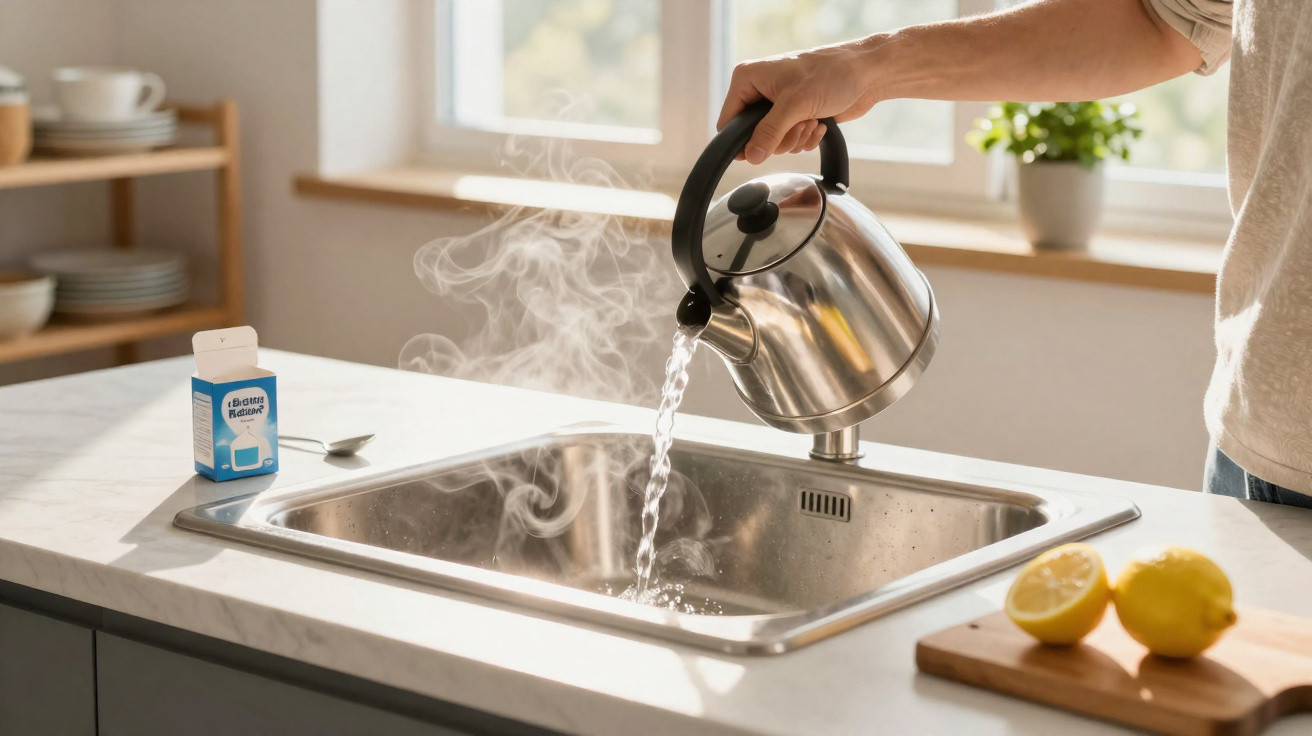
Pouring boiling water into the sink sends through a basic yet effective cleaning surge. Heat melts and softens grease deposits that cold water would simply flow past. It also disturbs biofilm, the slimy combination of bacteria and food residue attached to pipe walls. Think of it as gently removing the softer outer layer of grime each week, before it becomes a hard, stubborn blockage.
The heat can also shift settled soap and detergent particles. They dissolve again and move deeper into the system, where pipes are broader and less likely to clog. Rather than merely sending unpleasant smells away, you are slowing the conditions that create them. There is no magic involved: only physics and a kettle.
How to use boiling water the smart way
The basic method is simple: boil a full kettle, pour the water slowly and directly down the drain, then repeat once or twice. When done routinely, this modest habit can stop everyday odours from taking over, particularly in frequently used kitchen sinks. Many plumbers discreetly recommend it between professional cleans.
When you do it makes a difference. Flushing the sink after washing greasy pans helps remove fats before they cool and adhere to the pipes. Some people make it part of their Sunday routine, once the final dish has been washed. Others tip boiling water down every household sink once a month as a mini health check for their plumbing. It is quick and requires neither chemicals, gloves nor strange tools from the cupboard.
Let’s be honest: nobody really does this every day. Most people only remember once an odour develops, by which point residue has already established itself. Even then, it is not too late. Several rounds of boiling water, separated by a short pause, can still dislodge a surprising amount of grime. Pour slowly, allowing the heat time to work into the slime coating the walls.
People make two major mistakes with boiling water. The first is assuming that hotter is always better. Vigorously pouring boiling water into old or delicate plastic pipes can be risky. In older homes especially, leave the kettle for 20–30 seconds before pouring. You still benefit from the heat without shocking the material.
The second is expecting boiling water to solve every issue alone. If the sink already drains very slowly or water backs up, a partial blockage will probably need more assistance. Repeatedly forcing hot water into an almost blocked pipe may simply push the issue farther down the line. This is when you should pair boiling water with a gentle plunger or a small drain snake, or call a professional when the smell is accompanied by standing water.
There is an emotional element that rarely gets mentioned. On a difficult day, a sour kitchen smell can feel like another thing you have failed to manage. You clean, cook and wipe down surfaces, yet the room still seems to judge you. Understanding that pipes are simply doing what pipes do can remove that sense of guilt. It is not about being “dirty”; it is an invisible system that needs a little encouragement.
“Most of what people call a ‘smelly sink problem’ is really just a ‘too much life going down the drain’ problem,” says a Paris-based plumber I spoke to. “Boiling water is like hitting reset before it gets dramatic.”
To make that reset simpler, remember a few basic guidelines:
- Never tip used cooking oil directly into the sink.
- Wipe greasy pans with kitchen roll before washing them.
- Run hot tap water for 20–30 seconds after particularly fatty meals.
- Fit a straightforward drain strainer to catch food particles.
- Flush every sink with boiling water every few weeks.
These are not rigid rules, but gentle routines. You will occasionally forget them because life gets busy. The aim is to move gradually from worrying about smells to preventing them quietly. Small, nearly dull actions repeated over time stop the sink from becoming a science experiment.
Beyond the kettle: what your pipes are telling you
Once you begin noticing how odours travel around your home, patterns emerge. The kitchen holds on to the memory of last night’s meal. The bathroom sink may carry a scent of old perfume and toothpaste. A utility sink in the garage has its own cold, metallic smell. Each drain is like a small mouth, revealing what it has been given.
Pouring boiling water into those mouths is a way of noticing and responding. When one sink consistently smells worse than the others, it offers a clue about how you use it. Perhaps it is where oily containers are rinsed, or perhaps its trap is shallow and dries out more rapidly. Instead of only battling the smell, you can change the chain of events that causes it.
You may live in a flat where one person loves cooking while another dislikes washing up. Or perhaps your children secretly rinse half their dinner down the drain. The kettle method can become a shared routine, almost a household rule. One person cooks, another cleans, and somebody takes on “pipe duty” now and then. Such small rituals keep a home’s infrastructure working quietly, without a grand speech or a chore chart.
There is also something unexpectedly grounding about standing in the kitchen with a steaming kettle and pouring water into somewhere you cannot see. For a few seconds, you are connected to the unseen route beneath the floor, the pipe network beneath your street and the wider system that removes things so you need not think about them. In the simplest possible way, you are looking after that hidden system.
The next time a sour smell rises from the drain, you may still light a candle and grumble about it. But you will also know that one quick, almost free action can change the situation. It is not a miracle trick: just hot water, gravity and the quiet pleasure of having an effective solution ready.
| Key point | Detail | Benefit for the reader |
|---|---|---|
| Boiling water loosens grease | Heat softens fat and soap film stuck to pipe walls | Reduces smells and slows down future clogs |
| Regular mini-routine | Flush sinks every few weeks with a full kettle | Simple habit that keeps odours from building up |
| Limits of the method | Won’t cure severe blockages or broken traps | Helps decide when to call a plumber instead of waiting |















Comments
No comments yet. Be the first to comment!
Leave a Comment