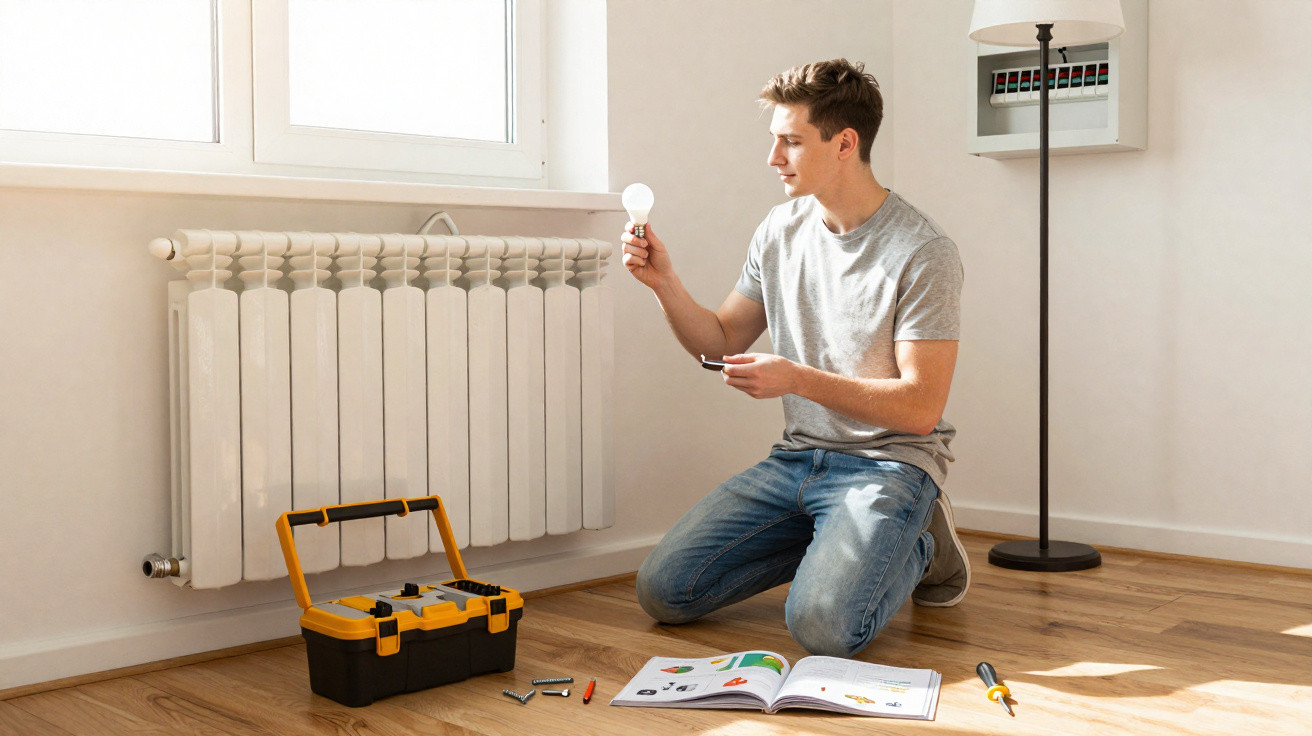
Many adults cannot bleed a radiator or change a light bulb – and readily admit it.
A new UK study reveals just how overwhelmed many people feel in their own homes. Even seemingly straightforward jobs, such as resetting a circuit breaker, restarting a boiler or clearing a drain, leave many people flustered – and more likely to reach for their phone than a tool.
When your own home feels like the enemy
The research surveyed 2,000 adults. One key finding was that around a quarter of people have only a vague understanding of how the heating, water and electricity systems in their home work. When something goes wrong, many do not know where to begin.
One third of those surveyed only think about household repairs and maintenance once something has already broken.
Around 10 per cent even admit that they deliberately ignore problems, hoping they “will somehow go away”. That rarely works with a leaking pipe or a temperamental heating system, of course.
Guesswork instead of reading the instructions
Rather than seeking help, most people initially try to work it out for themselves. About 73 per cent rely purely on trial and error when something at home stops working. This often creates more trouble: a quarter of amateur DIYers make the situation worse through their own efforts.
Nearly half say that unsuccessful repair attempts have caused arguments with a partner. It is a familiar scenario: one person wants to “quickly sort it out themselves”, while the other would rather call someone straight away. In the end, it becomes more expensive because the professional must also repair the damage already caused.
“Everyone used to be able to do this” – did they?
About 62 per cent of respondents believe earlier generations were more practically skilled. Many say their homes sometimes seem to be actively working against them: mysterious boiler error messages, confusing consumer units and cryptic instruction manuals.
Even so, few immediately turn to a professional. Only around a quarter would pay an expert straight away to handle a simple problem. A further 13 per cent are not even sure at what point a job really needs to be left to an expert.
Instead, one old standby remains: around 15 per cent still call Mum or Dad when things become serious at home, whether the issue is the consumer unit or a leaking sink.
The 15 household tasks that defeat many people
Experts have identified 15 basic tasks that every homeowner or flat owner should ideally be able to manage. In reality, things look very different.
- Restarting a boiler or correcting its pressure
- Changing a light bulb
- Putting up a shelf straight and securely
- Wiring a plug correctly
- Replacing the light in a fridge
- Finding the central water isolation valve
- Bleeding radiators
- Locating the main stopcock for the water supply
- Clearing a blocked drain
- Finding the electricity or gas meter
- Replacing a faulty smoke alarm unit
- Resetting a tripped circuit breaker in the consumer unit
- Switching off the entire electricity supply in the home
All of these jobs are considered basic knowledge, comparable to checking a car’s tyre pressure. Yet many people cannot complete them without outside assistance or lengthy online research.
Heating weak point: air in the system, nobody knows what to do
A cold radiator in winter is a typical example. Often, the only cause is air that has built up in the system. It can be resolved in a few minutes with a small radiator key.
In practice, the process is as follows:
- Switch off the heating and allow the radiator to cool slightly.
- Hold a container and cloth beneath the bleed valve.
- Use the radiator key to open the valve slowly.
- Wait until the air has escaped and water flows out steadily.
- Close the valve again and turn the radiator back on.
Nevertheless, many people do not even know where the valve is, or are reluctant to touch it because they fear making a mistake.
Electricity: the fuse trips – what next?
The situation is similar with electricity. Some respondents admit they can locate the consumer unit but do not feel confident touching anything inside it. Often, all that is required is pushing a tripped switch back up.
Knowing how to turn off electricity and water in an emergency can significantly limit damage and costs.
It becomes dangerous when nobody in the home knows how to switch off the main electricity supply or close the stopcock for the entire water system. Every minute matters in the event of a burst pipe or an overheated appliance.
Why is basic household knowledge missing?
Several factors are involved. Household technology has become considerably more complicated. Heating systems have displays with error codes, while washing machines have more programmes than entire laundries once did. In addition, many people grow up in rented homes where landlords or managing agents take care of much of this work.
Traditional knowledge-sharing has also partly disappeared. Anyone who has never watched someone clean a trap or wire a light fitting will naturally be more hesitant. Streaming services, delivery apps and tradesperson apps all convey a similar message: “Don’t worry about it, someone else will take care of it.”
Building basic household knowledge without stress
Nobody needs to become an amateur plumber. However, a minimum level of knowledge saves money, stress and, in an emergency, damage. Useful steps include:
- Taking a short tour of the home to identify the consumer unit, meters and stopcocks.
- Saving photos of important details, such as rating plates and valve locations, on your phone.
- Keeping manuals for key appliances within easy reach rather than leaving them in a box in the cellar.
- Practising simple repairs in less critical places first, such as fitting a shelf in a storage room.
Many energy suppliers and consumer advice organisations now offer step-by-step guides and videos covering these basic tasks without technical jargon. Anyone who spends a quiet evening learning them will feel more confident when an emergency arises.
When a professional should be called straight away
There are clear limits. Nobody without training should work on gas pipes, complex electrical installations or load-bearing structural components. One frequent mistake is for people to start tinkering with heating electronics, exposed electrical wiring or old consumer units themselves. This can be life-threatening or lead to a fire.
A useful rule of thumb is that a qualified tradesperson is the better choice if specialist tools are needed, pipes must be opened or there is any uncertainty about safety. The skill lies in knowing which jobs you can tackle yourself and when they become risky.
Maintenance should not wait until everything stops working
The study also shows that many people have no maintenance plan whatsoever for their heating system or boiler. More than 40 per cent do not have a single maintenance contract, even when they depend entirely on their heating. If the system fails in the middle of winter, conditions quickly become uncomfortable.
Regular inspections by professionals cannot prevent every issue, but they reduce the risk of costly breakdowns. Combined with a little basic knowledge, they also allow people to make a rough assessment of minor faults and respond more effectively.
Ultimately, the point is not to be perfectly skilled at DIY. What matters is knowing the most important switches, stopcocks and controls in your own home – and not panicking when the lights go out or a radiator stays cold.












Comments
No comments yet. Be the first to comment!
Leave a Comment