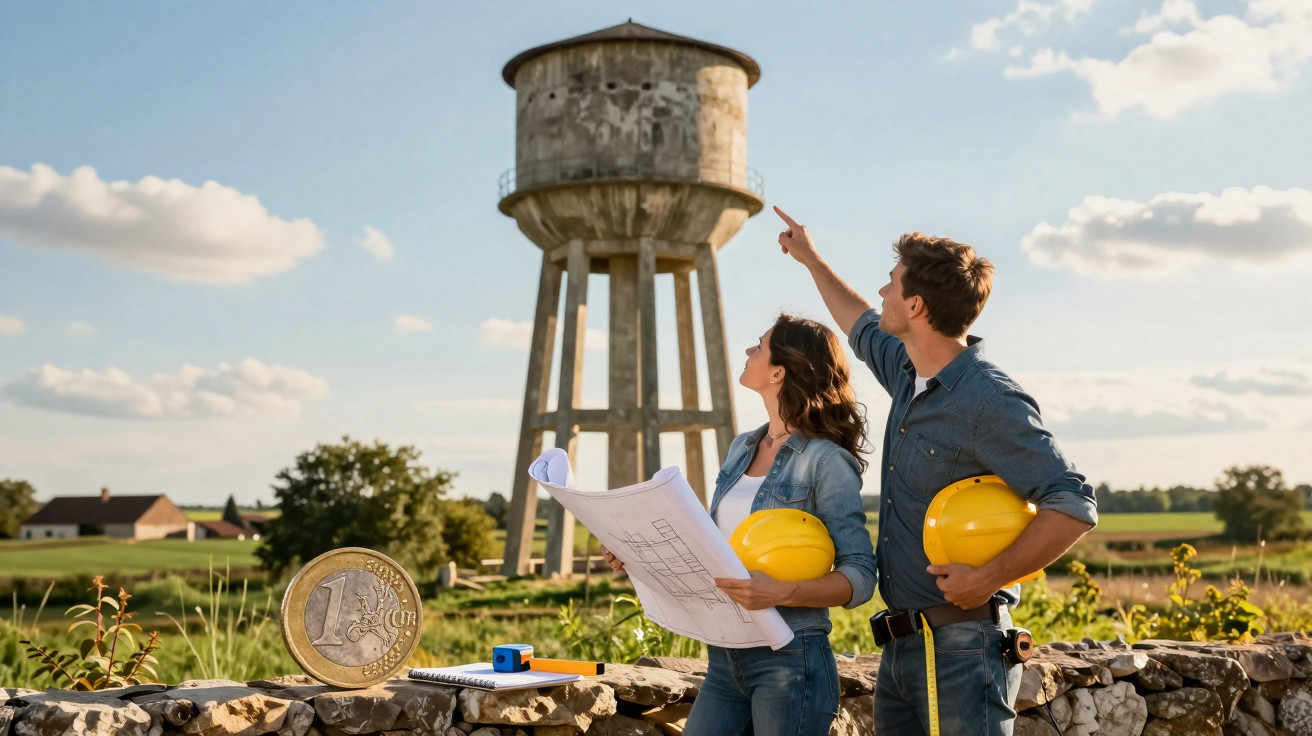
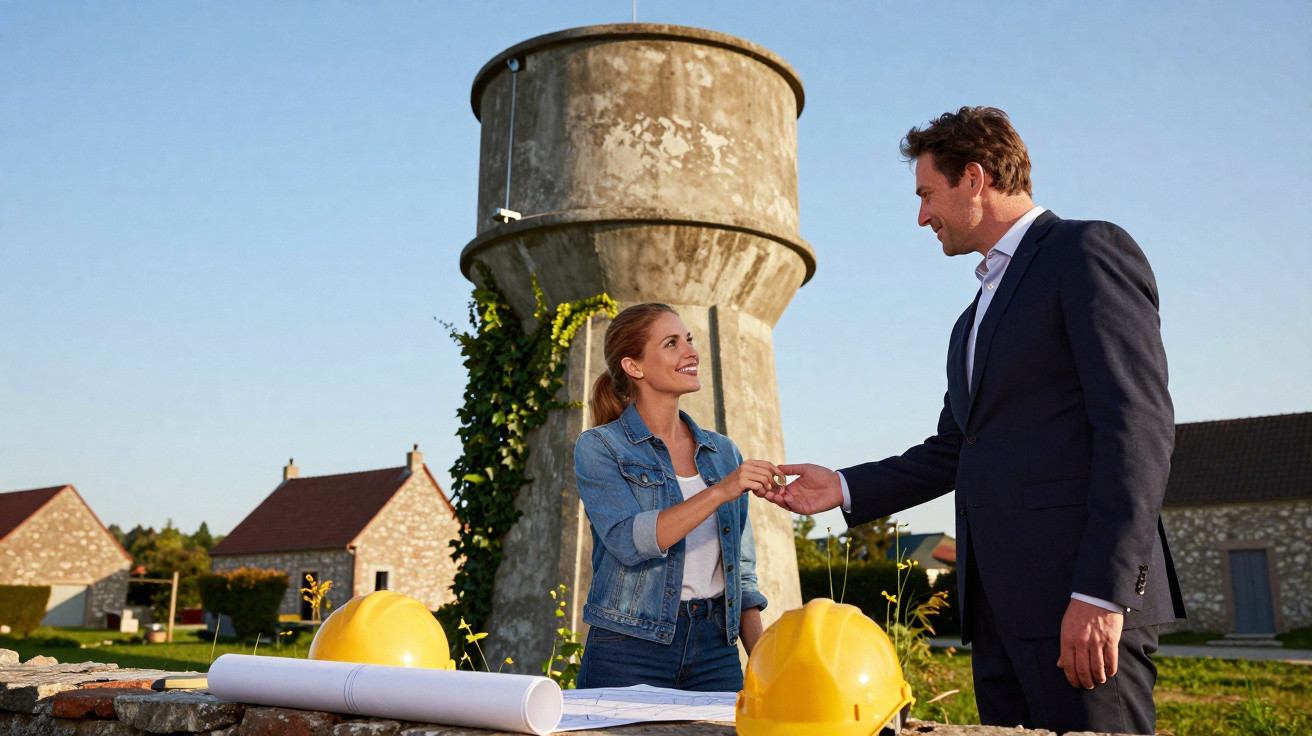
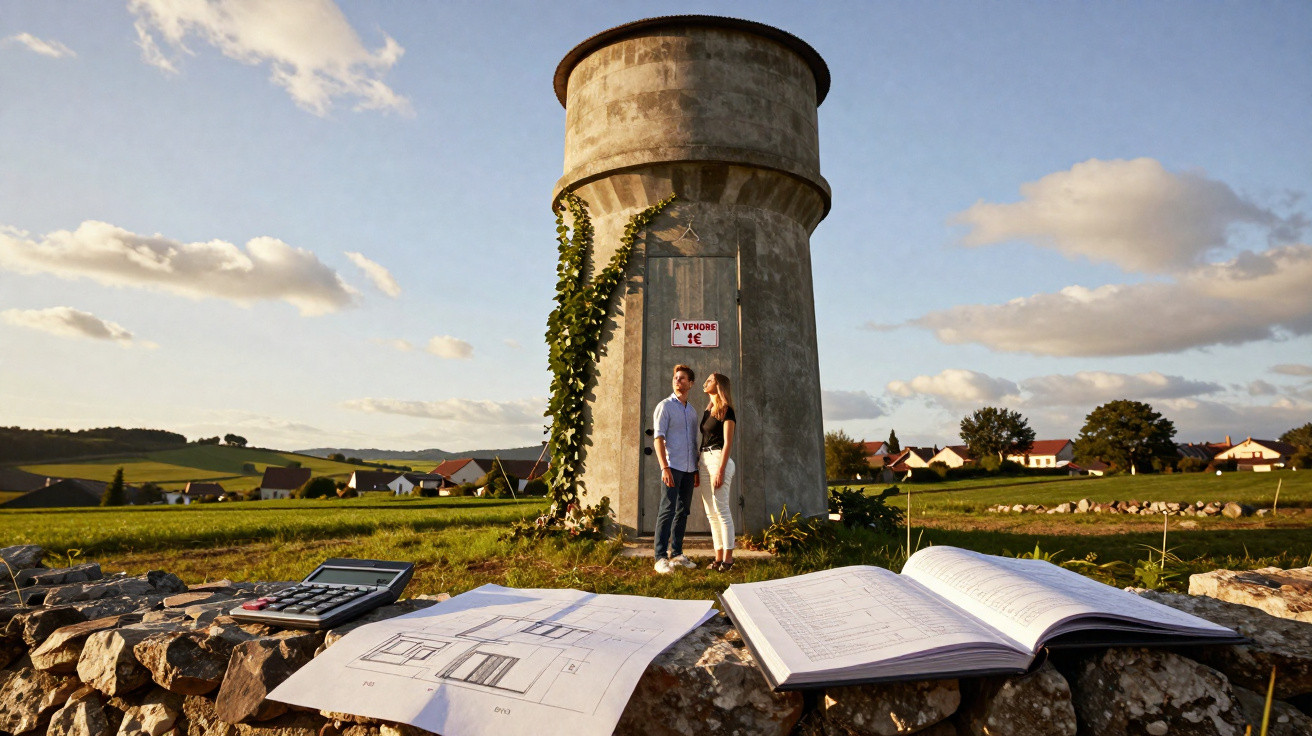
The small commune of La Chapelle-Baloue in the Creuse department is currently making headlines across France: the local authority is offering a decommissioned water tower for the symbolic price of €1. There are no notary fees or hidden charges, but there is one clear expectation: whoever buys it should give the towering grey concrete structure a new purpose.
A water tower for €1 – what is behind the offer?
At first, it sounds like a joke: an entire building for the price of a single coin. Yet the initiative is a serious one. The commune is upgrading its drinking-water network, meaning the old tower, which stands around 15 metres high, is no longer needed. Rather than paying dearly to demolish it, the authority wants to transfer it to someone with a worthwhile idea.
“A fully fledged structure, around 15 metres high, on a plot measuring 79 square metres – all for a symbolic euro.”
The sale includes both the whole plot and the tower standing on it. Constructed in the period after the Second World War, the building remains in its original condition. Buyers should not expect luxury, then: this is more of a raw conversion project than a finished property.
Why the commune is virtually giving away the water tower
The local authority faced a difficult choice. The water tower is no longer required, but it still forms part of the village landscape. Demolition was considered, along with an estimate of the cost. The result was that dismantling the structure would have cost roughly €100,000. For a small village, that is a sum that would be extremely difficult to afford.
“Rather than spending €100,000 on demolition, the commune would prefer to hand over the structure for €1 – and hopes someone from the public will come up with a smart idea.”
By selling it at a token price, the commune hopes to achieve two things at once. First, it avoids the substantial demolition bill. Second, it could give somebody the opportunity to turn the water tower into a project that benefits the village, whether privately, culturally or through tourism.
Who is most likely to secure the tower?
In principle, anyone interested can come forward. One key condition applies: the tower’s immediate neighbours will be given priority. They may wish to extend their own land or incorporate the structure into their existing property. However, the commune stresses that it is willing to consider every serious proposal.
The deadline is clearly set: applications can be submitted until 31 March. The deciding factor is not the price, as that has already been fixed, but the proposal itself. Anyone hoping to be selected should present a realistic plan explaining what the tower could become.
Potential new uses for the old water tower
What can actually be done with a redundant water tower? Examples from France and elsewhere show how imaginatively these structures can be repurposed:
- Conversion into a compact holiday home with panoramic views
- An artist’s studio or exhibition space
- A small viewing tower with an observation platform for visitors
- An office or workspace for remote workers who favour unusual locations
- A small museum exploring the history of the village and its water supply
Naturally, legal and construction restrictions mean that not every idea will be possible. Anyone intending to convert the tower into living accommodation or a public venue will need permissions and a robust conversion plan.
Hidden costs: renovation is unavoidable
The €1 purchase price is only the starting point. Prospective buyers must allow for significant investment before the building can be put to use. A structural assessment, safe access, electricity and water connections, and potentially insulation can each quickly push costs into five figures.
“The symbolic purchase price does not disguise the fact that the real commitment lies in renovation, technical work and permissions.”
According to current estimates, France has around 16,000 water towers. Only a very small proportion are genuinely suitable for conversion into homes or comparable projects. They commonly lack windows, access can be awkward, and although their structure is robust, it was never designed for comfortable living.
Work typically required for a water tower conversion
Anyone considering such a project should broadly expect to deal with the following areas:
| Area | Potential work involved |
|---|---|
| Structure and safety | Assessment by an engineer, possible reinforcement, railings and stairs |
| Access | A new entrance, secure stairs, and potentially a lift or external staircase |
| Interior conversion | Floors, insulation, intermediate levels and new window openings |
| Services | Electricity, water, drainage, heating or alternative energy supply |
| Permissions | Planning permission, fire-safety requirements and possible heritage protection |
These very obstacles are likely to explain the limited interest in La Chapelle-Baloue so far. The commune says that it has received at least one offer, but there has been no rush of applicants.
Why water towers continue to attract architects and DIY enthusiasts
Despite the high cost of conversion, structures like these hold a distinct appeal. They are highly visible, shape the landscape and carry clear associations with supply, engineering and infrastructure. Many people who buy a water tower value precisely this sense of character.
Several striking projects have attracted attention in recent years: water towers have been transformed into luxury lofts with 360-degree views, unusual holiday lets, or landmarks topped with glass extensions. For creative minds, the circular footprint offers an exciting design challenge, while also demanding unconventional layouts.
Opportunities and risks for buyers
Anyone considering a purchase, whether in France or elsewhere in the German-speaking world, should calculate the costs realistically. A €1 purchase price can rapidly turn into construction costs amounting to several hundred thousand euros. On the other hand, the result can be something truly distinctive: not a standard catalogue home, but an eye-catching one-off.
- Advantages: unusual architecture, considerable attention, potential tourism impact, comparatively affordable land
- Risks: unpredictable building costs, strict conditions, a limited resale market and demanding maintenance
For communes such as La Chapelle-Baloue, a successfully converted water tower could become a calling card. A small village that few people would otherwise know could suddenly appear in travel guides and social-media posts. That may bring visitors, and with them money for the area.
For overseas buyers, including those from Germany, further considerations apply: purchasing under an unfamiliar legal system, language barriers, and different building and planning rules. Anyone considering this step will need local partners, including architectural practices, tradespeople and, ideally, someone familiar with official procedures.
Water towers offer a compelling illustration of how ageing infrastructure can be transformed. Instead of demolition and rubble, the best outcome is a new piece of architecture with a history. The €1 offer in Creuse is therefore more than an unusual headline: it is an example of how small communes are trying to carry their past creatively into the future.






Comments
No comments yet. Be the first to comment!
Leave a Comment