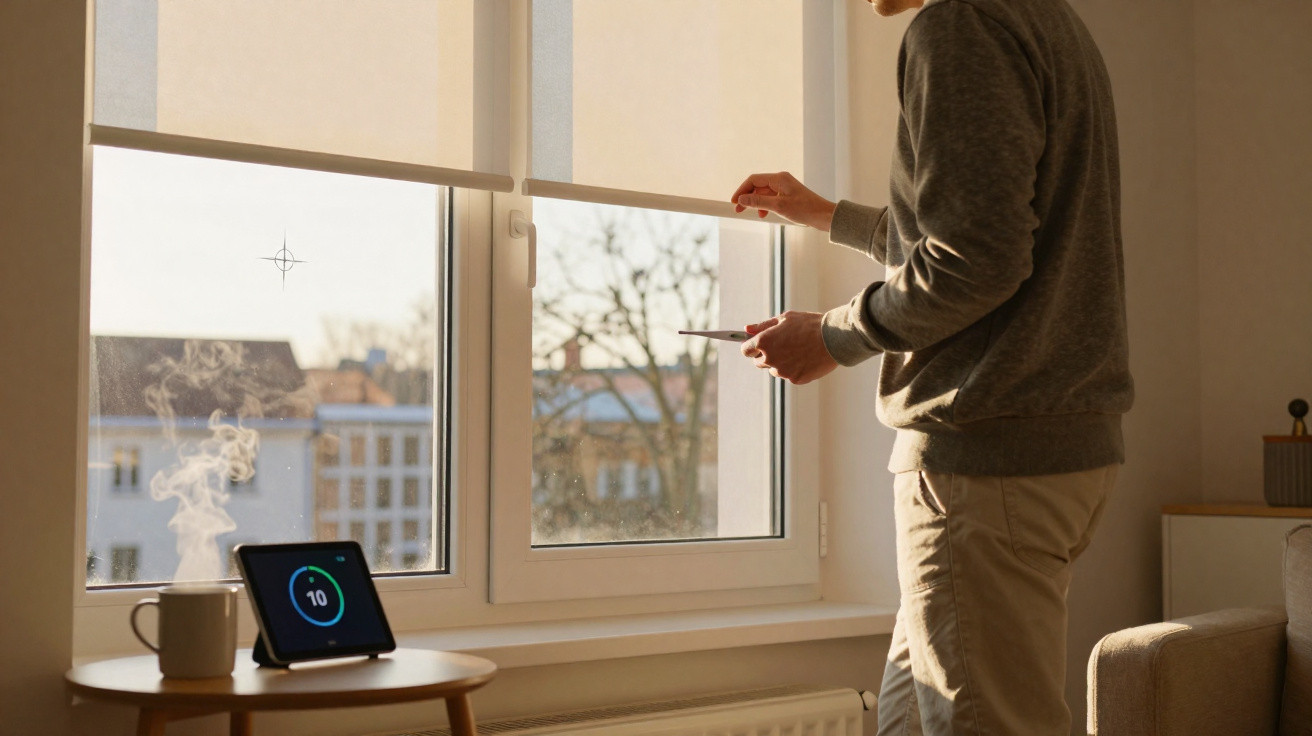
Many households automatically reach for the remote control or winding handle in March as soon as the clock approaches 18:00. The thinking is straightforward: seal off the windows, retain warmth and cut heating bills. Yet closing everything too early often means missing out on free solar energy – and it can even reduce your sense of wellbeing in the evening. Behind the seemingly simple question, “Should the roller shutters be closed already or left open?”, lies a fairly complex interaction between temperature, daylight and the condition of the building.
Why timing suddenly matters so much in March
From an energy perspective, windows are a weak point. In poorly insulated homes, 10 to 15 per cent of heating warmth can quickly be lost through glazed areas; where there are numerous large openings, this can rise to as much as a quarter in extreme cases. Closed roller shutters or hinged shutters create an additional thin insulating layer in front of the glass.
Closing roller shutters in the evening can substantially reduce heat loss through windows – but only if it is done at the right time.
Once darkness falls and outdoor temperatures drop, window panes cool down. You may then notice “cold walls” and a slight draught near the window, even where frames seal tightly. A lowered roller shutter creates an insulating pocket of air between the glazing and the shutter curtain, providing a small amount of thermal protection. This means less of a cold sensation, reduced air movement and a more stable indoor temperature.
Using this effect consistently means the thermostat generally needs turning up less often. Energy studies suggest that, with typical annual heating costs of around €1,200, potential savings range from €40 to €80; in older, poorly insulated homes with functioning roller shutters, they can reach €180. That may not sound dramatic, but it adds up over the years.
Closing roller shutters at 18:00 in March – sensible or simply habit?
Official energy-saving guidance clearly recommends closing roller shutters and curtains in the evening once the outdoor temperature is noticeably below the desired indoor temperature. In the depths of winter, this is often the case by around 17:00 or 18:00. Reaching for the strap early therefore makes perfect sense.
March changes the equation. Days become longer, the sun sits higher in the sky and daylight lasts significantly later. The month falls precisely between winter routines and the feeling of spring – and this is where many people make a mistake:
- Early evening at the start of the month: It is still cool outside, the sun sets relatively early and heating demand remains high.
- Later evening towards the end of the month: After the switch to summer time, strong sunshine can fall on south- and west-facing façades until after 19:00.
Anyone who rigidly darkens every room at 18:00 in both situations gives up free solar warmth on mild days. The sun could still noticeably warm the living room for another hour, allowing the heating to ease off. Instead, the boiler continues running unnecessarily and artificial lighting is switched on even though it is not properly dark outside.
The rule of thumb: the thermometer and sunshine matter more than the clock
The most reliable guide is simple: look outside and check the thermometer rather than following the time. In practical terms, ask yourself:
- Is the outdoor temperature clearly below your preferred room temperature – for example, 10 to 12°C outdoors and 19°C inside?
- Is direct sunlight no longer hitting the window?
- Does the glass already feel noticeably cool as you walk past it?
When all three points apply, it is worth lowering the roller shutters and drawing thick curtains. This creates the desired air pocket, the glass radiates less cold into the room and the temperature can be maintained with less heating energy. If you also lower the room temperature by half a degree in the evening, energy experts say the saving is noticeable: every 1°C reduction on the thermostat saves around 7 to 8 per cent of heating energy.
Anyone who shields their living space more effectively from the night-time cold can often comfortably accept 0.5 to 1°C less – without feeling chilly.
North side, south-facing façade or loft: why window position changes everything
The best time to close roller shutters varies from one window to another and depends chiefly on its orientation.
North- and east-facing windows: it can get dark earlier here
North- and east-facing windows receive little solar warmth in March. For these windows, heat retention is clearly more important than “light and atmosphere”. In many locations, it makes sense to close shutters on these sides fairly consistently at around 17:30 to 18:00, regardless of whether it is the beginning or end of the month.
Older homes with single glazing or very old double glazing particularly benefit from roller shutters being closed early on these cooler façades. Acting consistently here makes a noticeable difference to how the rooms need to be heated.
South- and west-facing windows: use the free heating for as long as possible
South- and west-facing windows are very different. In March, they are the real sources of energy. Sunlight often provides perceptible warming until 18:30 or 19:00, sometimes even later – particularly after the clocks change.
Closing off these windows at 18:00 cuts you off from this free heat input. The result is:
- The room cools down more quickly and the heating comes on sooner.
- Artificial lights are used unnecessarily early.
- The perceived atmosphere indoors shifts back into “winter mode” even though it is spring outside.
For these windows, it is worth waiting to close the roller shutters until the sun has genuinely disappeared and is no longer warming the pane. In many cases, that point is closer to 18:30 or 19:00, or later still.
Modern technology: automation instead of instinct
Motorised roller shutters with timers or smart-home controls can be adjusted specifically for the changing seasons. Anyone willing to spend a little time on the settings can save a separate schedule for each room. A typical example is:
| Period | North-/east-facing windows | South-/west-facing windows |
|---|---|---|
| Deep winter | approx. 17:00–17:30 | approx. 17:30–18:00 |
| March (start) | approx. 17:30–18:00 | approx. 18:00–18:30 |
| March (end) | approx. 18:00 | after sunset, often 18:30–19:00 |
Adding an outdoor temperature or light sensor allows even more precise control. The roller shutters then do not close blindly according to the time, but respond to light levels and the temperature difference between indoors and outdoors.
Reducing heating costs without overthinking it
Many people feel torn in March: high energy prices encourage saving, while longer days create a desire for more light and a feeling of spring. A few practical guidelines can make daily decisions easier:
- Living room with south- or west-facing windows: Close roller shutters only once the sun has gone and it genuinely feels like evening.
- Bedroom: Here, atmosphere matters less than quietness and insulation. Closing shutters early is often sensible, especially on cool days.
- Kitchen and rarely used rooms: It is perfectly reasonable to lower the roller shutters earlier if you hardly use these rooms in the evening.
This creates a personalised balance of comfort and savings instead of a rigid “18:00 rule” that rarely fits every situation.
What many people underestimate: light, mood and everyday life
For many people, March is the first month in which winter finally starts to retreat. Darkening everything at 18:00 takes away some of that feeling. Studies show that daylight and an unobstructed view outside can reduce perceived stress and lift mood. Especially after work, half an hour of remaining natural light often feels better than any energy-saving bulb.
There can therefore be a double benefit to lowering roller shutters a little later: with the right timing, you save heating costs while also supporting your wellbeing – especially on the first mild evenings.
Practical checks at home
Anyone who wants to tackle the issue actively can carry out a small test on a typical day in March:
- Compare the temperature directly beside the window with that in the middle of the room several times between 17:00 and 20:00.
- Note when the sun actually disappears and how much the room warms up before then.
- On one evening, close the roller shutters at 18:00; on another, wait until darkness falls – then observe the difference in heating behaviour.
After only a few days, a clear picture should emerge of the timing that makes sense for your particular home. Rather than relying on rigid prohibitions or blanket rules, this produces an approach suited to your building, your routine and your own comfort.















Comments
No comments yet. Be the first to comment!
Leave a Comment