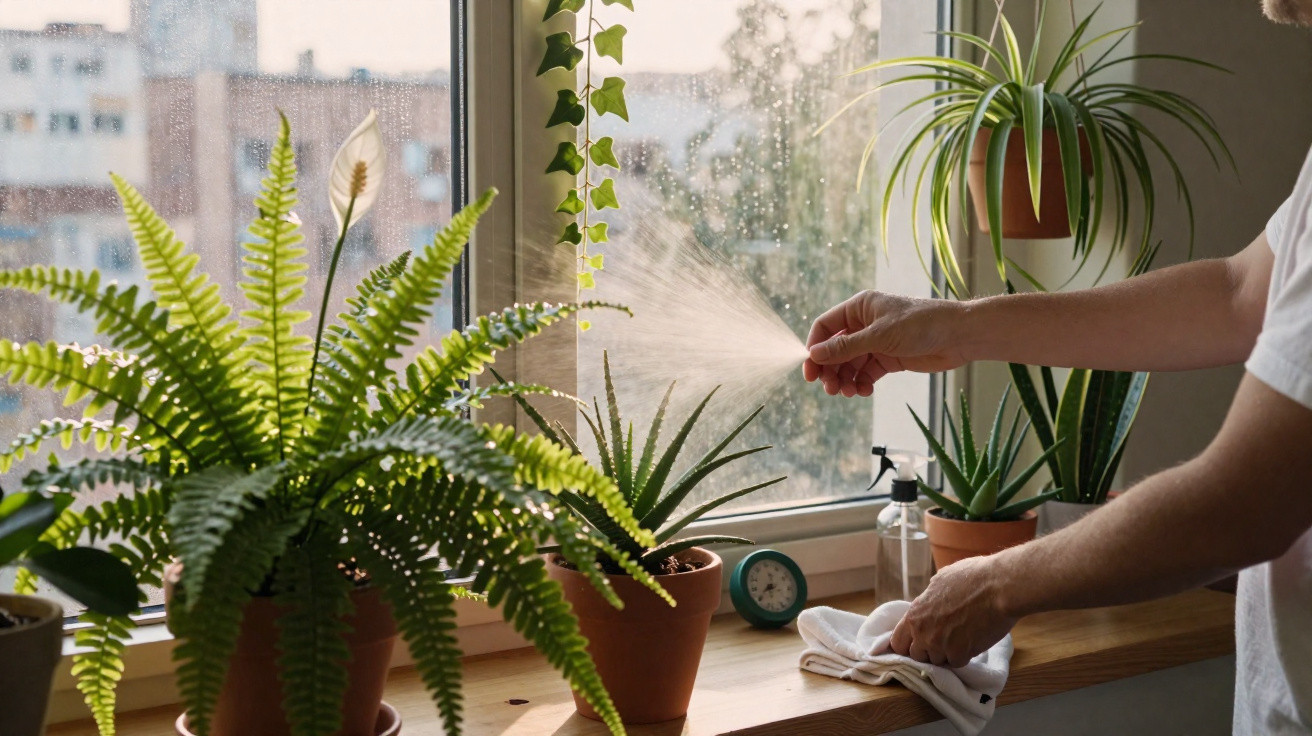
In many homes, excessive humidity first becomes apparent at the windows. Condensation runs down the glass, paint begins to peel and mould settles in the corners. Alongside ventilation and heating, certain houseplants on the windowsill can noticeably reduce the damp zone around the panes.
Why windows are the first to show the problem
Windows are the coldest surfaces in a room. Warm indoor air holds a great deal of moisture from breathing, showering, cooking and drying laundry. When this damp air meets cold glass, condensation forms. If it remains there every day, window frames, silicone seals and wallpaper stay permanently damp, creating ideal conditions for mould fungi.
Specialists recommend relative humidity of between 40 and 60 per cent in living spaces. A simple hygrometer can reveal within a few days whether your home stays within this range. Higher readings quickly result in:
- misted-up or dripping window panes
- a musty smell, particularly in the morning or after showering
- small black spots in corners and on silicone seals
- flaking paint and crumbling seals
“When panes regularly ‘sweat’, the issue is usually not the window but the air: there is too much moisture in the room.”
How houseplants help at damp windows
Some houseplants use high humidity to support their growth. They absorb water vapour from the air through their leaves and roots, then release it again gradually. This creates a natural buffer: peak humidity levels are softened, while the air around the window becomes slightly drier and more stable.
Research into indoor air, including the often-cited NASA study of plants in closed systems, also suggests that certain species can filter pollutants from the air. This is particularly useful in kitchens and living rooms, where cooking fumes, cleaning products or tobacco smoke can place an extra burden on air quality.
Even so, there is a clear limit: plants cannot replace the basic measures needed for a dry home. The following remain important:
- air rooms fully for about ten minutes twice a day, with windows opened wide
- keep radiators unobstructed so air can circulate
- use and clean a working bathroom extractor fan
- have visible water damage or leaks repaired promptly
Poor plant care can even make the issue worse. Waterlogged pots, constantly wet saucers or mouldy compost release additional spores into the room.
The six best plants for damp windowsills
1. Boston fern for humid rooms
The Boston fern, botanically known as Nephrolepis exaltata, is a classic choice for rooms with high humidity. It prefers bright but indirect light and is especially well suited to bathroom and kitchen windows.
- thrives in high humidity
- copes well with steam from showers and hobs
- its dense foliage makes the air feel noticeably “softer”
On a bathroom windowsill, it works almost like a small green air filter. Crucially, it must never be allowed to dry out completely, but it does need a pot with good drainage to prevent root rot.
2. Peace lily as a humidity regulator
The peace lily, botanically Spathiphyllum, absorbs plenty of moisture through its broad leaves and releases it more slowly. Many households place it by a bedroom or living-room window, where it can also bind pollutants.
“The peace lily is something of an all-purpose plant for stuffy, slightly damp rooms – it thrives in exactly the climate that people often find uncomfortable.”
It favours partially shaded positions away from intense midday sun. Keep the compost lightly moist, rather than soaking wet. Pet owners should take care: its leaves and flowers are toxic to cats and dogs.
3. English ivy for mould marks around the frame
English ivy grows well in a pot or as a trailing plant close to a window. It likes slightly cool air that is not overly dry, which makes it suitable for kitchen windows where condensation often develops.
Studies have shown that ivy can reduce mould spores and certain chemical substances in the air. This gives it a double benefit in a damp window area: it uses the moisture already present and also absorbs part of the associated pollution.
4. Spider plant: undemanding and hardy at a living-room window
The spider plant (Chlorophytum comosum) is regarded as one of the easiest houseplants to care for. It enjoys bright, indirect light, making it an excellent choice for a living-room or children’s bedroom windowsill.
- tolerates fluctuations in humidity
- can reduce pollutants released by furniture and carpets
- takes up little room on the windowsill
Allow the compost to dry slightly between waterings. Overwatering risks mouldy compost – precisely what should be avoided in a damp window area.
5. Aloe vera for bright, cooler windows
Aloe vera needs plenty of light and handles temperature changes well. It is therefore suited to very bright windowsills, such as those in poorly insulated older homes or conservatories that can become very cold overnight.
As a succulent, it stores water in its fleshy leaves. It consequently requires far less watering than conventional houseplants. In slightly damp rooms, it has a stabilising effect because it does not add extra moisture to the air, while coping well with fluctuating temperatures.
6. Snake plant: the low-maintenance windowsill resident
The snake plant, also known as mother-in-law’s tongue, is almost indestructible. It tolerates dry air, slight draughts and the occasional missed watering. By a bright window that is not too cold, it can help keep the indoor climate more consistent.
“Anyone wanting just one plant for difficult positions directly by a window will rarely go wrong with a snake plant.”
It needs very little water, making it a good option for households particularly concerned about mould and keen to avoid watering mistakes.
How to position and care for plants at damp windows
To allow the six plants to make the most of their strengths, positioning is particularly important:
- do not place pots directly on ice-cold stone; use a wooden or cork mat instead
- avoid pushing plants too close to wet glass, as leaves and roots may rot
- empty saucers after watering so water does not remain standing permanently
- dry the windowsill regularly if condensation appears in the morning
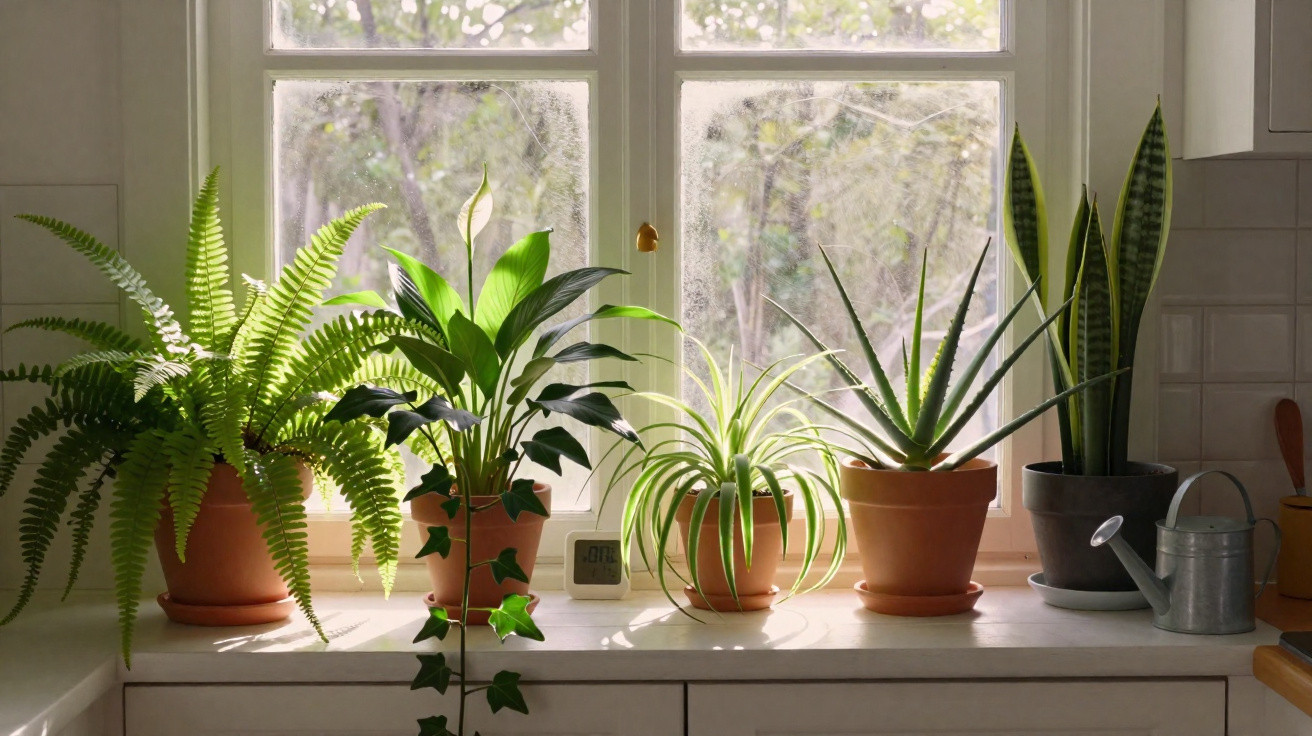
Combining several plants distributes their effects around the home more effectively. For example, place a Boston fern in the bathroom, a peace lily in the bedroom, a spider plant and snake plant in the living room, and aloe vera at a very bright kitchen window. In this way, moisture is managed where it is produced.
When mould is already present: limits and risks
If mould growth is already clearly visible, plants alone are no longer enough. The affected areas must then be removed mechanically or, if necessary, professionally remedied. If fungal growth remains, it continuously releases spores into the air, which is particularly harmful for people with allergies or asthma.
There is another consideration: every pot brings compost into the room, and compost itself can become mouldy. People who are very sensitive should choose high-quality, more mineral-based growing media and inspect the surface regularly. A light white coating on the compost often indicates excessive watering.
How to reduce everyday sources of moisture
Alongside plants, many small everyday choices can help prevent a damp windowsill. Typical sources include:
- drying laundry indoors
- long, very hot showers without ventilating immediately afterwards
- cooking without an extractor hood or open window
- blocked radiators and covered ventilation grilles
Making conscious changes in these areas makes the plants’ “work” easier. A brief burst of ventilation after showering, lids on saucepans and drying laundry in a drying room all reduce humidity before it can settle on the glass.
For households interested in technology, a digital hygrometer with a memory function is worthwhile. It displays not only the current humidity level but also peak readings from recent hours. This makes it easy to identify the times of day when windows suffer most and when houseplants, ventilation and heating work together most effectively.
















Comments
No comments yet. Be the first to comment!
Leave a Comment