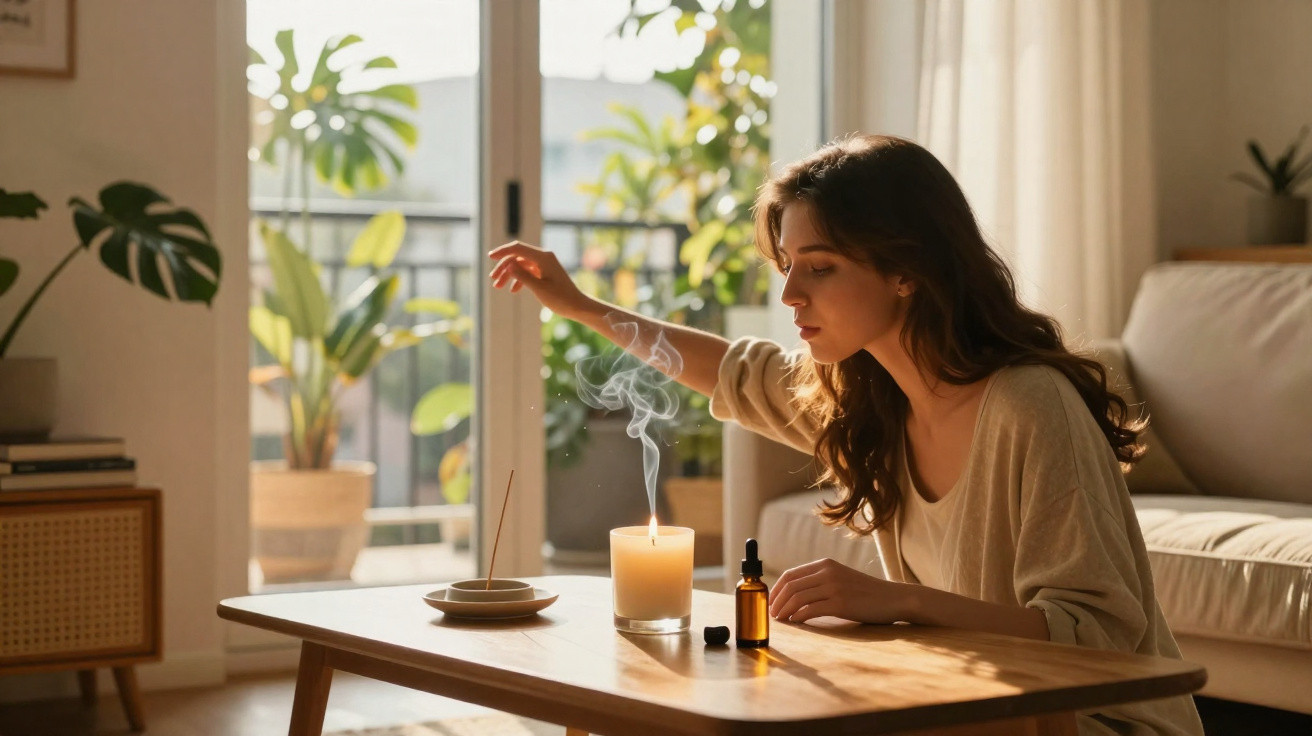
Many households routinely use scented candles, room fragrances, burning paper or incense sticks to make their home feel fresher, warmer and “cleaner”. These products promise nature, purity and wellbeing. Yet few people realise that these comforting rituals can pollute indoor air more heavily than a busy road just outside the door.
Why we enhance our homes with fragrances
A scented candle in a glass jar, sticks in a holder or a few drops of essential oil in a diffuser have become as much a part of many interiors as the sofa. Scents are intended to disguise cooking odours, remove cigarette smoke or simply create a particular mood: romantic, hygge, “zen” or reminiscent of a seaside holiday.
Packaging deliberately appeals to these associations. Terms such as “natural”, “inspiring” and “wellbeing” are made highly visible. As a result, many buyers assume these are harmless everyday items - almost as healthy as a walk in the woods. That is precisely where the misunderstanding begins.
What candles, incense products and fragrance oils really contain
Looking at the usual ingredients reveals just how far this impression can be from reality:
- Scented candles: Often made from paraffin, a petroleum-derived product, combined with synthetic fragrance compounds and colourants.
- Burning paper: Usually impregnated with resins such as benzoin and blended with solvents so that it smoulders evenly.
- Incense sticks and incense cones: A combination of resins, woods, plant powders, binding agents and, at times, additives intended to produce a “clean” burn.
- Essential oils: Highly concentrated plant essences; natural, but also very potent and chemically highly active.
All of these products are designed to smell pleasant while smouldering or evaporating as slowly as possible. However, that process also produces smoke, vapours and tiny particles which spread through the room - and end up in the respiratory tract.
The cosier the scented haze, the denser the mix of pollutants in the air often becomes.
What enters the air every time you light one
As soon as a wick burns or an incense stick smoulders, several processes take place at once: wax melts and burns, fragrance substances heat up, and colours and resins break down. This releases so-called volatile organic compounds (VOCs), formaldehyde, benzene, toluene and large quantities of particulate matter.
In poorly ventilated rooms, these substances can quickly reach high concentrations. Measurements show that a single scented candle burning for two hours in a medium-sized living room can push levels of certain pollutants well beyond recommended guidelines.
The hidden risk of particulate matter
Smoke from incense sticks and candles contains extremely small particles that can penetrate deep into the lungs. They can remain airborne for a long time, particularly when windows stay shut. Anyone using several candles or burning incense sticks at the same time is, quite literally, creating their own miniature smog cloud in the living room.
Who is particularly at risk from fragrance rituals
At first, many people notice very little. A slight feeling of pressure in the head or mildly irritated eyes can easily be dismissed as tiredness or screen-related strain. Over time, however, polluted indoor air can leave its mark. The following groups are especially sensitive:
- Children: Their lungs are still developing, and they breathe more air relative to their body size than adults.
- People with asthma or allergies: Fragrances and particles may trigger attacks or make existing symptoms worse.
- Older people and those with chronic illnesses: Their bodies have fewer reserves for compensating for pollutants.
- Pets: Birds, cats and small animals can sometimes react strongly to essential oils and smoke.
Anyone lighting scented candles every evening may be creating an ongoing exposure for sensitive people in the household - without realising it.
Essential oils: natural, but not automatically harmless
Many people regard essential oils as the “healthy” alternative. The idea is appealing: plant power rather than chemicals. Yet these oils are extremely concentrated. Just a few drops can readily represent an entire handful of plant material.
When heated in an oil burner or fragrance lamp, their molecules can change. At high doses, some oils irritate mucous membranes, cause headaches or worsen asthma. Many oils, including certain eucalyptus and peppermint varieties, are considered unsuitable for babies, young children, pregnant women and pets.
Common everyday mistakes
- A fragrance device runs continuously for hours in a closed bedroom.
- Different oils are mixed indiscriminately without considering whether they are tolerated.
- Strong oils are used close to children or animals.
- Tealight fragrance lamps overheat the oils and alter their composition.
How to assess your own fragrance habits critically
A useful first step is to take an honest look at everyday routines. How often are candles actually lit? How long do incense sticks remain burning? Are rooms aired at the same time, or is everything kept closed so that “the scent stays in”?
Typical warning signs after an evening with fragrances include:
- a scratchy throat or dry mucous membranes
- a heavy head or mild nausea
- stinging eyes
- increased coughing in children or people with asthma
If these symptoms occur regularly, it may be worth making a clear change: go without fragrance products entirely for a few days and ventilate daily instead. If the symptoms improve, the supposed “wellbeing ritual” may be the cause.
Practical alternatives for cleaner air and a subtle scent
Nobody needs to ban every source of fragrance completely. However, a few changes can noticeably reduce exposure.
Gentler options for candles and incense
- Plant wax instead of paraffin: Choose candles made from soya, rapeseed or beeswax, without colourants and without a strong fragrance.
- Limit burning time: Burn candles for no more than one hour at a time, then air the room thoroughly.
- Use incense sticks infrequently: Treat them as an occasional ritual rather than a daily source of room fragrance.
- Keep decoration clear: Avoid soot directly beneath shelves or cupboards, and leave sufficient space from walls.
Gentle ways to freshen the air
- Ventilate fully: Open all windows wide two to three times a day; five to ten minutes is usually enough.
- Wash textiles rather than masking smells: Clean curtains, sofa covers and cushions regularly instead of covering odours with sprays.
- Natural sources of fragrance: Place bowls of citrus peel, lavender sachets, dried herbs or coffee in small bowls around the home.
The most effective “room fragrance” remains fresh air - it costs nothing and harms nobody.
What many people do not realise: air quality adds up
Scented candles are only one part of the overall picture. Varnished furniture, new carpets, cleaning products, tobacco smoke and cooking fumes all mix together in everyday life. If several fragrance sources are added every day, the total exposure increases significantly.
Anyone who genuinely wants to improve the quality of their home should therefore consider more than the single tealight lit in the evening and look at the whole package. A few simple questions can help provide direction:
- How often does it smell “chemical” when I enter the home?
- Are there rooms that are rarely or never aired, such as a storage cupboard or guest toilet?
- Who lives here - are there particularly sensitive people, children or animals?
What a healthier fragrance routine can look like
A realistic approach is to cut back consciously rather than give everything up completely. Light one candle for a special occasion instead of five every evening. Use incense sticks only rarely and in well-ventilated rooms. Run a diffuser for only a short time - and not in a child’s bedroom.
It is also worth questioning expectations. Does a home need to smell permanently of vanilla, “Cotton Fresh” or sandalwood? Or can a home simply smell neutral, perhaps of wood, soap or freshly laundered clothes?
Anyone who answers these questions honestly and changes small habits can reduce exposure for themselves and everyone else in the household - without sacrificing atmosphere. A single beeswax candle flickering beside an open window may ultimately create more cosiness than a whole pile of heavily perfumed fragrance products.













Comments
No comments yet. Be the first to comment!
Leave a Comment