Practical furniture, fair prices and unfussy design: few home-furnishing retailers have shaped homes in Germany and France as much as Ikea. Its French subsidiary has now revealed which products most frequently make it through the tills there. Familiar favourites such as the Billy shelving system are included – but, among the shelves and wardrobes, there is also an armchair that many people have seriously underestimated.
How Ikea meets everyday needs in smaller homes
Ikea France's analysis makes one point clear: furniture with more than one use sells best. Particularly in cities where rents are high, homes tend to be smaller and every square metre matters. Shoppers therefore look for pieces that can adapt to changing circumstances rather than performing one fixed function.
Multifunctional and modular furniture that can be expanded dominates Ikea's bestseller list – it simply grows with everyday life.
Whether for a living room, a home-working corner or a children's bedroom that is constantly changing, systems that can be recombined, extended or altered are at the top of shopping lists. Many of the items Ikea has named as current bestsellers share precisely this quality – and have been in the range for decades.
Billy: the shelving unit found in almost every home
A list of Ikea bestsellers without Billy would be difficult to imagine. This straightforward bookcase with its understated frame has been one of the company's enduring favourites for decades. Its success does not rest on striking design, but on an unobtrusive yet highly practical combination:
- a slim, restrained appearance
- a comparatively low price
- units in several widths and heights
- the option to extend it with additional elements
In many households, it starts with a narrow shelving unit in the living room. A second unit may follow later, then a top extension. Some people build a complete wall solution from several elements, while others use Billy in a study or even a child's bedroom. As its design remains so simple, the shelf never appears out of place in any of these rooms.
Ikea regularly refreshes the system with new colours and finishes. In France, a new blue version is currently receiving particular attention. Yet its core principle remains unchanged: a basic bookcase that can be extended in every direction, growing alongside an ever-larger pile of books.
Kallax: the shelving unit that does more than hold books
Kallax, previously known as Expedit, takes second place among France's sales hits. This square shelving unit has long become something of an everyday building block. The idea behind it is simple: cube-shaped compartments that can be freely arranged, whether as a long sideboard, a tall bookcase or a square block.
Its value is especially apparent in smaller homes. The unit can:
- stand conventionally against a wall
- divide a room when positioned in the middle
- be placed horizontally and used as a bench
- be wall-mounted to keep floor space clear
In the French article, the editorial team describes how one music enthusiast uses the unit to store a large vinyl collection – the compartments are almost perfectly sized for records. Similar repurposing appears time and again, from toy storage to a makeshift home office. This very sense of “do what you want with it” is what makes Kallax so popular.
Pax: the modular wardrobe system
Third place goes to another classic: the Pax wardrobe range. This modular wardrobe has been part of the collection since the 1970s and has continued to evolve ever since. The key to its success is that nobody has to buy the wardrobe exactly as it appears in the catalogue.
Buyers can select:
- the width and height of the frames
- the type of doors, either hinged or sliding
- interior fittings including rails, drawers, baskets and shelves
- fronts in different colours and finishes
In homes where every centimetre counts, Pax can be adapted relatively precisely to sloping ceilings, alcoves and room corners. Interior designers have stressed for years how important systems like these are for maximising storage without overwhelming an entire room. This is where Pax excels, as it is fitted out internally according to individual needs rather than merely looking attractive.
The unexpected star: the Poäng armchair moves up the rankings
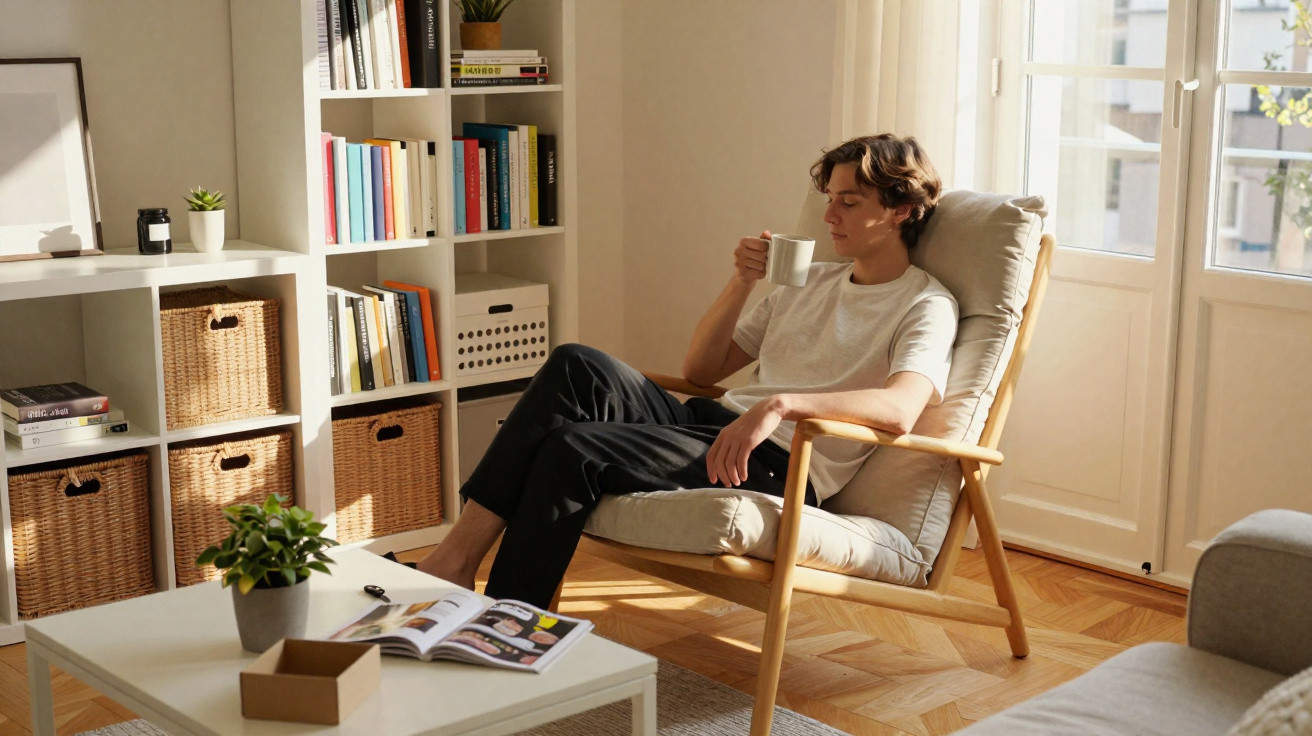
Fourth place brings a result that genuinely causes a moment of surprise among Ikea followers. Instead of one of the famous chests of drawers or a bed, an armchair ranks remarkably highly: Poäng. Many people recognise this model, with its curved wooden frame and slim padded cushion, from shared flats, student homes or cosy reading corners.
The Poäng armchair, which has remained almost unchanged in the range since the 1970s, is among Ikea's best-selling products in France – and outsells well-known chests of drawers.
At first glance, Poäng appears almost unremarkable, but it proves its worth in daily use. Its gently springing frame provides more comfort than its pared-back design suggests. Many owners place it next to their bookcase or by a window, where it offers a quiet counterpoint to the sofa.
The armchair is available in several wood finishes, alongside numerous covers ranging from plain to brightly patterned. When moving home, people often change only the cover rather than replacing the entire armchair. As a result, this piece of furniture stays in use for a surprisingly long time, even when the interior style changes completely.
Lack: the budget coffee table for a first home
Another long-standing favourite occupies fifth position: the Lack coffee table. This simple tabletop on four legs has been a fixture for years in student shared houses, first homes together and often guest rooms as well. Its greatest advantage is obvious: it costs considerably less than many competing products.
However, its popularity cannot be explained by price alone. The table avoids every unnecessary flourish and is so pared back that it is almost invisible. That means it works in nearly any living room, whether the style is Scandinavian, colourful boho décor or a more minimalist loft. Anyone furnishing on a very limited budget gets a functional focal point for the room in a single item of furniture.
Why these five Ikea furniture ranges are so successful
A clear common thread emerges from Ikea France's bestseller list: every item mentioned is relatively simple, affordable and conceived as modular furniture. They work across very different stages of life – from a first shared room to a family home – and can be rearranged when a separation, job change or growing family requires it.
This adaptability is becoming increasingly important at a time of limited living space. Rather than continually buying new furniture, many people extend existing systems or use them differently. A Billy bookcase becomes a crockery wall, Kallax becomes a filing unit, and Pax becomes a pantry in a storage alcove. The Poäng armchair can move from the living room to a child's bedroom when a cosy reading corner is needed there.
What UK households can take from this
Although these figures come from France, much can also be applied to the UK market. Housing conditions are very similar in many urban areas: high rents, shrinking floorplans and a sharp rise in home working. Furniture that fulfils more than one purpose is therefore becoming significantly more important.
Anyone planning their home from scratch can use three straightforward questions as a guide:
- Can this furniture be extended or reconfigured later?
- Can I reuse it in a different room after moving home?
- Is there an accessory that allows me to change its purpose?
The Ikea bestsellers mentioned here show that this type of furniture that grows with its owner is less expensive over the long term. Rather than replacing an entire interior, an additional module, a new door or a different cover is often enough to update the style or create more storage.
There is also an interesting psychological effect: choosing a flexible system reduces the pressure of planning. A home does not have to look perfect immediately. Billy, Kallax, Pax, Poäng and Lack can be added to gradually. Over time, this creates a home suited to current needs – and one that can later change completely again without having to start from scratch each time.












Comments
No comments yet. Be the first to comment!
Leave a Comment