
It usually starts innocently enough: you are sitting on the sofa in the evening, phone in hand, with the room softly dimmed. The living-room lamp above you is on, casting a warm glow and creating a cosy mood. Then you happen to look up and get a small shock: a thick grey layer of dust on the lampshade, tiny fluff around the fitting, even cobwebs gleaming in the light. For a moment, you wonder: how long have I been failing to notice this? And, more importantly, when did I last clean it?
We wipe tables, vacuum carpets and tidy the kitchen. Lamps, however, often remain unnoticed. Even though they hang right in the middle of the room. Even though we switch them on every day. This is where the strange story of the dust above our heads that we simply choose to ignore begins.
Why dust on lamps escapes our attention
When we enter a room, our brains instinctively scan what is at eye level. Sofa fine, table fine, floor reasonably clean - that will do. Lamps are too high up, too bright or too inconspicuous to hold our attention for long. Their brightness dazzles us, so we automatically look away. Dust occupies this blind spot, almost unseen. Let us be honest: nobody wipes down their ceiling light every other day simply as part of a routine.
Most people only spot dust on lamps when something changes. When moving house, for instance, once the furniture has gone and the light hangs exposed in the room. When replacing bulbs with LED bulbs, because the ladder is already out. Or when the mother-in-law visits, and every minor imperfection suddenly seems twice as obvious. Only when we get closer do we realise how much has collected up there.
Psychologists refer to this as “selective perception”: we mainly notice what everyday life has trained us to see. Lamps belong to the room's infrastructure rather than being decoration in the narrow sense. They are there so that we can see everything else. That is precisely what makes them invisible to us. Dust on the coffee table is irritating because we want to put down a mug. Dust on a lamp does not interfere with anything we do directly. The brain filters it out as though it were background noise. This makes dust on lamps the perfect grey area between “actually rather disgusting” and “well, it is still alright for now”.
The quiet risk of dusty lamps - and how to tackle it
Ignoring lamps for years invites more than a few harmless dust particles. The coating can noticeably reduce brightness, by up to 20 per cent on some models. Eventually, you notice it in small kitchens or dark hallways: you keep choosing a brighter bulb rather than picking up a cloth once. It becomes even less pleasant when grease from kitchen air is involved. The dust then sticks firmly, forms a grimy layer and can cause light fittings to yellow more quickly.
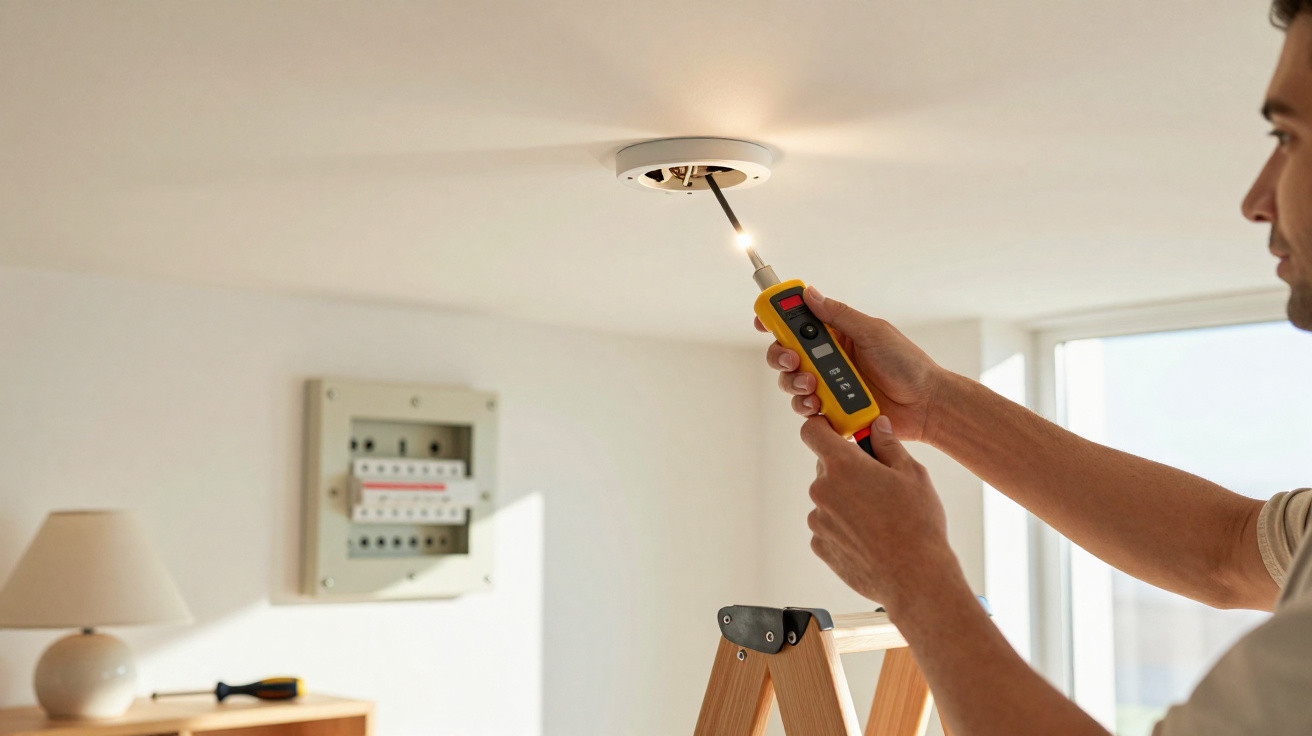
A simple schedule can prevent a great deal: wipe visible lampshades with a dry microfibre cloth once a month, then clean them more thoroughly once a quarter. Switch off the power, allow the lamp to cool, and then clean it without rushing. Clean glass with lukewarm water and a drop of washing-up liquid; carefully vacuum fabric shades or use a lint roller on them. Anyone who makes this a small routine will quickly notice just how much a clean cone of light changes the atmosphere in a room.
The most common mistake is wiping in a hurry while the lamp is still warm. Not only can this smear the dirt around, but it can also create hairline cracks in glass. Mistake number two is using harsh cleaning products that cloud plastic or dull metal. There is an emotional aspect too. Many people put this task off because it reminds them of all the little jobs at home that they have not managed to do. It feels like one more item on an endless to-do list. A kinder perspective helps here: you do not have to make everything perfect. Small, quick cleaning moments are enough.
“Cleaning lamps is like taking an inner inventory,” says a professional domestic cleaner from Berlin. “You suddenly look where you normally do not look - in the room and in your mind.”
If you are looking for a way to start, use these three tiny steps as a guide:
- Wipe one lamp each week rather than tackling the entire home at once.
- Establish a fixed mini-ritual: Sunday-morning coffee, followed by two minutes checking the lamps.
- Keep a cloth handy whenever you change a bulb, and clean the lamp at the same time.
What dust on lamps reveals about our lives
Dust on lamps has a strangely intimate quality. It reveals how long we have lived somewhere, how often we look up, and where daily life has made us blind. In freshly painted homes, it stands out immediately; in long-occupied rooms, it merges into habit. When visitors are coming, we quickly wipe visible surfaces, clear piles of shoes from the hallway and hide the laundry. The lamps are left out, as though they do not belong to our “public” image. Perhaps dust up there does not bother us because it belongs more to our private, unfiltered lives.
Anyone who deliberately walks through their home looking only at lamps will often have a small revelation. Suddenly, you see not just the dust but also how differently the light works. A clean glass shade makes colours appear clearer, while a dust-free fabric shade softens the light. Sometimes the room seems to become a few years younger. No fresh coat of paint, no new furniture - just clearer light. The effort is so small that you may almost wonder why you ignored it for so long.
Perhaps there is a quiet lesson in that. We often chase major changes: a new kitchen, a new sofa, more decoration. The small, overlooked places - such as the edge of a ceiling lamp - represent everything that could already make our lives brighter without much investment. A cloth, a few minutes and a deliberate glance upwards. The dust disappears, but something else remains: that small, quiet feeling of having one less blind spot.
| Key point | Detail | Benefit for the reader |
|---|---|---|
| Lamps sit outside our visual focus | Our brains prioritise surfaces at eye level, while bright light sources dazzle | Better understanding of why dust on lamps is unconsciously ignored |
| Regular mini-routines instead of a major clean | Clean one lamp per week and use changing bulbs as an opportunity | A practical everyday strategy for keeping lamps clean without stress |
| Clean lamps change how a room feels | More brightness, clearer colours and less of a “grey haze” in the room | An immediately noticeable effect without spending money on new furnishings |















Comments
No comments yet. Be the first to comment!
Leave a Comment