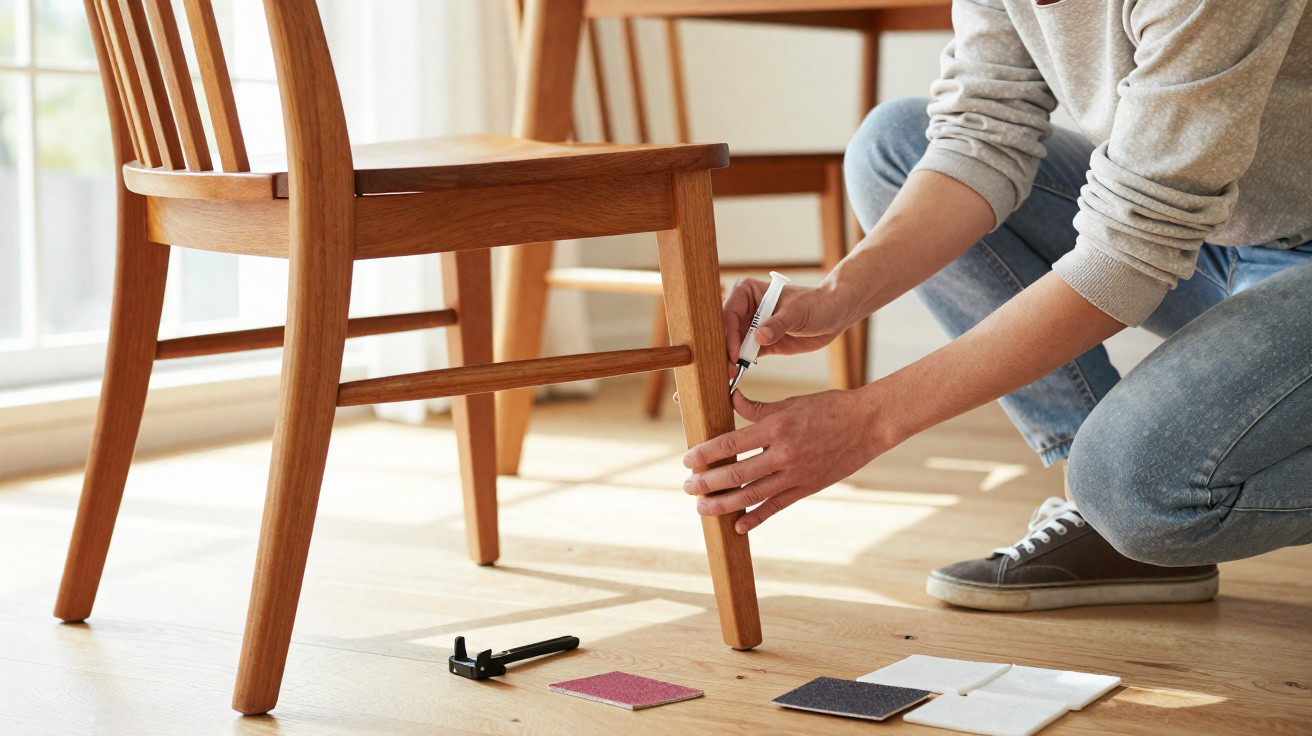
A wobbly chair nearly always results from looseness in the leg joints, deteriorated old glue or slight repeated movement in the wood. Rather than randomly hammering in nails or tightening screws, first identify where the frame has lost its stability so that you can fix it without damaging the finish.
Why does a wooden chair become wobbly?
A wobbly chair usually develops when its fitted components gradually lose their grip. Everyday sitting down and standing up puts pressure on the legs, stretchers and seat, creating tiny gaps around the glued joints.
Humid conditions can make matters worse too. Timber expands and contracts, eventually releasing some of the old adhesive, particularly on chairs used in kitchens, conservatories or dining rooms.
What should you check before repairing it?
Before applying glue or attempting to reinforce the frame, carefully turn the chair upside down and inspect the source of the movement. The wobble may be caused by a loose leg, a slack side stretcher or an open joint close to the seat.
- Rock each leg individually to find the loose area.
- Check whether the wood is cracked or whether only the joint has opened.
- Look for old glue that appears dry, brittle or crumbly.
- Make sure the floor is level before assuming the chair is at fault.
How can you remove the looseness without taking everything apart?
The easiest approach is to apply wood glue straight into the loose joint. Use a syringe, narrow nozzle or cocktail stick to guide the adhesive into the gap. Then press the parts together so the glue reaches inside the joint, and wipe away any excess with a slightly damp cloth.
Which materials are useful for a home repair?
This repair does not require heavy-duty woodworking equipment. The key is to use materials that hold the frame in place while the glue dries, without scratching the surface or crushing the timber.
- Wood glue designed for furniture.
- A small clamp, tightening strap or strong elastic band.
- A soft cloth for removing excess glue.
- A thin cocktail stick or syringe to reach the joint.
- Self-adhesive felt pads to level minor unevenness at the feet.
Once the glue has been applied, leave the chair untouched for the period stated on the packaging. Using the furniture before it has fully dried can reopen the gap and weaken the joint further.
How can you prevent the chair from becoming wobbly again?
A wobbly chair is more likely to return if it is dragged by its backrest, placed on a damp floor or used when its legs are out of alignment. Lifting it when moving it and keeping felt pads on the feet reduces strain on the joints and helps prevent further gaps from forming.
It is also worth checking the frame every few months, especially for older chairs or those in frequent use. When the timber is glued at the correct point, held firmly while drying and protected from impacts immediately afterwards, the looseness stops spreading through the stretchers and seat.















Comments
No comments yet. Be the first to comment!
Leave a Comment