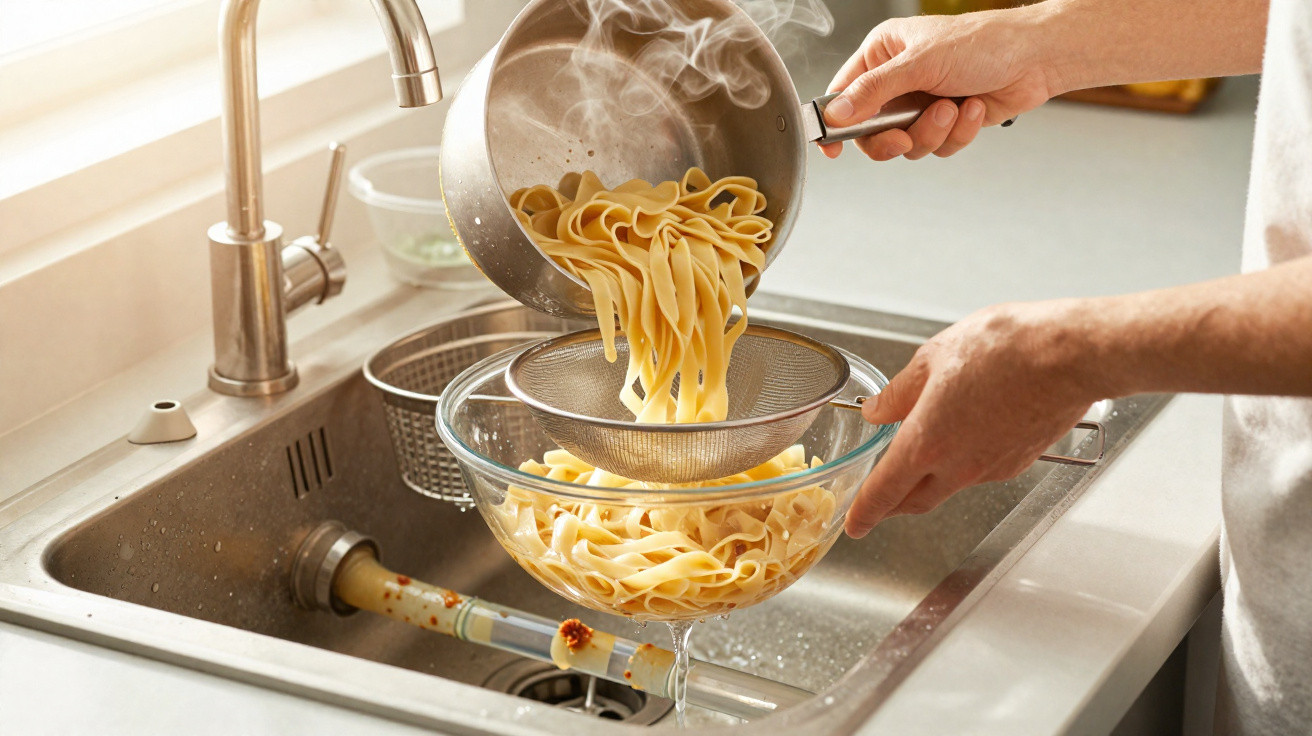
In countless kitchens, the routine is always the same: the pasta is ready, the pan goes to the sink, a colander is placed on top, the water is drained away – and the piping-hot pasta water rushes straight down the plughole. It is convenient, quick and apparently harmless. Yet this everyday habit can cause far more long-term damage to plastic pipes, seals and your budget than many people realise.
Why boiling pasta water weakens your drainpipes
In most homes, the pipes beneath the sink are made from PVC or comparable plastics. Although these materials are durable, they are not designed to withstand repeated exposure to temperatures close to boiling point.
“PVC can start to soften at around 60 to 70 degrees – while pasta water is often between 95 and 100 degrees.”
Repeatedly sending boiling water directly into the drain puts the pipework through a serious stress test:
- Thermal shock: There is usually cool water sitting in the pipe before near-boiling liquid suddenly follows it.
- Material fatigue: Constant changes between cold and extremely hot temperatures can weaken plastic at vulnerable points.
- Distortion: Bends, the trap and connecting fittings in particular can become slightly misshapen.
You will not see these changes happening. They occur out of sight inside the wall or behind the sink unit. The issue often becomes apparent much later: a pipe no longer seals fully, a connection begins to drip or a coupling starts to fail.
How seals and kitchen units can suffer hidden damage
The pipes are not the only concern. The seals also work constantly beneath the sink. Rubber and silicone rings are intended to keep water in the system and compensate for movement. Alternating between cold washing-up water and scalding pasta water gradually causes them to lose their flexibility.
The result can be tiny splits, hairline cracks in silicone and microscopic holes in rubber. At first, only a few drops may escape unnoticed behind the cupboard or into its plinth.
“The point at which the base unit starts to swell or black marks appear behind the kickboard is usually the first visible warning sign.”
A typical chain reaction in the kitchen looks like this:
- A minor leak at a pipe or seal
- Water collecting unseen inside the unit for weeks
- Chipboard absorbing moisture and beginning to swell
- Mould developing in joints and corners
- Not only a plumber’s visit, but often a replacement base unit or damaged flooring in the end
Even a straightforward drain-clearing job can quickly cost £80 to £200. Add replacement furniture, drying work and potentially repairs to the floor, and the final bill can easily reach the mid-hundreds – all because of a seemingly harmless kitchen habit.
The hidden danger in the pipe: starch, fat and food debris
Temperature is only one side of the problem. What makes pasta water particularly troublesome is what it contains. The cloudy liquid holds a great deal of starch, released from the pasta during cooking, which makes the water milky and slightly sticky.
When this starchy residue enters the drain, the following can happen:
- The starch coats the inside of the pipe with a thin, greasy film.
- Breadcrumbs, vegetable scraps, small pieces of pasta or grains of rice then stick to it.
- At the same time, fats and oils from sauces or frying can build up there.
Over time, these substances combine to form a tough coating. In areas where the flow is weaker, especially in the trap and pipe bends, it grows layer by layer. Eventually, water drains slowly, the pipe gurgles and the familiar smell from the drain begins to appear.
“Many people then instinctively reach for a large amount of boiling water – making the very problem they want to solve even worse.”
Why “rinsing fat away with hot water” is a misconception
A widespread piece of advice is: “Just pour a pan of boiling water down the drain and the fat will dissolve.” For the first few centimetres, that is indeed true. The fat softens, begins to loosen and appears to have gone.
However, it does not disappear; it simply moves further along. Deeper in the pipe, the now cooler mixture of fat, starch and food particles reaches colder sections. There, it solidifies again – in a location that is much harder to reach.
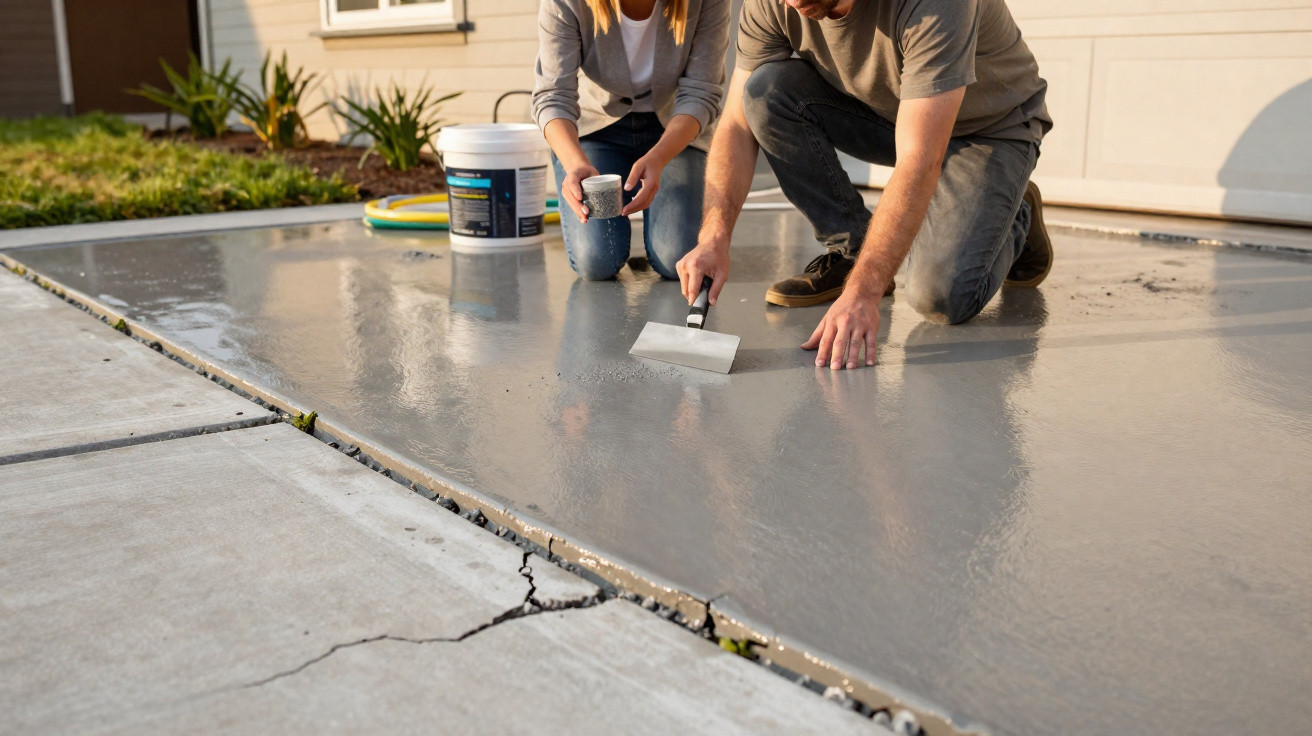
With every flush of hot water, the blockage shifts a little further along, gradually grows and can become an almost solid mass. Professionals sometimes compare these lumps to concrete in a pipe. At that point, household remedies are no longer enough: professional drain rods or high-pressure cleaning are required.
How to drain pasta water without damaging pipes or your budget
The good news is that a few simple habits can reduce the risk considerably, without chemicals or specialist equipment.
A gentler way to drain pasta water
- Do not tip the pan directly into the sink; drain it into a bowl or second pan instead.
- Let the water cool there until it is merely warm to the touch.
- Then pour it into the drain in several small batches.
- Keep cold water running at the same time, so that the mixture in the pipe remains at roughly 40 to 50 degrees.
If you have the time, allow the water to cool completely before pouring it away in portions. This prevents both heat stress on the material and rapid starch deposits forming in one area.
Gentle maintenance instead of harsh drain cleaners
Regular, mild care helps to keep pipes clear over the long term. The following methods have proved useful:
- Hot, not boiling: Once a week, pour one litre of very hot but not boiling water down the drain. If using a kettle, allow the water to cool slightly first.
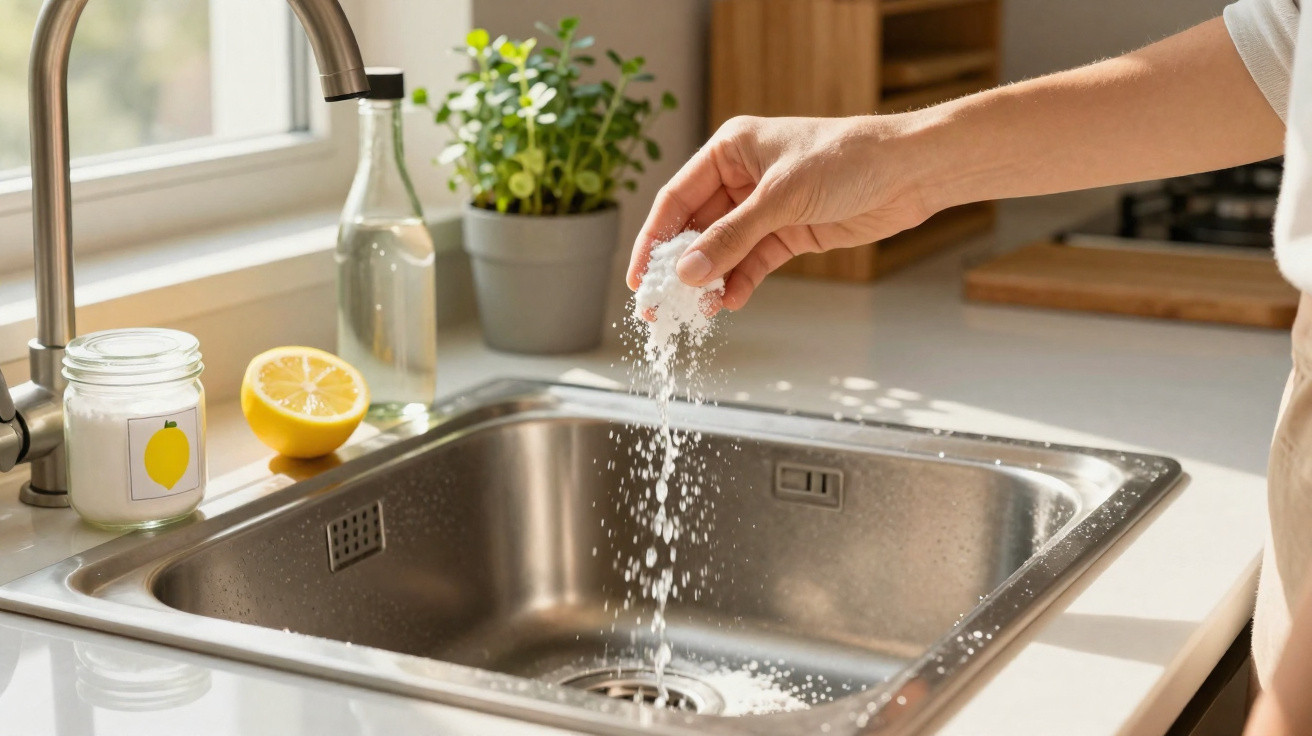
- Coarse salt: Put one or two tablespoons of coarse salt into the drain, leave it briefly, then follow with hot water.
- Bicarbonate of soda and vinegar: Add two tablespoons of bicarbonate of soda, followed by half a cup of vinegar. Let it fizz, then rinse through with warm water after 15 minutes.
“Such home remedies loosen light deposits, are gentler on pipes and avoid the repeated use of harsh chemicals that can affect seals and the environment.”
Useful ways to reuse pasta water
Rather than sending the hot liquid straight down the drain, pasta water can be put to practical use – provided it has not been heavily salted.
- A base for sauces: Starchy water helps sauces bind and gives them a creamy texture, particularly in pasta dishes.
- Dough and bread: Once cooled, it can be used to prepare yeast dough because the starch provides extra food for the yeast.
- Watering plants: Completely cooled, unseasoned water with little salt can be used for some houseplants or balcony plants.
Reusing pasta water in these ways not only reduces the strain on your pipes, but also saves fresh water when cooking and watering plants.
When it is better to call a professional
Certain signs indicate that a drain issue can no longer be resolved with household remedies:
- Water remains in the sink for several minutes.
- The pipe gurgles when water is used in other rooms.
- A strong smell rises from the drain despite cleaning.
- The base unit feels damp or the wood is swelling.
- Black or green marks appear around the plinth or behind the pipe.
In these situations, you should contact a professional drainage company as soon as possible. The earlier serious damage is identified, the more likely floors, furniture and walls can be spared.
What many people underestimate about pipe damage
The biggest trap is the delay. Months or even years can pass between draining pasta every day and the first obvious issue. When it happens, the blocked pipe can seem to have appeared “out of nowhere”. In reality, the problem has been building for a long time – layer by layer and shock by shock.
Tenants should also keep this in mind. If damage is judged to have resulted from improper use, questions may arise over who is ultimately responsible for repairs, furniture and consequential damage. Adopting gentler habits protects not only your own kitchen, but also helps to avoid possible disputes with the managing agent or landlord.
Ultimately, it is a small change to everyday life: rather than automatically emptying the pan into the drain at full force, pause briefly, let the water cool and work in stages. Those extra few seconds can save considerable trouble, money and extra trips to the DIY shop in the long run.















Comments
No comments yet. Be the first to comment!
Leave a Comment