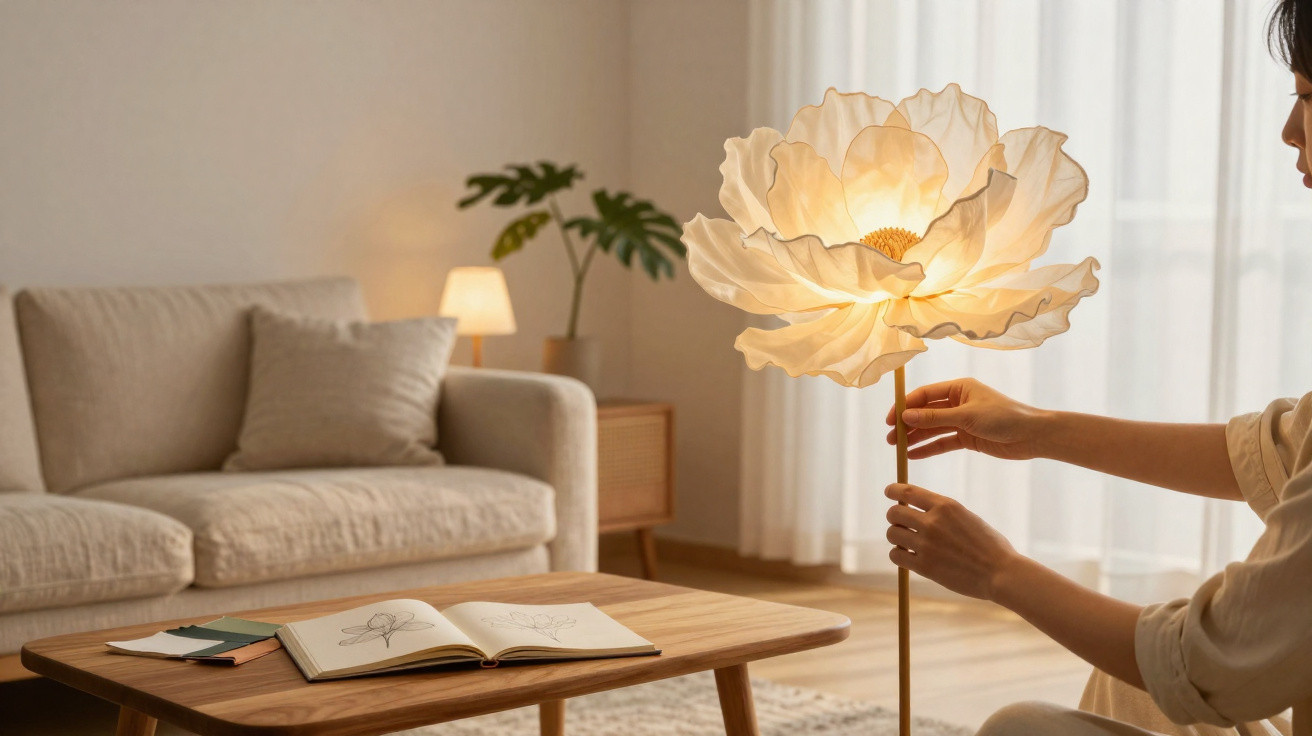
Many interior trends come and go, but some objects stay etched in the memory. That is precisely the case with the delicate, flower-like lights that interior enthusiasts have known from magazines and Instagram for years. They are the work of French designer Mylène Niedzialkowski, who created iconic textile ceiling lights through her brand Georges. She has now returned with a new label, Centième, continuing her vision of poetic, handmade lighting with unwavering consistency.
From an idea to a cult light
How textile flowers won over the interior world
In the world of interiors, it is unusual for a light fitting to be instantly recognisable while still retaining a crafted quality. Niedzialkowski has achieved exactly that. Her textile lamps evoke floating petals or graphic clouds, seeming to draw a room rather than merely illuminate it.
Over roughly 15 years at Georges, she developed lights that appeared above all in homes shaped by a “slow living” approach: less consumption, greater meaning and more craftsmanship. Each lamp felt like a small sculpture. Rather than a technical spotlight, it was a suspended object that painted shadows and softened the room.
Mylène Niedzialkowski’s lights work like light sculptures: they shape atmosphere, not just brightness.
Instead of anonymous mass production, the emphasis was on handcraft. Fabrics were dyed, folded and stretched. Their success did not rely on conspicuous branding, but on immediate recognition: anyone who had once seen one of these feather-light lights above a dining table would recognise it anywhere.
An eye for the smallest detail: the idea behind “Centième”
With Centième, the designer picks up exactly where she left off – only with even greater focus. The name refers to a tiny unit of measurement, a hundredth, and to details that are almost overlooked in everyday life. This microscopic perspective is central to her design process.
For years, she has collected sketches, colour samples and prototypes. Centième is not an impulsive fresh start, but the outcome of a long period of development. Colour, material and form are brought together as if in a laboratory, until the balance feels right.
The aim remains to combine traditional manual techniques with contemporary, pared-back design. This is not nostalgic craftwork destined to gather dust on a shelf, but liveable objects that work in modern interiors while retaining their handmade soul.
The new Centième brand: familiar poetry, a new chapter
Recognisable classics, broadened with fresh ideas
Centième has officially been underway since summer 2025, yet it feels like a natural continuation of her previous work. Fans of the earlier collections can breathe easily: the celebrated flower-like pendant lights, known as Pale, reappear in the new range.
Their defining characteristics remain unchanged: large, gently curved surfaces, textile finishes and soft, diffused brightness. Anyone accustomed to an exposed light bulb will find these lights a radical change: the illumination feels more muted, almost as though filtered through a fine veil.
At the same time, the designer is using the new structure to broaden her creative work. The brand serves as a laboratory for new forms, sizes and functions. Small table lamps, wall objects and textiles are expanding the universe around light.
Materials that look calm and feel that way too
Careful material selection remains a central concern. Centième follows a “slow” mindset: fewer pieces, but of higher quality and made to last. The designer aims to avoid unnecessary plastic and replacement parts that become impossible to find after a short time.
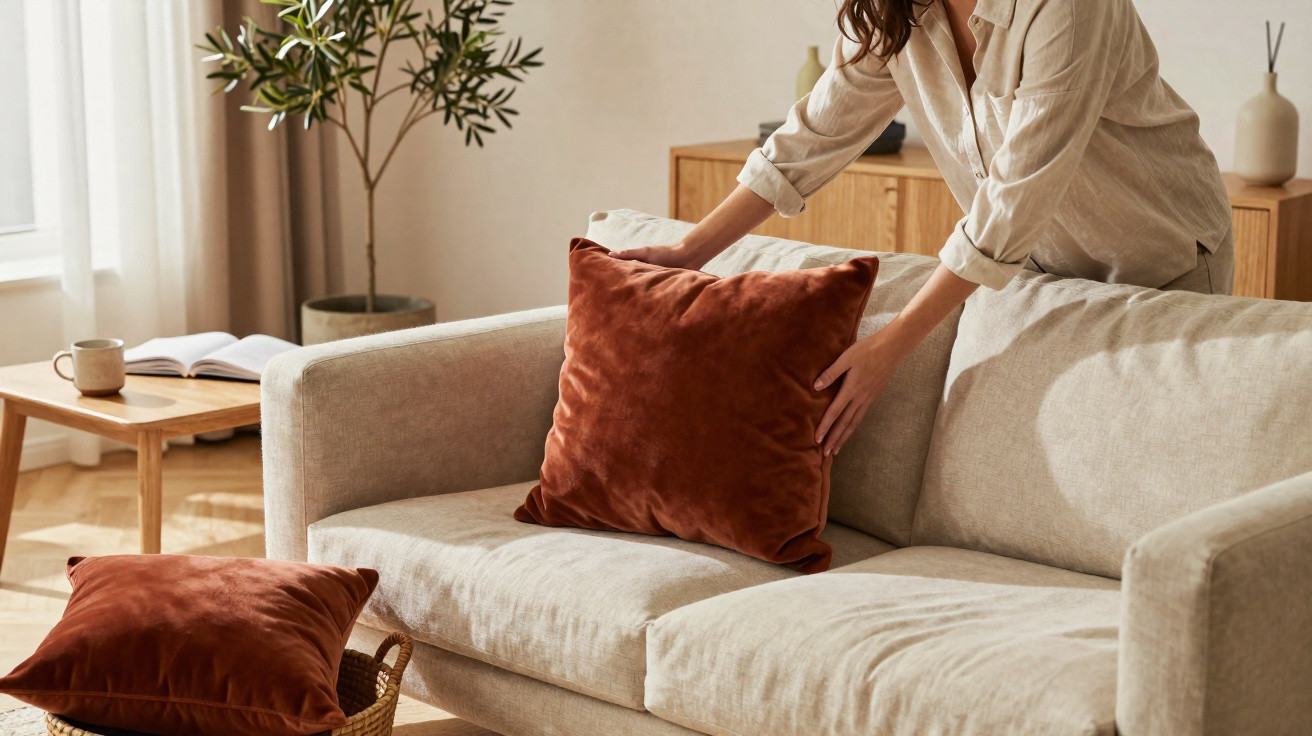
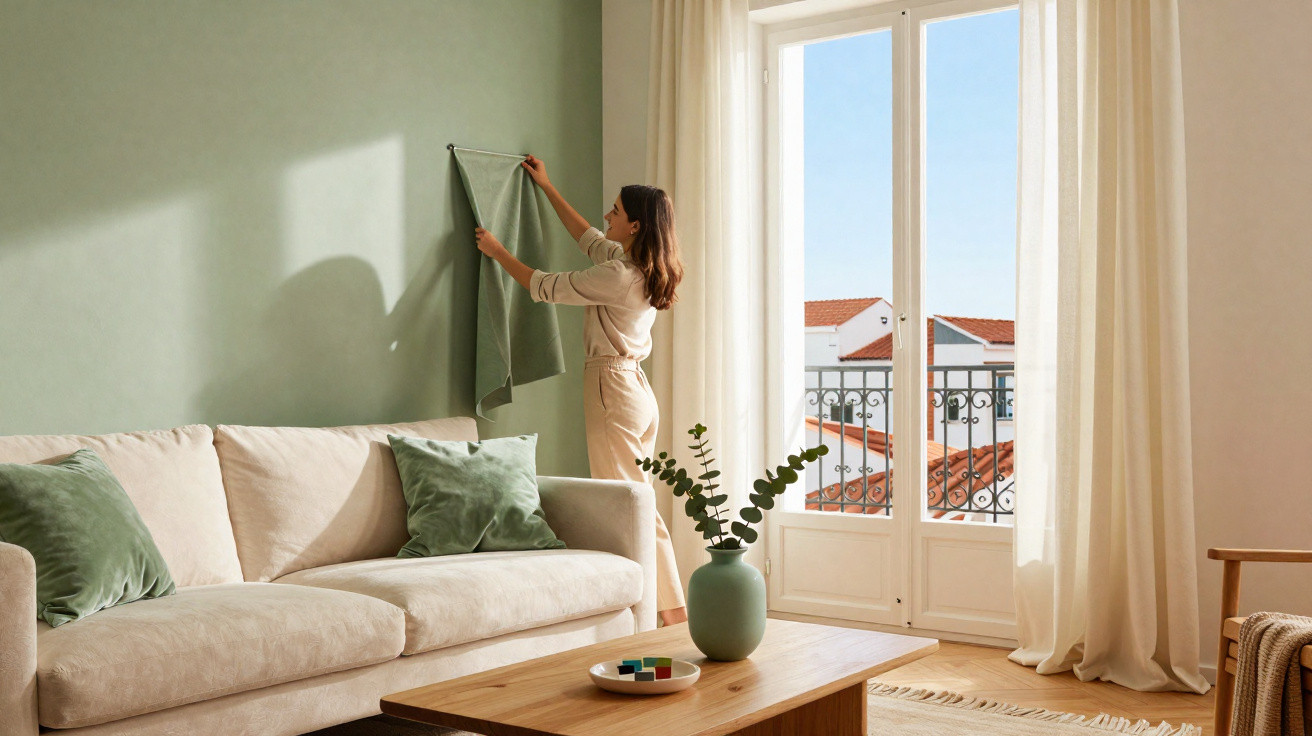
The range now also includes handmade cushions and small home objects that complement the lighting thematically. The unifying thread is natural texture, matt surfaces and subdued tones. Rather than vivid trend colours, the palette is dominated by shades of sand, sage, mist grey and warm terracotta.
- Raw materials such as metal, wood and untreated fabrics are visibly refined rather than concealed.
- Colours are created from numerous in-between tones, not a standard colour chart.
- Every visible edge and seam reveals the involvement of a real hand.
The result is a collection of objects that do more than look attractive on a shelf: they slow down everyday life. They act as small points of calm in a room, especially during long winter months when people spend much of their time at home.
How these lights noticeably transform rooms
Atmosphere without renovation: a small intervention, a major effect
Centième’s appeal lies in how little needs to change for the effect to be felt. A single large-scale pendant light above the dining table can make a plainly furnished room feel entirely different. Light is distributed more softly, shadows cast patterns on the walls and the ceiling appears higher.
Smaller interventions can have a similar effect: a statement cushion on the sofa or a delicate wall light above the bedside table can suddenly make a restrained interior feel warm and inviting. Such objects are particularly effective in period flats with high ceilings or new-build homes with very smooth surfaces.
Anyone wanting to change an atmosphere does not need to knock down walls – one well-placed light is often enough.
There is another aspect at play: the desire for more mindful consumption. Rather than replacing an entire interior every two years, Centième focuses on pieces designed to last. Buying this way not only conserves resources, but also enables people to build a personal collection over time that moves with them from home to home.
Design that outlasts trends
Every collection includes references to current trends, yet the core remains timeless. The forms are restrained and almost graphic, while still soft enough to avoid feeling cold. This allows the lights to fit into very different settings:
- A country home with timber beams and wooden floorboards
- An urban loft with concrete floors and large windows
- A period flat with decorative plasterwork and old doors
- A minimalist new-build home with smooth walls
Anyone investing in such a piece is not buying for one season. The objects are intended to change according to the room in which they hang, the furniture around them or the wall colour that frames them. In this way, Centième aligns with the “less, but better” trend, moving away from short-lived decorative excess.
What terms such as “slow decoration” and “poetic light” mean
Slow living in the living room: more an outlook than a style
The term “slow decoration” now appears in many interior magazines. It describes an approach that clearly distances itself from the logic of fast fashion. Rather than inexpensive mass-produced goods that are replaced after a short time, the focus shifts to a small number of carefully chosen pieces.
This includes:
| Approach | Typical characteristic |
|---|---|
| Buy less | Take time to search until an object “fits” |
| Choose better | Materials that can age rather than break quickly |
| Use mindfully | Repairing, caring for and passing on items instead of throwing them away |
Centième connects directly with this approach: its products cost more than an impulse purchase from a furniture superstore, but they are intended to last for decades rather than months. Those who furnish in this way see their home as a long-term project, not a permanent building site.
Practical tips for lighting with character
Anyone wishing to bring the idea behind Centième into their own home can follow a few basic principles, even without buying this particular brand:
- Position large textile shades, where possible, well into the centre of the room rather than directly beneath the ceiling.
- Choose warm light colours, especially in living rooms and bedrooms.
- Combine several smaller light sources instead of relying on one harsh ceiling light.
- Select materials that reflect or filter light, including fabric, paper and frosted glass.
- Use lighting deliberately to highlight favourite objects, such as a picture or a plant.
This creates a similar effect: rooms become not only visible, but tangible. Light opens up zones for reading, eating and unwinding. This is exactly what Mylène Niedzialkowski’s poetic lights are intended to achieve: not simply to reveal a room, but to transform how it feels.









Comments
No comments yet. Be the first to comment!
Leave a Comment