Many homes look attractive, yet the centre of the living room can still feel empty.
One straightforward table idea is now creating an entirely different atmosphere.
Spring is the season for rearranging: as soon as temperatures start to rise, the desire for a calmer, warmer home grows. Rather than replacing an entire scheme, an increasing number of interior designers recommend one deliberate change: a distinctive, authentic coffee-table solution that puts materials before glitz and gives the living room a visual and emotional sense of grounding.
Why the trend for sleek, glossy surfaces is fading
For years, the rule for living rooms was simple: the more polished, the better. Polished stone, immaculate finishes and everything looking as though it belonged in a design museum – ideal for Instagram, but less suited to real evenings with friends, children and bowls of crisps.
This is precisely where attitudes are now shifting. Many people find the typical “high-gloss lounge” cold and tiring. You barely dare put down a glass, every scratch is immediately visible, and the room can quickly feel overly formal.
“Move away from the showroom look and towards furniture you can touch, use and occasionally scratch – without stress.”
Interior designers describe a cosier, slower approach to living. Instead of fashionable materials that feel dated after two years, the focus is moving towards durable finishes that develop a character of their own over time.
Tactile materials rather than sterile perfection
In a world where almost everything feels digital and smooth, the desire for tactility is increasing. People want to feel textures, run their hands over edges and notice irregularities. This is exactly what the new coffee-table trend reflects.
- Surfaces with visible grain
- Edges that are slightly irregular rather than laser-straight
- Stone that is deliberately left natural instead of being polished completely smooth
Running a hand over a rougher timber surface or feeling small indentations in stone with your fingertips immediately creates a stronger connection with the room. The living room feels less like a stage and more like somewhere you can truly settle into.
The new living-room star: combining wood and natural stone
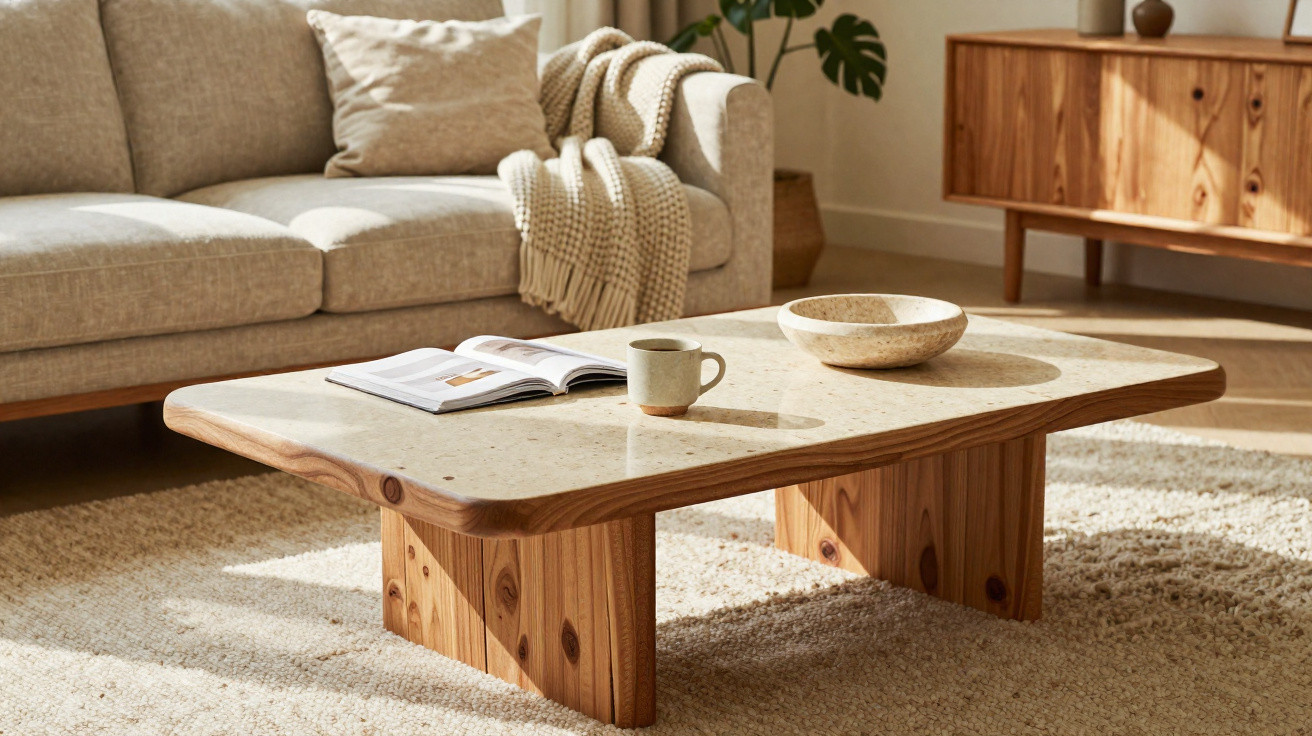
At the centre of the current trend is a particular type of coffee table: one that combines solid wood and natural stone, with both materials left as minimally processed as possible, visibly authentic and not perfectly smoothed.
“Raw woods combined with natural stone are replacing polished designer pieces and becoming the new recommendation from furnishing professionals.”
Placed at the heart of the living room, this mix of materials creates a striking effect. It feels grounding, calm and high-quality without seeming pretentious. Many designers refer to it as an “anchor point” that brings order to the entire room.
Solid wood that tells a story
Oak, walnut and elm are especially popular, often lightly oiled rather than finished with glossy lacquer. Typical features of this new generation of coffee tables include:
- Clearly visible wood grain
- Knots or small cracks used as intentional design details
- Subtle colour variations across a single tabletop
A table like this can feel almost like a one-off piece of furniture. Over the years, the wood develops a patina: small marks from daily life, gentle changes in colour and the occasional knock. These details make the furniture more interesting rather than making it “damaged”.
There is also a practical benefit: solid timber tops cope remarkably well with everyday life involving children, pets and working from home. A water mark or scuff can usually be sanded down or repaired – and even when it cannot, it does not spoil the overall look, often enhancing it instead.
Stone as a calm counterpoint: travertine and more
The other element is natural stone, often in softer, warmer shades. Travertine, with its small pores and naturally occurring holes, is particularly fashionable, alongside sandstone and other pale, matt stones.
Its restrained, almost powdery appearance is characteristic. Rather than mirror-like shine, you see edges, tiny chips and shifts in colour. This makes the table appear weighty and stable without looking cumbersome.
“A solid stone base or thick stone top creates visual calm and removes the worry about scratches and stains.”
Anyone who has scratched a high-gloss luxury piece will quickly appreciate the relaxed nature of natural stone: minor marks disappear into the overall appearance, leaving the table easy to use without concern.
How to introduce a new coffee table without buying everything again
Many people hesitate over such a statement furniture choice because they think: “I’ll have to replace my entire living room for this.” That is not the case. With a few simple approaches, a raw timber or stone table can work within an existing interior.
Soft textiles take away the table’s hardness
Fabrics provide the most important balance to wood and stone. The more natural and softer they are, the more cohesive the overall scheme will feel.
- A large, dense wool rug beneath the table instantly makes the room cosier.
- Berber or deep-pile rugs create an appealing contrast with hard materials.
- Linen cushions and coarsely woven throws on the sofa and armchairs complete the look.
This creates balance: the table adds structure and visual weight, while the textiles bring warmth and comfort. If you have a plain grey or beige sofa, natural tones such as sand, rust, moss green or cream can add extra depth to the room.
Size, shape and height: points to check
To ensure the new coffee table has the intended effect rather than becoming an obstacle, it is worth making a quick check before buying:
| Aspect | What should you consider? |
|---|---|
| Size | At least half the length of the sofa, while leaving enough space to walk around it (approximately 40–50 cm). |
| Height | Ideally level with the sofa seat or slightly lower, so that nothing blocks the view. |
| Shape | Round/oval for narrow rooms, rectangular for large sofa arrangements. |
| Weight | Solid stone looks excellent, but the table should still be movable, for example when vacuuming. |
It is useful to mark the planned dimensions on the floor with masking tape. This lets you judge in advance whether the proportions and routes through the room will work.
Why this coffee table saves money and hassle in the long term
Anyone who regularly buys inexpensive trend-led furniture knows the problem: after only a few years, it looks old, becomes unsteady or no longer suits a changed style. Many people no longer want to take part in this kind of disposable approach to furnishing.
“A coffee table made from real wood and natural stone costs more initially, but saves numerous replacement purchases in the long run.”
The look is timeless because it is not tied to a particular colour scheme or passing craze. Whether you later switch to a dark sofa, paint the walls in pastel shades or embrace a minimalist home, natural materials will continue to fit.
There is an emotional benefit too: when people consciously choose a long-lasting piece of furniture, they treat it differently. It is more likely to be seen as “a permanent part of the home” than as interchangeable decoration.
Practical tips for care and daily life
A few simple routines are enough to help the table retain its attractive appearance:
- Refresh wooden surfaces with oil once or twice a year.
- Use coasters for very hot drinks, especially on stone.
- Lightly sand small scratches in wood instead of tackling them with harsh cleaners.
- Do not drag decorative objects with sharp edges directly across the table.
Households with children benefit particularly from this robust approach. Toy cars, craft activities and impromptu snacks are usually handled better by a solid natural-material table than by a delicate high-gloss top. Small signs of use blend into the look and often suit its overall character.
How to develop the style further
If you enjoy the raw-material look, there is no need to stop at the coffee table. Many people carefully carry the idea into other areas:
- A solid-wood bench instead of a delicate side table
- Shelves with exposed edges rather than laminated board
- Ceramic or stoneware vases instead of high-gloss glass objects
Balance remains important: a whole room made only from rough timber and heavy stone can quickly feel dark. Pale walls, plants and soft fabrics introduce lightness and prevent the look from becoming oppressive.
If you are unsure, start simply: begin with the central wood-and-stone table, then gradually add matching decorative pieces. Often, this one item in the middle is enough to make the living room feel like a new, more relaxed place.








Comments
No comments yet. Be the first to comment!
Leave a Comment