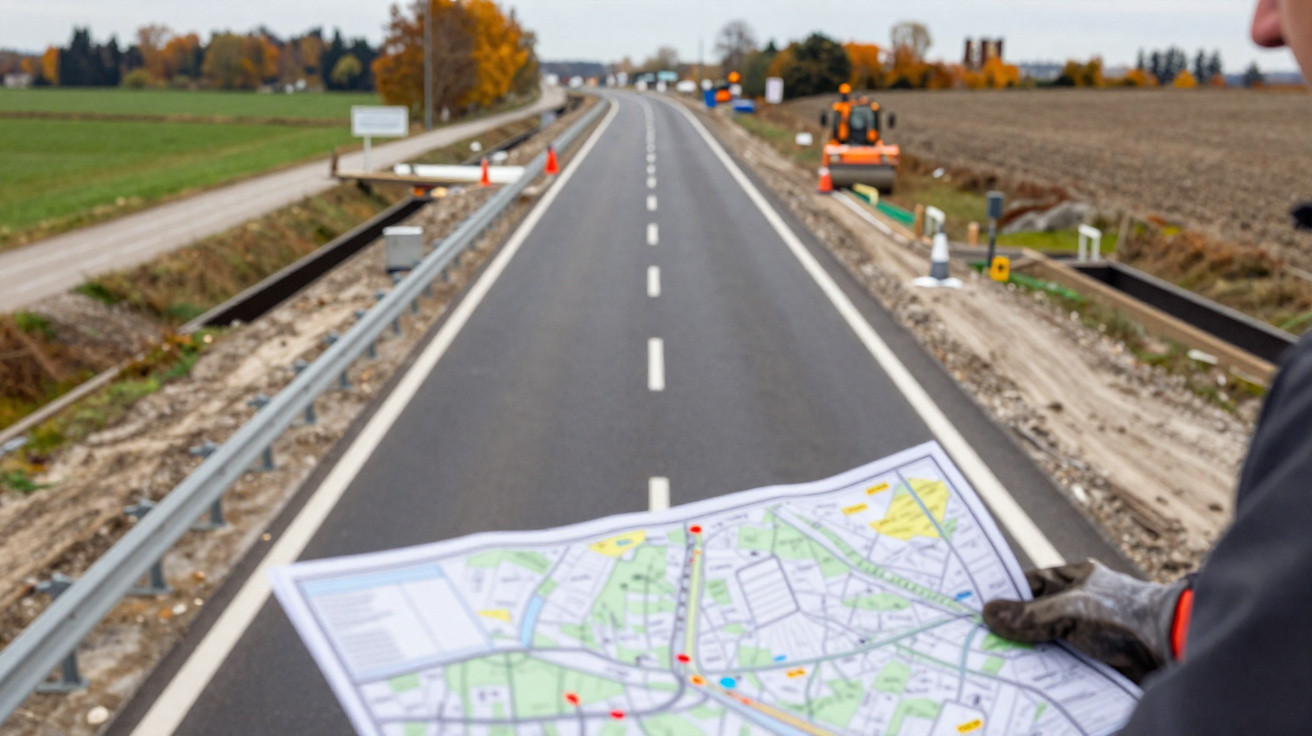
A broad strip of fresh tarmac south of Wrocław can look like a finished road from a passing car, but it is not yet a route drivers can rely on. The important point is that Poland is extending the S8 expressway south from the Kobierzyce area towards Łagiewniki, closing part of a long-standing gap on the approach to the Kłodzko region.
For Lithuanian motorists, holidaymakers and freight operators travelling through Poland, the sensible approach is simple: watch the project, but plan journeys using roads that are officially open. A visible carriageway, even one with markings, may still have unfinished junctions, structures or safety equipment.
What is being built south of Wrocław?
The scheme concerns a new section of the S8 between Kobierzyce and Łagiewniki, south of Wrocław. It extends the expressway beyond its present southern end near Magnice and Kobierzyce, across largely agricultural land.
The project is divided into three construction sections:
- Kobierzyce Północ to Kobierzyce Południe;
- Kobierzyce Południe to Jordanów Śląski;
- Jordanów Śląski to Łagiewniki Zachód.
Together, these sections total about 32 kilometres. The new road is being built as a dual carriageway, generally with two lanes in each direction, plus junctions and the supporting infrastructure needed for an expressway.
That infrastructure matters as much as the asphalt. It includes bridges, underpasses, drainage, barriers, crossings and connections to local roads. These elements are why a project can appear close to completion from a distance while remaining closed to public traffic.
A newly surfaced road is a construction milestone, not an opening announcement.
Where the route is intended to go
The immediate southern end of this stage is near Łagiewniki. In strategic terms, however, it forms part of a wider plan to improve the route towards the Kłodzko Valley and the Czech border area.
Drivers should avoid assuming that the whole journey south will become expressway-standard as soon as this new stretch opens. Road schemes are delivered in separate stages, with different design, funding and construction timetables. Beyond the new section, travellers will still need to follow the network that is open at the time of their journey.
For people arriving from Lithuania via Warsaw, Łódź or Wrocław, the development may eventually mean fewer transitions between high-speed roads and ordinary routes south of Wrocław. Its most immediate value is likely to be a better connection between the existing S8 and roads serving the towns and villages along this corridor.
Possible practical effects once it is open include:
- a more direct route south from the Wrocław area;
- less long-distance traffic using some local roads;
- changed traffic patterns around new junctions;
- a different choice of routes for deliveries and holiday traffic.
The precise effect on any individual journey will depend on traffic levels, roadworks elsewhere and the final connection arrangements.
Why tarmac is only one part of the job
Road construction is not simply a matter of laying the top surface. Before an expressway can open, contractors need to complete work below, beside and above the carriageway.
1. Groundworks and drainage
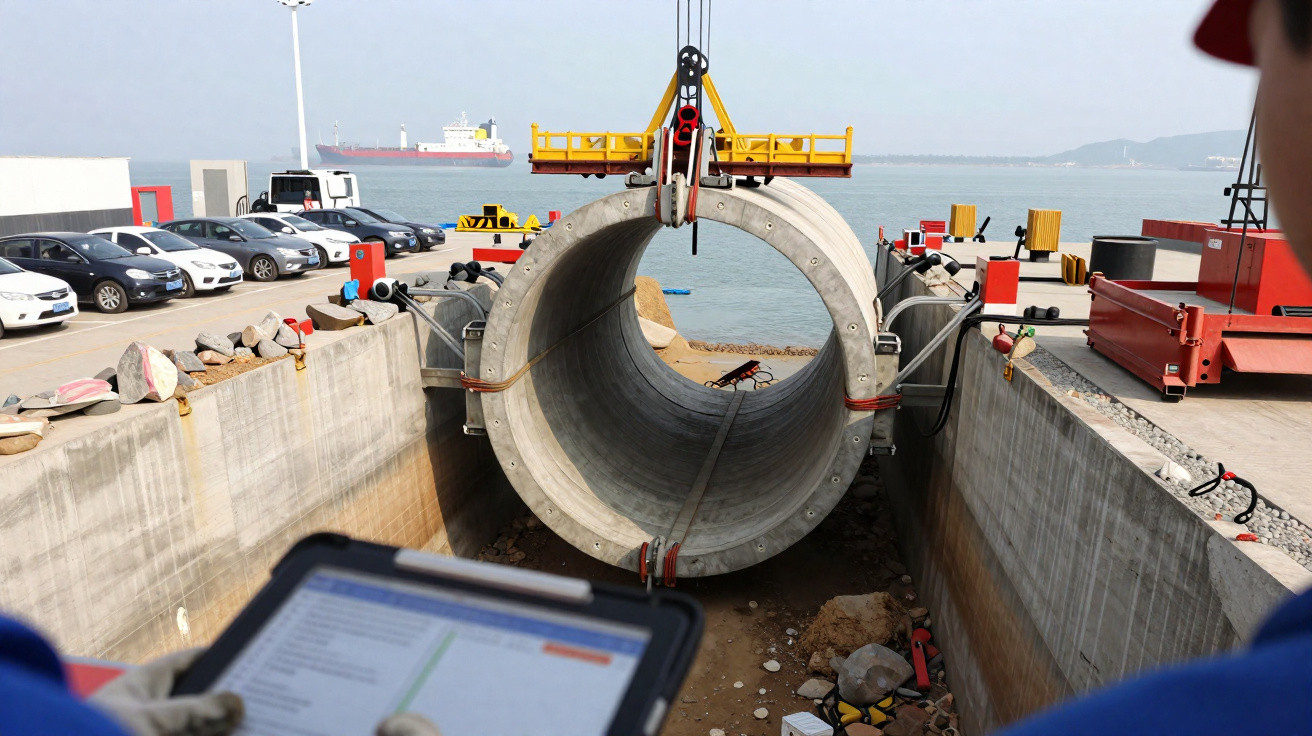
Fields may need extensive preparation before they can support heavy traffic. Contractors build embankments, cuttings, drainage channels and culverts, and deal with existing ditches, watercourses and underground services.
This is particularly important after prolonged rain. Water must be directed safely away from the road surface and neighbouring land.
2. Bridges, underpasses and local connections
A new road can divide existing routes used by residents, farm vehicles and wildlife. Bridges, underpasses, access roads and crossings are built to maintain those connections.
These structures often take longer than the carriageway itself because they require multiple stages of construction, finishing and inspection.
3. Surfacing, signs and safety systems
The final visible phase includes the pavement layers, road markings, barriers, signs and, where required, lighting and communications equipment. Junctions also have to function safely with the roads around them before traffic can be allowed through.
The route is only ready when the road authority opens it, not when drivers can see a black ribbon of asphalt across the fields.
Opening dates can move
Published project programmes have indicated completion during 2027, with dates differing between the three sections. Such dates should be treated as targets rather than fixed travel-planning deadlines.
Construction schedules can change for many reasons. Poor weather may delay earthworks or surfacing; utility work can prove more complex than expected; and major structures require checks before they can enter service. Final traffic arrangements may also take time after the main road surface is complete.
If travelling through the area in 2027, assume that restrictions and diversions remain possible until an official opening is announced. Sat-nav systems can be helpful, but an app may not immediately recognise a new road, a changed junction or a temporary closure.
How Lithuanian drivers can plan sensibly
There is no reason to avoid Wrocław simply because the S8 extension is being built. The better option is to check current conditions shortly before setting off and allow time for changes on the day.
A useful pre-journey checklist
- Check the whole route. Look beyond the destination. Traffic around Wrocław, holiday travel and works on connecting roads can all alter the best route.
- Use official Polish updates. Poland’s General Directorate for National Roads and Motorways, GDDKiA, publishes notices about major national-road works and openings.
- Leave a time margin. This is especially useful during summer holiday periods, public holidays and winter weather.
- Check rules for the vehicle. Toll arrangements and restrictions can vary by vehicle type, weight and road. Operators should verify the current requirements before dispatch.
- Keep an offline map. Coverage on main roads is usually good, but an offline map is valuable if a diversion leads through rural areas.
Hauliers should check any diversion for height, weight and local access restrictions. The shortest alternative shown on a map may be unsuitable for an articulated lorry, coach or vehicle carrying a wide load.
Common mistakes when following a major road project
The most common error is treating a visible new carriageway as a shortcut. Unopened roads may contain construction traffic, incomplete slip roads, unfinished drainage works and uneven surfaces.
Other mistakes include:
- treating a projected completion month as a guaranteed opening day;
- assuming every section of the southern S8 corridor is complete;
- following a diversion intended for cars when driving a larger vehicle;
- relying on an old route download after a junction has changed;
- stopping on emergency lanes, construction access roads or verges for photographs.
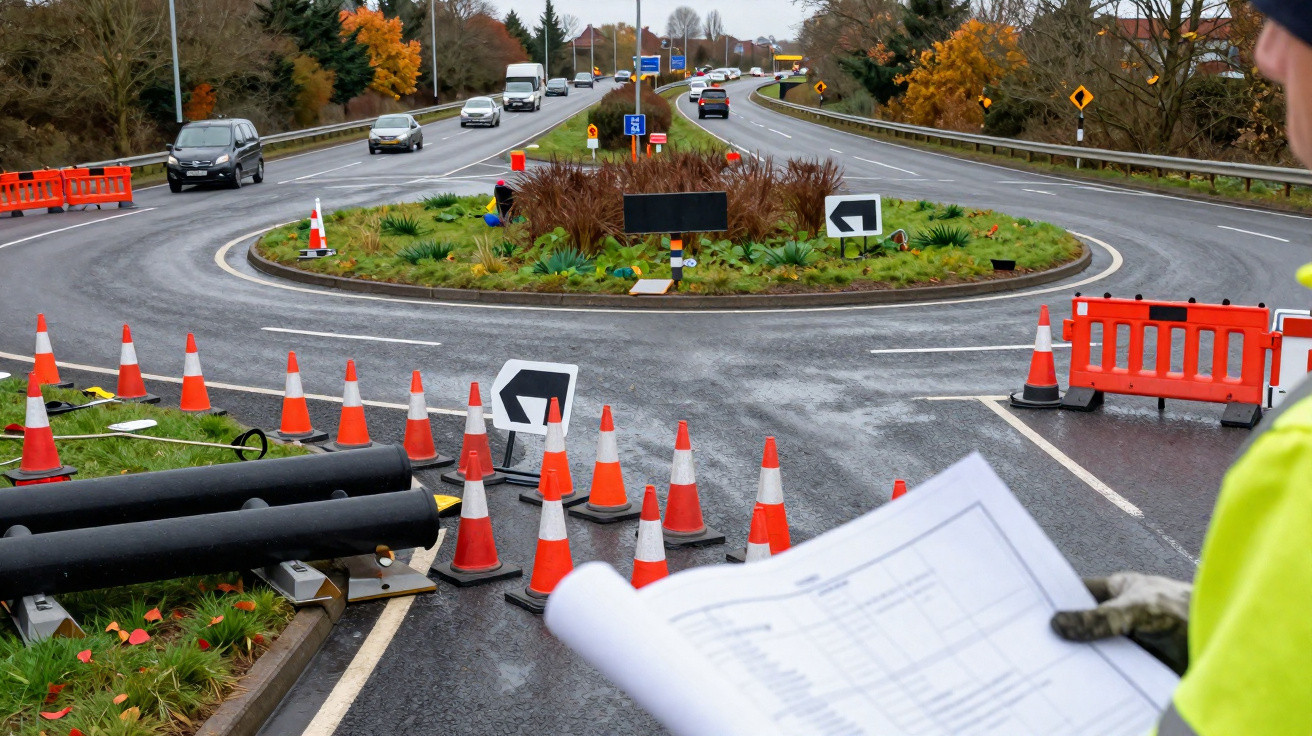
Never drive around barriers, enter signed work areas or use an unopened carriageway. Construction sites can contain moving plant, temporary surfaces and unexpected changes in direction. Near roadworks, follow temporary signs and speed limits even if they conflict with an older sat-nav instruction.
What may change for places near the route
A new expressway can alter the balance of traffic on nearby roads. Some through-traffic may move away from settlements, while junction roads and service areas may become busier. Farm access, local commuting patterns and routes to Wrocław may also change once the final layouts are in use.
For businesses, the potential advantage is a more direct connection to the national road network. However, delivery schedules should not be tightened solely on the basis of a planned opening date. It is wiser to wait for confirmed opening information and test the route in normal operating conditions.
The landscape will change too. The scheme brings a substantial new transport corridor through open land, along with bridges, embankments, drainage works and connecting roads. For travellers, that is a reminder that the road is a major infrastructure project rather than a simple local bypass.
Watch the official notices, not the asphalt
The S8 extension from the Kobierzyce area towards Łagiewniki is an important development south of Wrocław. It should improve this part of the corridor when all three sections are officially open, but it is not yet a complete expressway route to the Czech border.
For Lithuanian road users, the practical takeaway is straightforward: use current route information, allow for roadworks and wait for GDDKiA or other official confirmation before including the new road in a journey plan. That avoids the expensive and unsafe mistake of heading for a route that is visible from the fields but not ready for traffic.














Comments
No comments yet. Be the first to comment!
Leave a Comment