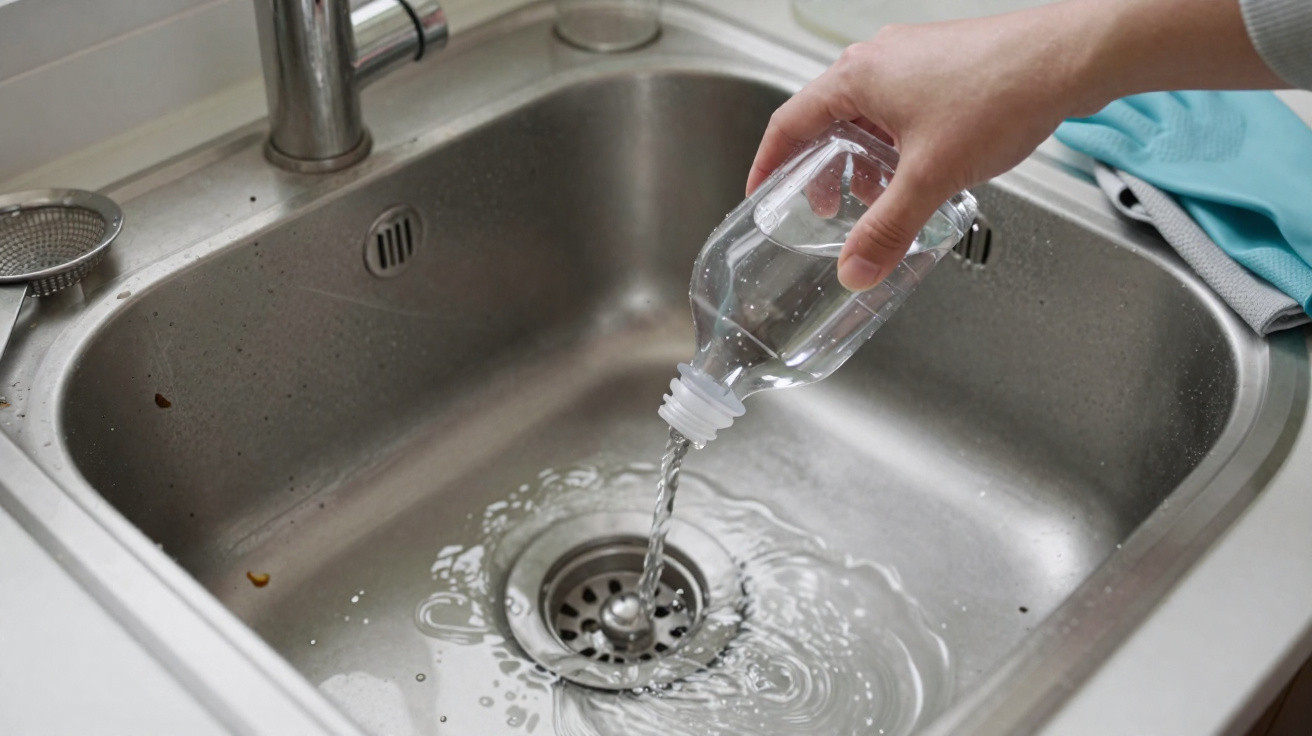
A sink that drains slowly is easy to put up with - until washing-up water lingers in the bowl, food smells hang around and using the kitchen becomes a nuisance. Before reaching for a chemical unblocker or calling a plumber, there is one simple method worth trying for a minor, recent blockage: using a flexible plastic bottle full of water to create a short burst of pressure in the waste pipe.
The bottle is not left upside down in the drain. It is used briefly, with its open neck held over the plughole and squeezed. Done carefully, this can shift a small, soft build-up of grease, soap residue or food particles near the sink outlet. It is not a cure for every blockage, but it is a useful first step when the problem has only just started.
What the upside-down bottle trick does
Kitchen sink waste pipes collect more than water. Tiny food scraps, cooking fat, grease and detergent residue can settle inside the pipework and gradually trap more debris. In bathroom basins, the usual causes are soap, toothpaste and hair.
When a bottle that is nearly full of water is turned upside down over the plughole and squeezed, it sends water into the waste pipe under pressure. If the bottle makes a reasonable seal around the opening, that pressure can disturb soft material sitting close to the sink and help move it along.
The useful part is the brief pressure from a well-sealed bottle, not simply pouring extra water down the sink.
Think of it as a gentle way to tackle an early slowdown. It will not remove a solid object, clear a serious blockage further along the drain or repair damaged pipework.
When it is worth trying
This method is best for a sink that is slow rather than completely blocked. It may be worth a try when you notice:
- Water draining more slowly than usual
- A small amount of water pooling before it clears
- Mild gurgling as the bowl empties
- A stale smell around the plughole
- Visible grease, crumbs or residue around the waste opening
It can work on many kitchen sinks, bathroom basins and shower wastes, as long as the bottle can be held securely over the opening.
Do not use the method if you have recently poured a chemical drain cleaner, bleach or another strong cleaning product into the drain. Pressure can cause contaminated water to splash back. Follow the product instructions and allow the stated time before attempting any other method.
If the sink is full and close to overflowing, bail out enough water first using a jug or bowl. Place towels around the sink unit or floor. If water is backing up in more than one fixture - such as the kitchen sink, shower or toilet - stop and seek advice from a plumber, landlord or managing agent. The issue may be beyond your own waste pipe.
Choose the right bottle
A clean, flexible still-water bottle of around one to 1.5 litres is usually easiest to grip and squeeze. Avoid glass bottles, very rigid plastic bottles, and any bottle that previously contained chemicals, fuel or strongly scented products.
The bottle opening needs to sit over the plughole rather than inside it. A narrow-necked bottle may not make a good seal on a wide kitchen waste, while a large bottle may be hard to control.
Gather the following before you start:
- A clean, flexible plastic bottle with the cap removed
- Cold or warm tap water
- A cloth or old towels for splashes
- Rubber gloves, if you prefer
- A jug or small bowl for removing standing water
Remove the plug, basket strainer or loose waste cover first, then clear away any visible debris. This simple job sometimes improves drainage without needing anything else.
How to use the bottle safely
1. Prepare the sink
Remove any standing water until there is enough room to place the bottle over the drain. Wipe the area around the plughole so the bottle neck can sit as flat as possible.
If you have a double-bowl sink, put the plug in the other bowl. For a sink with an overflow opening, hold a damp cloth over it while using the bottle. This helps limit water escaping through the overflow.
Fill the bottle almost to the top with cold or warm tap water. Leave a small gap so you can grip it comfortably. Do not use boiling water: very hot water can soften or strain some plastic waste pipes, seals and fittings.
2. Make a seal over the plughole
Hold the bottle upright near the drain, turn it upside down and place its open neck directly over the plughole. Keep your hand firmly around the bottle and press down gently enough to reduce water escaping around the sides.
Do not force the bottle into the drain. It should rest over the opening only.
3. Squeeze steadily
Squeeze the bottle firmly and steadily to send its water down the waste. Keep your face back from the bowl in case of splashing.
Lift the bottle away, refill it and repeat once or twice if the water begins to move more freely. There is no advantage in repeatedly forcing water into a drain that remains blocked.
4. Test the drainage
Run the cold tap briefly and watch how the sink empties. If it now drains normally, rinse through with warm tap water for a minute or so.
Stop if you see water leaking into the cupboard below the sink, if water rises in another bowl or appliance waste, or if the sink remains full after a few attempts.
A bottle can help shift a fresh, soft build-up near the outlet. Persistent standing water needs a more suitable method.
Why it can be preferable to chemical unblockers
The appeal of this method is that it is mechanical: it relies on water pressure rather than a caustic product. That means there is no strong chemical residue left in the trap if you later need to inspect or clean it.
Chemical drain unblockers can irritate skin and eyes, and their contents can splash when a blockage does not clear. They can also create a hazard for anyone who later takes apart the trap or uses a plunger. Never mix drain cleaners with other products.
In particular, never mix bleach with vinegar, acidic cleaners, ammonia-based products or drain cleaner. If you are unsure what has already gone down the sink, avoid adding anything else and use a plumber if necessary.
A proper sink plunger is usually more effective than a bottle because it is designed to make a seal. Still, a bottle is a sensible low-cost option for a small slowdown when no plunger is to hand.
If the sink is still slow
A blockage that survives the bottle method may be in the trap - the curved pipe beneath the sink - or further along the waste pipe. Work through these options carefully:
- Clean the plug and strainer. Greasy sludge and food debris often collect immediately below the visible drain.
- Use a sink plunger. Cover the overflow with a damp cloth, and plug the second bowl of a double sink before plunging.
- Clean the trap. Put a bowl and towels underneath first. Wear gloves, and only dismantle it if you are confident you can refit the seals correctly.
- Use a hand-operated drain snake with care. Do not force it through old, fragile or awkward pipework.
- Call a qualified plumber or drainage professional. This is the safest choice for recurring blockages, leaks, persistent foul smells or water backing up elsewhere.
In a flat, repeated drainage problems may involve shared pipework. Report the issue to your landlord, housing provider or managing agent where appropriate.
Common mistakes to avoid
These errors can make the task messier, or make a minor blockage worse:
- Using a rigid or very small bottle: it is harder to create useful pressure.
- Leaving the cap on: water cannot leave the bottle.
- Using a bottle that held chemicals: residues may be unsafe if they enter the drain or splash out.
- Forcing the bottle into the opening: it should seal over the plughole, never be pushed down it.
- Using boiling water: warm water is the safer option for household plastic pipework.
- Mixing products: do not add vinegar, bicarbonate of soda, bleach or drain cleaner after another cleaning product.
- Ignoring leaks: stop immediately if water appears under the sink.
- Persisting with a full blockage: repeated pressure can cause splashing and may expose a weak joint.
Keeping the drain clearer afterwards
Once the sink is draining properly, a few routine habits can help. Scrape plates into the bin or food-waste caddy before washing them, and use a removable strainer to catch solids.
Let fats, oils and grease cool in a container, then put them in the bin rather than rinsing them down the sink. Clean the strainer and the area beneath it regularly with warm water and washing-up liquid. In hard-water areas, regular cleaning can also reduce the limescale that gives grease and debris something to stick to.
The upside-down bottle technique is a practical first response to a sluggish sink, requiring no specialist equipment. Use controlled pressure, keep expectations realistic and move on to a plunger, trap clean or professional help if the water does not start to clear.






Comments
No comments yet. Be the first to comment!
Leave a Comment