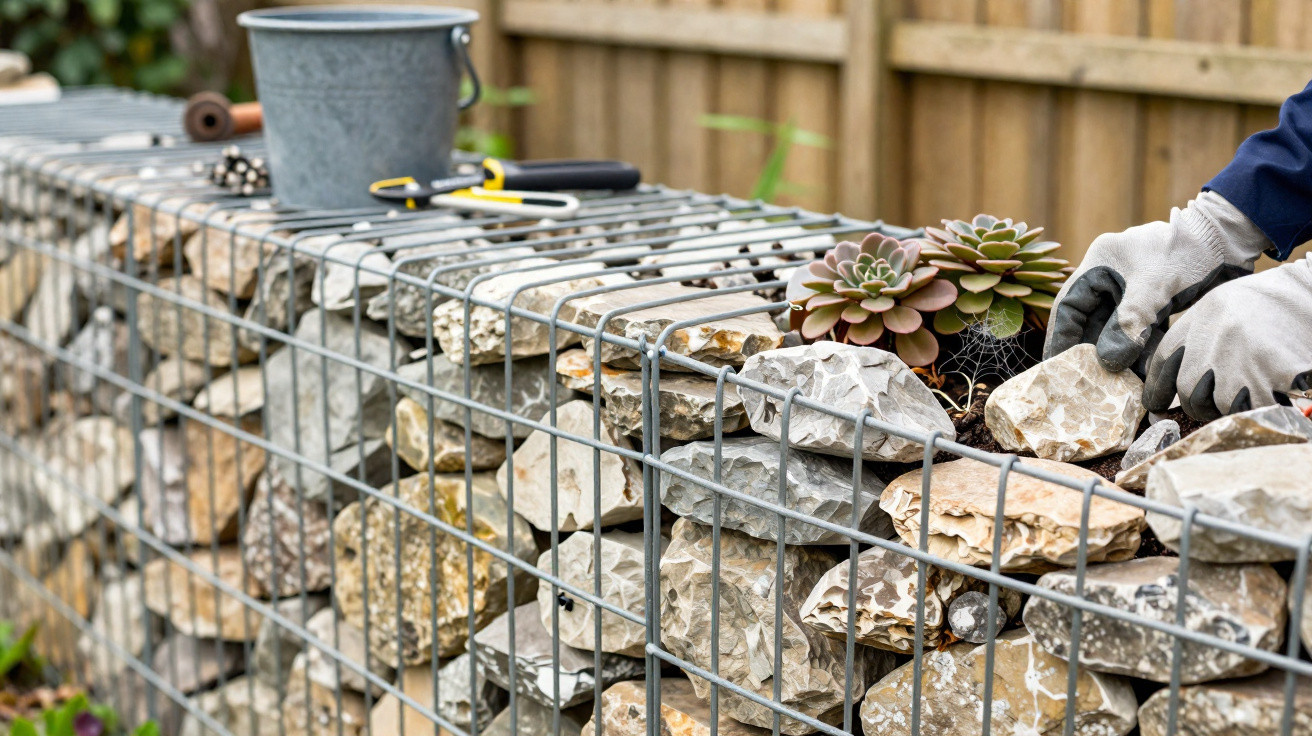
A gabion wall often starts as a style choice: a clean-edged boundary by a patio, a screen in front of an unattractive fence, or a substantial-looking backdrop for planting. Stone in steel mesh has a contemporary, unfussy look, and it can seem more approachable than building a traditional stone wall.
After a few wet British seasons, though, the spaces in the wall can become part of the garden rather than simply a design feature. Small gaps provide shelter for invertebrates, collect the occasional leaf and seed, and create varied conditions of sun, shade and moisture. The key is to build the wall properly first, then avoid removing every bit of cover that develops naturally.
A gabion is more than stone in a cage
Gabions are wire-mesh baskets filled with stone. Larger versions have long been used in engineering works, particularly where a strong, free-draining structure is required. In gardens, they are used for low dividers, screens, raised features, seat surrounds and, when properly designed, retaining structures.
Unlike a solid rendered wall or close-board fence, a gabion has countless small changes in condition. Stones on a south-facing side can warm up in sunshine; deeper gaps remain shaded; and the lower section may stay damper after rain. Wind-blown debris and tiny amounts of soil can settle in a few crevices over time.
That does not mean every gabion becomes a wildlife haven, nor should an ornamental wall be made unstable in pursuit of one. But a soundly built wall can offer useful shelter alongside its practical role.
The most wildlife-friendly detail is often not an added feature, but a little restraint: leaving some sheltered gaps and avoiding needless disturbance.
What might use the gaps
What appears in and around a gabion will depend on its position, the plants nearby and the wider neighbourhood. A wall beside a planted border, hedge or pond is likely to have more visitors than one surrounded by paving.
You may notice:
- ground beetles and other invertebrates moving around the base;
- spiders using protected corners and the mesh for webs;
- woodlice in cool, damp lower gaps;
- ladybirds and other insects sheltering in dry crevices;
- self-seeded plants establishing where a small amount of growing medium has collected;
- occasional amphibians or reptiles using nearby cover in well-connected gardens.
Do not expect to identify particular species simply because a wall has gaps. Solitary bees, for example, need nesting holes of suitable dimensions and conditions, so a gabion should not be treated as a replacement for a properly made bee nest site.
Stone exposed to sun can hold warmth for a while after daylight fades, while deeper spaces offer some protection from wind. In a British winter, however, a gabion is still exposed to cold and wet weather. Its value is shelter and variety, not guaranteed warmth.
Put the wall in a living part of the garden
The setting matters at least as much as the stones. Wildlife needs food, water, cover and safe routes through the garden, not just a place to hide.
If you are planning a low decorative gabion, consider placing it near:
- a mixed hedge or dense shrub border;
- flowering perennials and herbs such as thyme, marjoram or oregano;
- a small pond or damp planted area, where appropriate;
- a modest log pile in a quiet corner;
- longer grass, ground cover or a less intensively managed border.
Keep some open cavities. Packing every space with compost or plants can compromise drainage, create a weed trap and defeat the visual point of the stonework. A better balance is open stone with planting at the base and, if wanted, a handful of deliberately formed planting pockets.
Build for stability before planting
Stone-filled baskets are extremely heavy, even when the wall is quite low. The stone size, basket specification, base preparation and internal bracing must all suit the proposed structure.
For a simple non-retaining garden feature, the process is broadly as follows.
1. Decide what the wall needs to do
A low ornamental divider is very different from a wall holding back soil, supporting a slope or standing beside a drive. Retaining walls need proper design for ground pressure, drainage and loading; this is not a casual weekend project.
2. Prepare a firm, level base
Follow the gabion supplier’s installation guidance. A stable, level foundation helps prevent settlement and distortion. Before digging, check for buried cables, pipes and drains.
3. Choose suitable stone and baskets
The stone must be larger than the mesh openings, so it cannot work loose and fall out. Angular stone often interlocks more effectively than smooth rounded pebbles. Use baskets, lacing wire and internal braces designed for the job, and fit the braces as instructed to prevent bulging.
4. Fill carefully
Hand-place the most attractive stones on the visible face, then fill behind them without creating oversized voids. Do not remove structural stones later to make planting spaces.
5. Add planting only where it has been allowed for
If you want plants in the face, create a few small, secure pockets while building. Use a free-draining growing medium and choose plants with modest root systems. For many walls, planting at the foot of the gabion is the safer and simpler option.
A gabion should remain a stable structure even if every plant dies back, is removed or is left untouched for a season.
Plants that soften a sunny gabion
In a sunny, free-draining position, plants that tolerate dry conditions can soften the outline without needing rich soil. Suitable options may include:
- houseleeks (Sempervivum);
- sedums;
- thrift;
- aubrieta;
- small campanulas;
- creeping thyme.
Plant according to the actual conditions, rather than the appearance of the wall. A north-facing wall in a damp garden is unlikely to suit plants chosen for a hot, dry rockery. In shadier positions, use suitable perennials or ferns in the soil at the base rather than forcing roots into narrow stone gaps.
Avoid vigorous plants that could swamp a small feature or spread beyond your garden. Even drought-tolerant planting needs watering while it establishes, particularly during dry spells.
Common mistakes that spoil the result
Gabions are versatile, but they are not a universal answer to awkward levels or poor boundaries. These errors can affect both appearance and safety.
- Using a decorative basket as an unengineered retaining wall. Soil and water pressure can cause serious failure.
- Choosing stones that are too small for the mesh. They can shift or escape through the openings.
- Omitting internal braces. The basket sides may bow under the weight of stone.
- Filling the centre with loose soil. This can reduce drainage, encourage weeds and add unpredictable pressure.
- Leaving sharp wire ends exposed. These are a hazard near paths, seating and play areas.
- Treating every cobweb, leaf or insect as mess. Some seasonal untidiness is part of allowing the wall to settle into the garden.
- Building tight against timber or a boundary with no inspection access. Trapped debris and overgrown plants are harder to manage.
Safety and considerate maintenance
Wear sturdy gloves, eye protection and substantial footwear when handling wire mesh and stone. Fold, cap or secure cut wire ends as specified by the system manufacturer. Keep children and pets away while baskets are being filled, and do not climb or sit on a wall unless it has specifically been designed for that use.
Seek professional advice for any wall that retains ground, supports a bank, affects drainage or is close to a building, public pavement or vehicle access. Consider where rainwater will go: a new hard-landscaping feature should not direct runoff towards your home or a neighbouring property.
If you find wildlife using the wall, delay non-urgent work and inspect carefully before moving stones. Slow worms, for example, are protected in Great Britain from deliberate killing and injury. If you suspect a protected species is present, seek advice from the relevant nature conservation body or a suitably qualified ecologist before disturbing the structure.
Avoid routine pesticide use around the wall. For cleaning, a stiff brush and removal of litter are usually enough. Never mix cleaning products, and never mix bleach with acidic products such as vinegar, as dangerous gases can be released.
Let it settle into the garden
A gabion can keep its graphic, architectural look while becoming less stark over time. Weather softens the stone, planting fills out around the base and a few webs or fallen leaves make it feel connected to the rest of the garden.
Build the wall as a safe, well-drained structure first. Then give it the best chance of becoming part of a richer garden by planting nearby, keeping chemicals to a minimum and resisting the urge to clear every crevice. Two winters on, the stones may still be the feature you intended - but the spaces between them may be doing useful work too.









Comments
No comments yet. Be the first to comment!
Leave a Comment