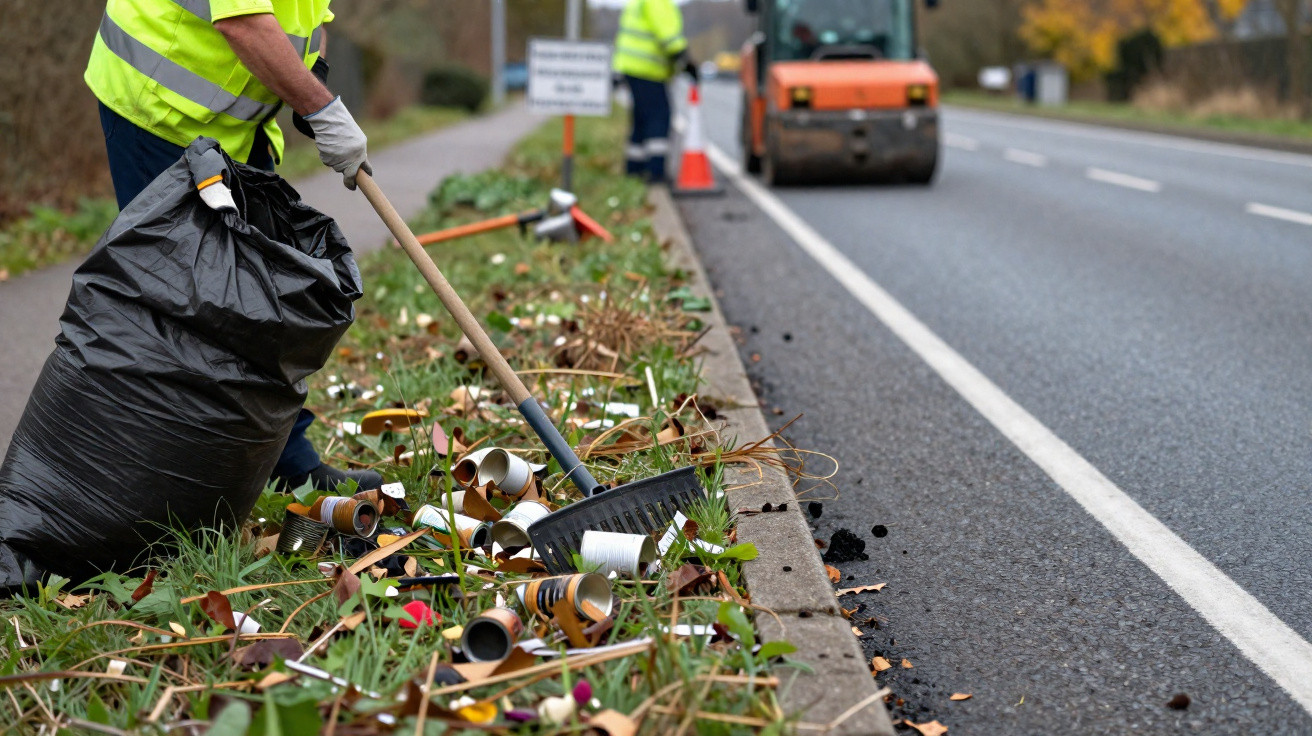
Potholes are an everyday irritation, but repairing them safely is not as simple as sending extra people out with a bag of tarmac. The key distinction in any proposal involving prison work is whether people are being asked to do specialist highway repairs, or helping with lower-risk tasks that release trained crews for that work.
That distinction matters especially in a headline about Victoria, Australia. Victoria is a state, and Labor is the usual spelling for the Australian Labor Party. For UK readers, the useful question is broader: could supervised community work help keep roadsides orderly without compromising safety, decent work or proper investment in road maintenance?
What the headline can - and cannot - tell us
A phrase such as “sent out to repair roads” can cover a wide range of activities. It could mean direct pothole repair, but it could also mean support work around roads and public spaces.
Without a published scheme specification, it would be unsafe to assume that people in custody will fill potholes, operate machinery or work in live traffic lanes. Those are skilled, safety-critical jobs.
A carefully designed programme might instead involve supervised tasks such as:
- litter picking in suitable locations;
- clearing light debris from footways or verges;
- basic grounds maintenance away from moving traffic;
- removing low-level graffiti where it is safe to do so;
- tidying non-hazardous public areas; and
- assisting with depot-based work.
None of these tasks should be presented as a replacement for highway engineering. They may help teams concentrate on priorities, but they cannot resolve the structural causes of repeated road failure.
More hands can improve the appearance of a roadside. They do not remove the need for qualified people, safe traffic management and properly funded repairs.
Why potholes need specialist repair
Potholes usually develop when water enters small cracks in the road surface, weakens underlying layers and is then worked loose by traffic. Repeated wet weather, freezing conditions and heavy vehicles can all make the problem worse.
A lasting repair may require more than filling a visible hole. A competent highways team may need to assess the surrounding surface, remove failed material, check whether drainage is contributing to the defect and compact suitable repair material correctly.
There are also practical constraints which extra unskilled labour cannot simply remove:
- Inspection: Defects must be identified, recorded and prioritised.
- Traffic control: Working beside moving vehicles needs a planned, safe system of work.
- Weather: Rain, low temperatures and standing water can affect repair materials and their durability.
- Plant and materials: Road repairs often require specialist vehicles, tools and approved products.
- Underlying failure: A recurring pothole can indicate problems below the surface, rather than a need for another quick patch.
In the UK, councils and National Highways contractors use trained operatives for these roles. Anyone considering a comparable initiative should keep that basic principle: work should only be carried out by people with the right competence, supervision and equipment.
Where supervised prison work might be appropriate
Work programmes for people in custody are not new in principle. Their value depends on whether the work is voluntary where appropriate, safe, genuinely purposeful and connected to opportunities after release.
For external work, suitability assessments are essential. Not every person in custody will be eligible, and public safety, individual welfare and operational security must come before a target for completed jobs.
1. Choose tasks with clear limits
Lower-risk work should be clearly separated from technical road maintenance. Participants should not be asked to:
- work in live carriageways;
- set out traffic management or lane closures;
- operate unfamiliar plant or powered cutting equipment without proper training;
- handle hot asphalt, bitumen or hazardous chemicals;
- deal with sharps, unknown waste or suspected asbestos; or
- assess whether a road defect is structurally safe.
Even litter picking can be unsuitable in a fast-moving road environment. Location matters as much as the task itself.
2. Provide proper supervision and equipment
A quick briefing is not enough for outdoor public work. Participants need task-specific instruction, a named supervisor, a clear stop-work process and correctly fitted protective equipment.
Depending on the activity, this may include high-visibility clothing, gloves, sturdy footwear, weatherproof layers and eye protection. In hot conditions, water, shade and breaks matter; in cold or wet conditions, people need suitable clothing and a way to warm up.
Any worker who finds needles, chemical containers, damaged cables, dead animals, unstable structures or suspicious material should stop and report it rather than attempting to clear it.
3. Make rehabilitation the point
A scheme has greater value if it builds evidence of reliability and practical experience that can be used after release. That could include attendance records, recognised training where available, careers support and links with employers prepared to consider applicants with convictions.
Community work should not be a dead end: it should leave participants safer, more confident and better placed to find lawful paid work.
Pay, consent and fairness need scrutiny
Public work carried out by people in custody raises legitimate questions about pay and choice. It is not enough to say that a programme benefits the community; organisers should explain what participants receive in return and how they can raise concerns.
A transparent scheme should set out:
- whether participation is voluntary and how consent is recorded;
- payment or allowances, including any deductions;
- the hours, travel arrangements and breaks involved;
- the training, qualifications or references available;
- insurance, health and safety arrangements; and
- an independent route for reporting unsafe treatment or poor conditions.
Money saved for release can be useful, but it should not be used to excuse poor pay, unsafe work or the removal of normal employment opportunities. Rehabilitation is more credible when participants are treated with dignity and can point to skills that employers recognise.
It must not displace paid jobs
One major concern with any prison labour proposal is that it could undercut existing staff, contractors or apprentices. Calling work “additional” is not enough on its own.
Public bodies should be able to show which tasks were previously backlogged, what paid roles are already funded and whether the programme is adding capacity rather than replacing it. Consultation with staff, trade unions, local communities and organisations supporting people in custody can reveal problems before a pilot begins.
This is particularly relevant to road maintenance. A tidy verge may make a route look better, but it does not compensate for reduced inspection capacity, poor drainage, delayed resurfacing or stretched maintenance budgets.
The longer-term answer to potholes is generally a planned maintenance approach: clearing drainage, sealing early cracks, renewing worn surfaces and dealing with failures before they become hazardous. Support work may have a place, but it is not a substitute for that programme.
Common mistakes in pothole plans
High-profile pothole schemes can appear productive while delivering little lasting improvement. Common pitfalls include:
- Using vague language. Basic roadside tidying is not the same as repairing a road.
- Focusing only on visible holes. Drainage and weakened foundations can be the real cause of repeat defects.
- Relying on quick patches alone. Temporary repairs can be necessary, but repeated failures need investigation.
- Treating roadside work as low risk. Passing traffic, uneven ground, litter and poor weather all create hazards.
- Ignoring workforce impacts. New schemes should not quietly replace properly paid jobs.
- Measuring publicity rather than outcomes. Useful reporting includes repeat defects, completion times, safety incidents and participant outcomes.
- Overpromising. A small work scheme cannot solve a road-maintenance backlog caused by years of underinvestment.
Safety notes for the public and workers
Members of the public should never try to fill a pothole, place warning objects in a live road or approach an active work site. Report defects through the relevant road authority instead. In the UK, this will usually be your council for local roads, or National Highways for motorways and major A-roads in England.
Only report a location when it is safe to do so. If there is an immediate danger on a motorway or major road, use the emergency route appropriate to the situation rather than stopping on the carriageway yourself.
Workers should not burn weeds beside roads or drains, and should not pour household chemicals into gullies or defects. Never mix bleach with acidic cleaners, ammonia-based products or other chemicals: dangerous gases can be produced.
The practical test
The meaningful test for any Victorian proposal - or a similar idea in Britain - is not whether it creates a striking headline. It is whether it makes public spaces safer and better maintained while protecting participants, existing workers and the public.
A responsible pilot would have limited, suitable tasks; trained supervision; clear safety boundaries; transparent pay and participation rules; and published results. It would keep road repairs in the hands of qualified highway teams, while ensuring any work completed by people in custody offers genuine experience and a credible step towards employment after release.














Comments
No comments yet. Be the first to comment!
Leave a Comment