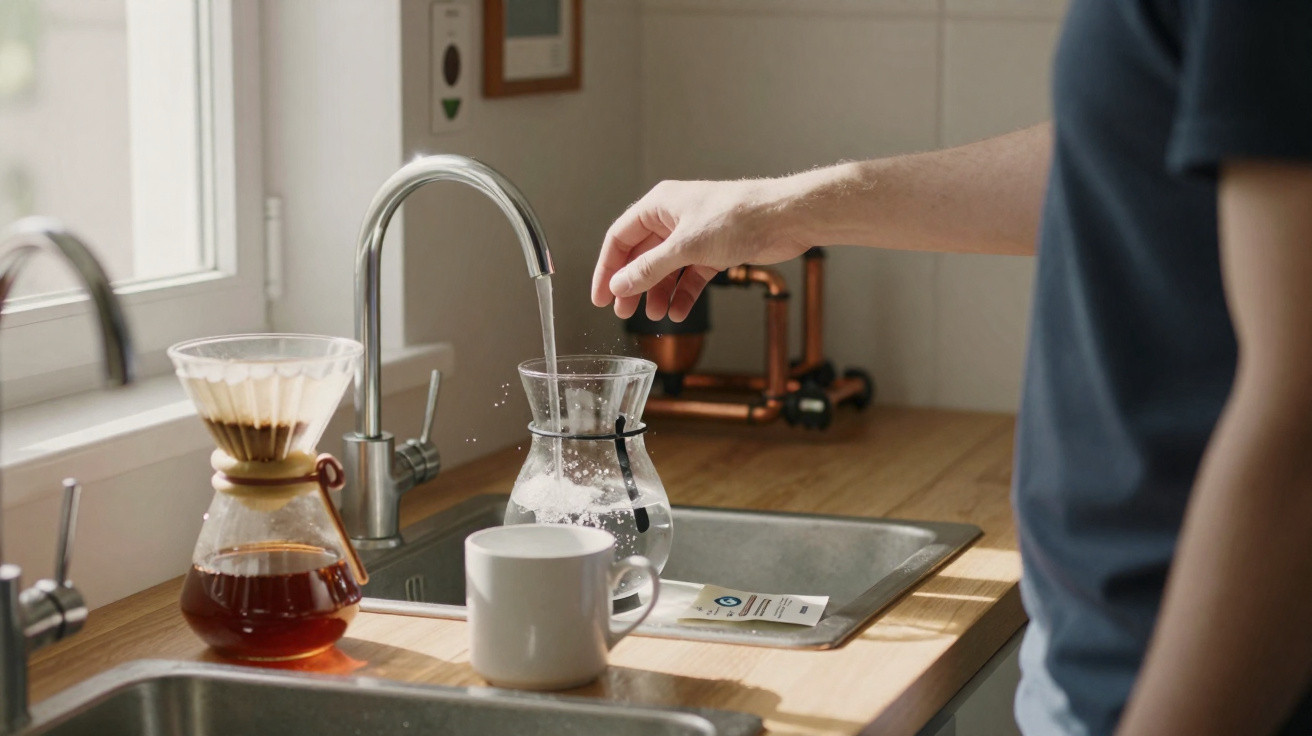
Almost everyone knows the routine: you stumble sleepily into the kitchen, switch on the machine, fill the pot with hot water straight away and save a little time. It sounds convenient and seems harmless. Yet health authorities now warn very clearly against doing exactly that. Hot tap water does not belong in the coffee pot – and the reason has less to do with the beans than with the pipes.
Why hot tap water is not intended for drinking
Authorities draw a clear distinction between cold and hot water from the tap. Cold tap water, which is specifically supplied as drinking water, is subject to strict monitoring. Laboratories test it regularly for germs, chemical substances and metal limit values.
Hot water, by contrast, passes through your own domestic system: pipework, a storage tank and perhaps a boiler in the cellar. This part of the installation is not officially monitored in the same way. No one routinely checks what happens in your hot-water cylinder or how ageing pipes in the home are performing.
Hot water from the tap is technically regarded as service water – intended for showering, bathing and washing up, not for coffee, tea or baby food.
Health ministries and specialist authorities make precisely this point: anyone preparing coffee or tea with hot tap water is using the system for something other than its intended purpose.
Metals from pipes: what ends up in your cup
The main issue lies in the materials used in domestic plumbing. Older properties can still contain lead pipes or lead connection fittings. Many other buildings use copper or nickel-containing alloys. Small quantities of all these metals can leach into the water.
The longer water remains in a pipe, the more substances it can draw from the pipe wall. Temperature accelerates this process: hot water absorbs metals considerably faster than cold water.
- Lead: a historic pipe material suspected of harming the nervous system and children's development
- Copper: can affect the liver and digestive system at high levels
- Nickel: may contribute to allergies and irritate the skin and mucous membranes
Measurements show that when the same pipe is supplied at different temperatures, water at around 25 degrees contains roughly twice as much lead as water at 15 degrees. This makes little difference to flavour, but it does matter for long-term exposure.
Boiling makes water free from germs, but not “free from metals” – and the concentration may even rise because liquid evaporates.
So, when hot water is drawn directly from the tap, you are heating water that has already dissolved more metal than its fresh, cold equivalent. Its metal content does not disappear in the kettle or coffee machine.
Stagnation in the tank: the ideal combination of warmth and standing time
The hot-water tank itself is another factor. Whether it is a conventional boiler in the bathroom or a large cylinder in the cellar, the water inside often remains still for hours. This combination of warmth and stagnation encourages two effects:
- increased release of metals from pipework and tank walls
- favourable conditions for certain bacteria
Legionella is the best-known example. It thrives particularly well in lukewarm to warm water. Strict temperature recommendations apply to showers in order to limit the risk of infection through water vapour. The system is simply not designed for making coffee.
Even where a tank is set to 55 to 60 degrees, all technical requirements focus solely on hygiene for bathing and washing. No one designs the hot-water circuit on the assumption that it will be used to prepare drinks every day.
What authorities specifically recommend
The message from specialist bodies is straightforward: only cold tap water should be put into a saucepan, pot or machine for anything you eat or drink. This applies to:
- Coffee and espresso
- Tea and instant drinks
- Soup, pasta, rice and vegetables
- Baby food and bottles
First draw cold water from the tap, then heat it – that is the simple basic rule for greater safety in the kitchen.
If a flat or house has not been used for an extended period, cold water should first be allowed to run for one to two minutes. This flushes the pipework and reduces the proportion of water that has been standing overnight and absorbing metals.
This flushing is especially sensible protection in older buildings with an unknown installation history. The water that has run through can easily be used for cleaning or watering plants, so it does not have to go unused down the drain.
Who faces the most serious risk
In principle, metal exposure affects everyone who drinks tap water. However, some groups are more sensitive to lead and other substances:
- Pregnant women: lead can interfere with the development of an unborn child.
- Babies and young children: their nervous systems are still developing, so every additional exposure matters more.
- People with kidney disease: they may find it harder to excrete metals.
For this reason, households with babies or pregnant women should strictly use only freshly drawn cold tap water for drinks and food. If in doubt, it is worth asking the landlord or an advice service about the age of the building's pipes.
Effect on flavour: why baristas have long used cold water
Beyond the health arguments, flavour is another reason not to use hot tap water. Many baristas and keen home roasters pay close attention to water quality. Cold drinking water from the tap usually provides a good starting point because it is clearer, fresher and more stable in its mineral composition.
Hot water that has spent a long time in a boiler can taste slightly dull. Some people describe it as flat or faintly metallic. Yet every nuance matters for a good espresso or filter coffee: temperature, grind size, extraction time – and, of course, the water.
Anyone who fills their machine with fresh, cold water and heats it only in the appliance gets more flavour from the bean while also reducing unnecessary substances in the cup.
The same effect can be noticed with tea. When made with freshly heated cold water, many varieties taste cleaner, bitter notes are less pronounced and herbal teas seem less “stale”.
Practical everyday tips for the kitchen
A few straightforward habits can reduce the risk from metals without making busy mornings any more stressful:
- Always set the lever or tap control firmly to “cold” before filling a pot or kettle.
- After longer periods without use, let the cold water run briefly until it feels noticeably fresher and cooler from the tap.
- Descale the kettle regularly so that no additional layer of deposits forms.
- If old pipes are visible in the cellar or flat, speak to a plumber and seek advice on the pipe materials.
Anyone who drinks coffee regularly should ideally follow this advice consistently. One cup alone will not make a difference, but the total effect of daily habits can.
How limit values work and what they mean
Drinking-water regulations set maximum levels for lead, copper and other metals. These figures already include safety margins, but they apply to cold water defined as drinking water. Hot water falls outside that framework.
Water samples taken by suppliers typically come from the cold-water supply. Anything added within the property by old pipes or storage tanks does not automatically appear in these official tests. Responsibility for the condition of the installation generally lies with the owner or owners' association.
Anyone with concerns can commission a laboratory analysis of their household water. Many towns provide contact details, while some public health departments offer advice on suitable testing strategies. This can establish whether exposure is genuinely a problem in the home.
A conclusion without drama – but with a clear consequence
The authorities' warnings are not intended to cause panic, but to encourage a simple everyday change. Draw cold water, let it run briefly, then heat it – that is all it takes to avoid unnecessary metal loads in coffee. This step is particularly worthwhile for pregnant women, children and people living in older homes.
Flavour benefits too: starting the morning coffee with fresh cold water and careful preparation may cost a few seconds, but it delivers more aroma and greater safety. A small turn of the tap with a noticeable effect in the cup.















Comments
No comments yet. Be the first to comment!
Leave a Comment