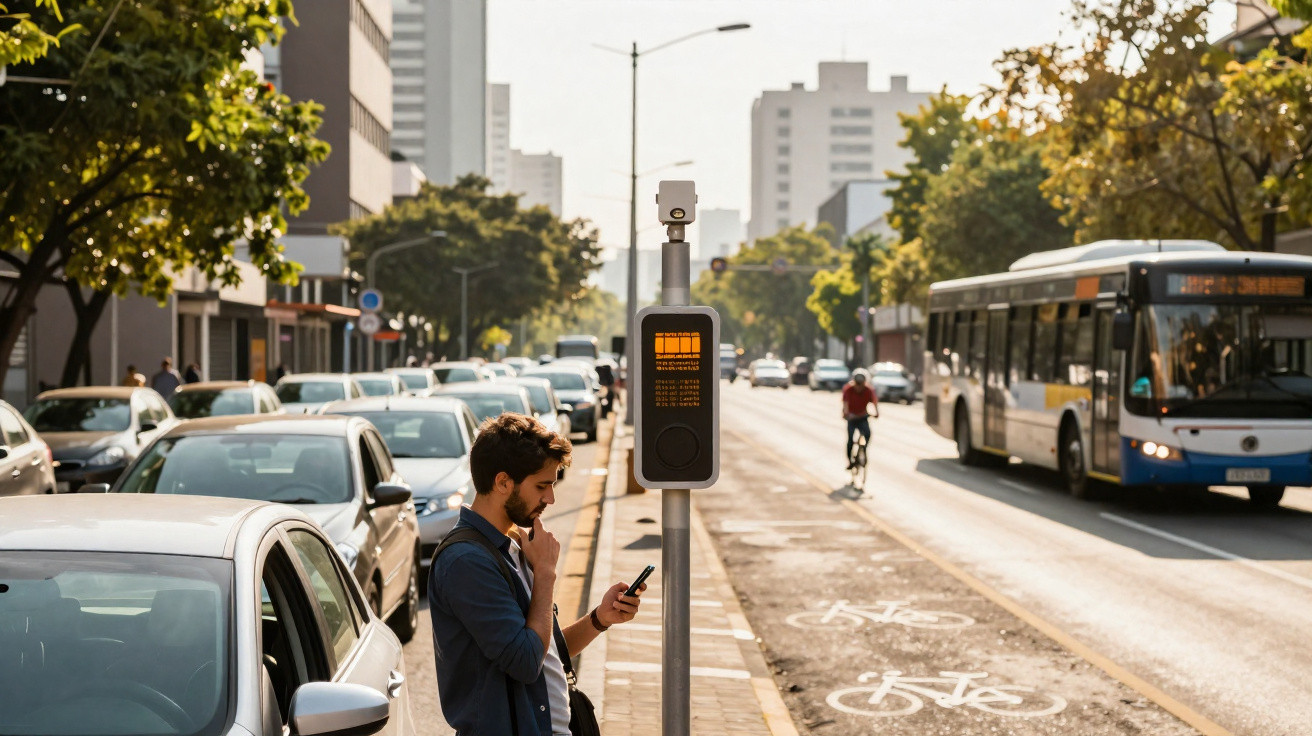
In cities across the world, the morning commute is beginning to look different as new rules gradually reshape everyday driving.
Some people see these changes as long-awaited action on air pollution and climate change. Others regard them as a levy on motorists with no practical alternative to using their cars. Congestion measures are being introduced road by road, through apps and cameras - while the debate around them grows more heated each week.
New rules, familiar roads, higher costs
From London and Manchester to New York and Los Angeles, local authorities are reconsidering where, when and how people may drive. The shared problem is congestion: excessive numbers of vehicles, limited road space and polluted air held between urban buildings.
Most new policies work in broadly the same way. Motorists pay either a daily charge or a fee per journey to enter designated areas during busy periods. Cameras scan registration plates, relay the information to central systems and automatically issue penalties when charges remain unpaid. Some programmes also include an emissions element, with higher fees for older vehicles that produce more pollution.
For many drivers, the first sign of change is not a council meeting, but a penalty notice arriving in the post.
Authorities often present these arrangements as “smart traffic management” or “clean air zones”. But for households already dealing with fuel costs, insurance and higher living expenses, they can feel like just one more bill.
Why cities argue congestion charges are necessary
Transport planners and city leaders maintain that the evidence supports the disruption. Road vehicles are a significant source of nitrogen dioxide (NO₂), fine particulate matter and greenhouse-gas emissions. In crowded urban districts, exhaust pipes are at roughly the height of children walking to school and people standing at bus stops.
Health bodies have linked prolonged exposure to traffic pollution with asthma, heart disease and lower lung capacity. Economists point to further costs: time lost in stationary traffic, delayed deliveries, buses moving slowly through queues and reduced productivity.
Supporters argue that the real hidden “tax” is the health damage and lost time caused by traffic jams and polluted air, paid by everyone, drivers or not.
Officials say the purpose of congestion rules is to alter behaviour. The principle is straightforward: making peak-time driving more costly should encourage some people to use public transport, share cars, cycle or travel at different times. With fewer cars on the roads, air quality should improve and journeys should become quicker for motorists who continue to drive.
Evidence from early adopters
Cities that brought in congestion charges years ago are now used as practical test cases, and their results influence today’s arguments.
| City | Change in traffic levels | Air quality impact |
|---|---|---|
| London (central zone) | Traffic entering the zone declined noticeably following its launch | Reductions in NO₂ and particulates near main roads |
| Stockholm | Car journeys decreased after charges were introduced, particularly during peak periods | Measureable improvements in local air pollutants |
| Milan | The inner zone saw fewer high-emission vehicles | Reduced soot levels and fewer pollution spikes |
Campaigners supporting new schemes frequently cite these findings. They contend that charging motorists is among the limited number of measures capable of delivering health and climate targets quickly enough.
Why many drivers feel singled out
Commuters, tradespeople, delivery drivers and families living beyond city centres often see the issue from a very different perspective.
Many of them live in places with infrequent, unreliable or entirely absent public transport. Buses may not operate at all for shift workers who start at dawn or finish close to midnight. Parents balancing school runs with several jobs commonly rely on a car simply to manage the day.
“Pay more or stay home” is how some drivers describe the new rules, especially those on tight budgets with older cars.
Once charges are announced, social media quickly fills with accounts from people who feel they have been left without a choice. There is the plumber who must transport tools, the care worker visiting patients confined to their homes and the lone parent living beyond the final railway station. In many areas, these are not unusual cases; they make up much of the local workforce.
The fairness question
This is the point at which claims of a “cash grab” emerge. Motorists question why they should shoulder such a large part of the cost of cleaner air when many of the alternatives have not yet been provided.
Several concerns are raised again and again:
- Regressive impact: Lower-income households are more likely to own older, more polluting vehicles and have fewer travel choices.
- Unclear spending: Residents cannot always see where congestion-charge income is spent or how it helps them.
- Limited consultation: Some believe decisions are made before consultation begins, with public views arriving late and making little difference.
- Business pressure: Independent shops worry that expensive journeys into town will reduce customer numbers.
Unless people can see clear local improvements - such as better buses, safer cycling routes and cleaner vehicles - charging schemes may appear less like environmental action and more like easy revenue-raising.
Where the money goes: promises and perceptions
Most local authorities state that revenue from congestion charges is ring-fenced for transport improvements. This can cover cleaner buses, tram networks, broader pavements or support for low-income workers and smaller businesses adapting to the changes.
Even so, many people find it difficult to link what they pay with visible outcomes. A figure in an annual budget is less noticeable than an unexpected parking penalty. A camera installed at the end of a road is immediately obvious, whereas a new bus service or safer junction may take years to arrive, if it arrives at all.
Trust becomes the quiet battleground: if residents do not believe promises on how money will be spent, every new rule looks suspect.
Independent audits, open reporting and straightforward local data can make it easier to show where every pound or dollar is going. Some authorities publish maps showing projects paid for through congestion charges in an effort to demonstrate that drivers’ fees create benefits for the wider community.
Technology that monitors, bills and sometimes goes wrong
The systems behind these schemes are becoming ever more digital. Automatic number-plate recognition cameras cover major routes. Payment apps alert motorists as they pass across invisible boundaries. Algorithms verify payment and produce fines for those who have not paid.
Supporters say this approach limits human mistakes and reduces administrative expenses. However, the technology is not flawless. Registration plates can be read incorrectly, hire vehicles may be charged in error and appeals can build up in backlogs.
For motorists who already distrust the rules, an incorrect penalty can strengthen the impression that the local authority is a predator rather than a partner. Prompt and fair handling of mistakes is vital to the legitimacy of any scheme that relies on automated enforcement.
Possible routes to a fairer congestion-charge system
Some specialists argue that congestion rules can still be effective while reducing the burden on people least able to pay. Better results usually come from combining pricing with exemptions and investment.
Options being considered include:
- Reduced or capped fees for lower-income residents who need to drive to work.
- Grants enabling tradespeople and small firms to replace vehicles with cleaner vans.
- Temporary exemptions for carers, disability badge holders and essential services.
- Commitments to spend an agreed proportion of revenue on new public transport in outer areas, rather than solely in city centres.
Under this model, congestion charges form part of a wider shift in transport rather than operating as an isolated punishment. Their effectiveness depends greatly on local circumstances - including a city’s size, the quality of bus and rail services, and the location of affordable housing.
Key terms drivers keep hearing
Discussions about congestion often feature technical phrases that can seem remote from everyday concerns. Several terms underpin many of the rules:
- Congestion charge: A payment for driving into or around a defined area, commonly during busy periods.
- Low emission zone (LEZ): A location in which highly polluting vehicles are restricted or required to pay more.
- Ultra low emission zone (ULEZ): A more stringent form of LEZ, allowing unrestricted access only to the cleanest vehicles.
- Road pricing: A wider system in which fees differ according to distance travelled, time of day or route.
Knowing the distinction matters for drivers deciding whether to replace their vehicle, alter their commute or challenge a penalty.
Everyday scenarios: who pays what?
A few common examples show how new congestion rules can affect people differently:
- A nurse living at the edge of a city works three 12-hour shifts each week, including overnight work. Train times do not suit her schedule and hospital parking is scarce. Unless healthcare workers receive dedicated exemptions, a daily congestion charge can rapidly reduce her earnings.
- A self-employed electrician drives an older diesel van purchased second-hand. Replacing it with a cleaner vehicle involves a substantial upfront expense. Grants or scrappage schemes may reduce the burden, although application processes and waiting lists can delay the change.
- A family in an inner suburb has a fairly new hybrid car and good bus connections. The charge encourages them to leave the car at home for school journeys and errands, reducing neighbourhood traffic while saving fuel costs.
These situations show why a single policy rarely works equally for everyone. Its effects are shaped not only by the type of vehicle owned, but also by income, work patterns, disability and postcode.
Health benefits, climate targets and the longer view
Public-health researchers often say that clean-air measures should be assessed over years rather than weeks. Fewer asthma cases, heart attacks and childhood lung conditions mean fewer hospital appointments and lower healthcare spending. Such gains are seldom visible in headline figures showing what motorists pay.
Congestion rules also form part of a broader climate challenge. In many countries, road transport remains a major emissions source. Moving more journeys to buses, trains, cycling and walking lowers fuel consumption, while combining charges with incentives for electric vehicles can accelerate renewal of the vehicle fleet.
However, climate reasoning may feel distant to a person fined for crossing an unseen boundary while travelling to a late shift. Policies that connect noticeable local changes - quieter roads, safer crossings and more regular buses - with long-term climate benefits are more likely to gain lasting public support.
As more cities introduce tighter driving rules, the central issue remains unsettled: are congestion charges a fair cost for cleaner air, or an inflexible measure that penalises people with the fewest alternatives? The answer often depends less on the cameras themselves than on how openly, transparently and flexibly they are applied.
















Comments
No comments yet. Be the first to comment!
Leave a Comment