Building an earth-and-rock dam in winter is not simply a question of keeping machinery running. At the Shuangjiangkou project in Sichuan, south-west China, cold weather can interrupt one of the most exacting parts of the work: placing and compacting the clay core that helps make the dam watertight.
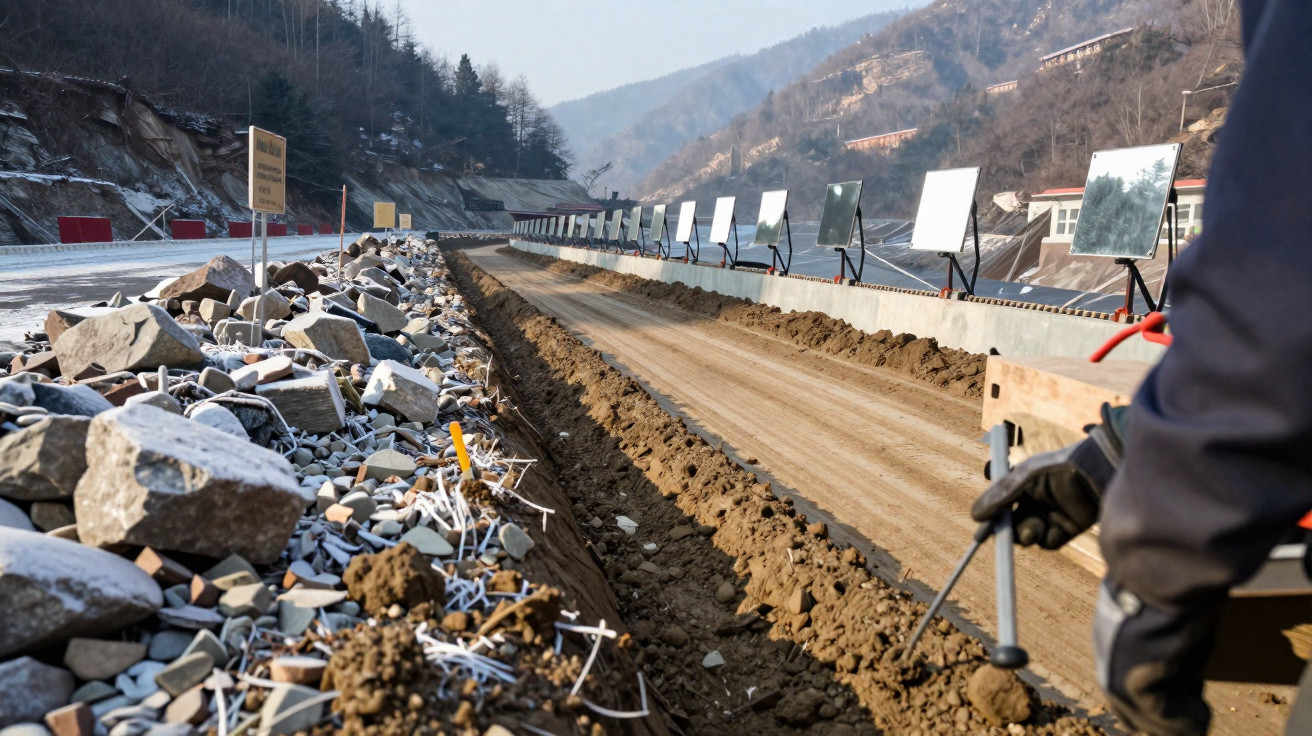
The reported solution is strikingly simple. A set of 27 large mirrors is being used to reflect sunlight towards the working area, raising the temperature locally and potentially giving crews more time to compact the clay safely on cold but sunny days.
Why the project is drawing attention
Shuangjiangkou is being built in a high mountain valley, at roughly 2,200 metres above sea level, near the confluence of the Jiaomuzu and Chuosijia rivers. The planned dam height is 315 metres.
If completed at that height, it is expected to exceed the 305-metre Jinping I dam, also in Sichuan, as the world’s tallest completed dam. That record is eye-catching, but the more difficult story is the construction challenge: creating a huge embankment in a cold, mountainous and seismically active setting.
The structure is a rockfill dam with a central clay core. Rockfill forms the substantial outer shoulders, while the clay core is designed to restrict seepage through the embankment. Work on either element has to follow a tightly controlled sequence of placing, compacting, testing and recording.
On a cold construction site, a few degrees can make the difference between a usable working window and a stop in earthworks.
Why the clay core needs careful treatment
Clay can only perform as intended when it is laid at the specified moisture content, density and temperature. Material that is too dry, too wet or partly frozen may not compact consistently.
Freezing is a particular concern. Ice within the material can stop soil particles packing tightly together; when it later thaws, the moisture condition can change again. For this reason, cold-weather earthworks are normally subject to strict stop criteria and on-site checks.
What controlled compaction involves
- Selecting and preparing fill – Clay or clay-rich material is processed to meet the project specification.
- Placing thin layers – Fill is spread in measured lifts, rather than tipped in deep heaps.
- Checking moisture and temperature – Teams assess conditions at the point of placement, not just the general air temperature.
- Compacting the layer – Specialist rollers make the required passes to achieve the target density.
- Testing before the next lift – Quality-control tests are recorded before further material is placed above it.
The mirrors do not replace any of these steps. They are intended only to make suitable conditions more achievable for longer.
How the mirrors are meant to help
The reflective panels direct available winter sunlight towards the clay-core zone. Reports about the installation have suggested that the system can raise the local temperature by around 3°C.
That is not a site-wide change, and it will not turn a severe winter day into summer. Yet construction specifications can involve narrow temperature limits. A modest local increase may help keep freshly placed material above a critical threshold for part of the day, allowing work to continue where it would otherwise have stopped earlier.
The possible benefits are practical:
- sunlight is used rather than continuous fuel-powered heating;
- the sensitive work area is targeted, instead of trying to warm the whole valley;
- clear winter weather can be used more effectively;
- interruptions to the sequence of earthworks may be reduced.
The system will be limited by weather and geography. Cloud, snowfall, fog, a low winter sun and shadows from valley sides all reduce the available solar energy. It is therefore a supplementary measure, not a guarantee of winter progress.
High altitude brings several problems at once
At around 2,200 metres, low temperatures are only one complication. Frost, snow, wind and poor access can affect people, equipment, haul roads and the material being placed.
Construction teams working in such conditions need to account for:
- fill and ground temperatures;
- freeze-thaw cycles and frost depth;
- wind exposure, visibility and safe lifting conditions;
- haul-road grip and access for heavy vehicles;
- water diversion and changing river flows;
- the availability of suitable unfrozen material.
The location also requires careful seismic engineering. For an embankment dam, reliable zoning of materials, drainage layers, filters and compaction are all central to long-term performance.
Height does not tell you how much electricity a dam can produce
Shuangjiangkou is also planned as a hydropower project, with reported installed generating capacity of 2,000 megawatts. However, a dam’s height should not be confused with its electricity output.
Generation depends on a combination of factors, including:
- the volume and seasonal pattern of river flow;
- the usable water head;
- reservoir operating rules;
- turbine and generator capacity;
- environmental flow requirements;
- the amount of water available during dry periods.
A lower dam on a much larger river can generate more electricity than a taller dam in a narrower mountain valley. The Three Gorges project, for example, is far lower than the tallest embankment dams but has much greater installed capacity because of its scale, flow and generating equipment.
Common mistakes when discussing the mirror project
The visual appeal of a field of mirrors can obscure what they can and cannot do.
- Calling Shuangjiangkou the current record holder. The record claim depends on the dam reaching its planned final height and being completed.
- Treating the reported temperature increase as valley-wide warming. Any benefit is intended to be localised around the clay-core work area.
- Assuming sunlight removes the need for testing. Moisture, density, material temperature and compaction results still decide whether work is acceptable.
- Equating dam height with energy output. Water supply, head and turbine capacity matter just as much.
- Assuming mirrors would suit every cold-weather site. Orientation, winter sunshine, available land and safety constraints would all need assessment.
Safety and quality controls come first
Reflective panels introduce hazards of their own. Bright reflected light can impair drivers, plant operators, surveyors and anyone working at height. The mirror layout also needs to be stable in high winds and adjusted safely.
A comparable installation would require a formal risk assessment and method statement covering glare, wind loading, panel maintenance, exclusion zones and safe alignment. Reflections should not create hazards for public roads, aircraft, nearby buildings or wildlife habitats.
Solar heating can extend a working window, but it must never override cold-weather stop rules or the dam’s compaction specification.
Workers should continue to measure the temperature of the material at the point where it is being placed. Air-temperature readings taken elsewhere on site are not enough to confirm that clay is suitable for compaction.
The useful lesson is simpler than the headline
The 27-mirror installation is a focused response to one bottleneck: keeping temperature-sensitive clay work viable during cold, bright mountain days. It is not a substitute for engineering controls, but it may help protect the construction programme when conditions are right.
For other major projects, the broader lesson is to identify the process that genuinely limits progress, then address it with a measured and safe intervention. Sometimes that means advanced machinery. Sometimes, as at Shuangjiangkou, it may mean using winter sunlight more intelligently.









Comments
No comments yet. Be the first to comment!
Leave a Comment