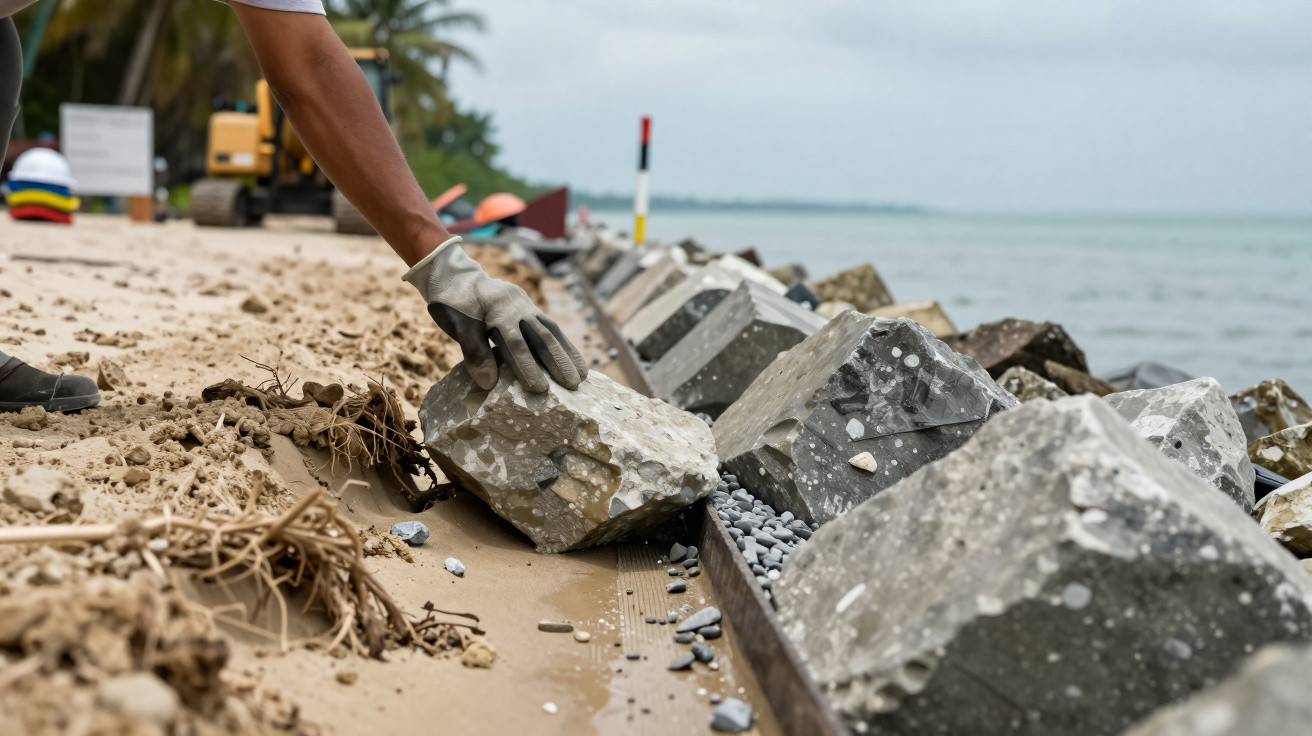
A coastal wall can look straightforward from a distance: rock, concrete and a long line between the sea and a settlement. In reality, the key to a useful defence is not simply building it high. It must be anchored into stable ground, drain properly and fit the way waves move along the whole shoreline.
The 1.8km project referenced here underlines the scale of protecting a low-lying island community. A wall may help shield homes, roads and vital services from erosion and storm waves, but it is only one part of the answer. Skilled construction, local involvement and a realistic maintenance plan matter just as much as the visible structure.
Why island coastlines need site-specific answers
Small islands can be highly exposed to coastal change. There is often little room to move roads, homes, water infrastructure or public buildings further inland. A severe storm can therefore affect transport, power, access to services and day-to-day life at once.
Before choosing a wall, engineers need to establish what is actually causing the damage. Common issues include:
- waves attacking the shore during storms;
- gradual loss of beach or dune material;
- overtopping, when water passes over the coastal edge;
- flooding through drains, tidal outlets or low ground;
- weak or unstable ground beneath a road or building.
A seawall or rock revetment can be appropriate where built-up land is already at risk. It is not, however, a standard solution that can be repeated unchanged around an entire coast.
A coastal defence is only as reliable as its foundations, drainage and connection to the shoreline around it.
What a 1.8km protective wall can involve
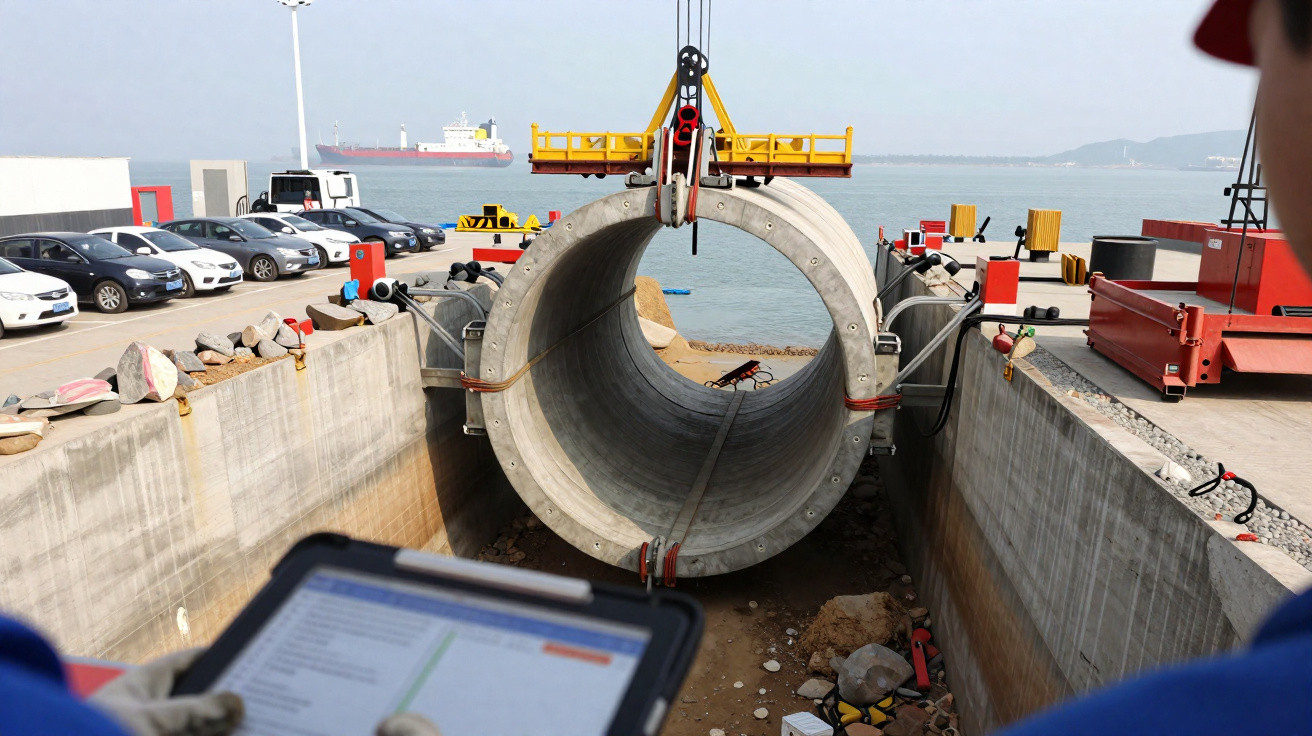
A wall running for 1.8km is a major civil-engineering task, particularly on an island where heavy plant, stone, fuel and specialist parts may have to arrive by sea. The part visible above ground is only one element of the work.
Depending on the site, the construction may include:
- prepared and compacted ground beneath the defence;
- geotextile and filter layers to keep fine soil from washing away;
- rock armour or reinforced concrete sections;
- protection at the base, known as the toe, to limit scour;
- drainage routes to relieve water pressure behind the wall;
- safe paths, steps or access points for residents and maintenance teams;
- secure tie-ins at either end, so water cannot erode around the new structure.
Rock revetments use a sloping layer of large stone to absorb and break up wave energy. They need sufficient width, properly sized durable rock and suitable ground beneath them. Vertical concrete walls can take up less space, which may be useful beside a road or densely built area, but waves can reflect from them and scour the seabed at their base if the design does not address it.
The work behind the word “tradies”
“Tradies” is an Australian informal term for tradespeople. On a coastal project, it can describe a much wider team than the people laying concrete or positioning rock.
Surveyors and engineers set out the correct levels and alignment. Plant operators prepare the ground and move heavy material. Steel fixers, carpenters and concreters form reinforced sections. Logistics and drainage teams keep deliveries, water management and temporary works organised.
On islands, everyday practical decisions can be as important as a drawing. Work may need to pause around high tides, rough seas or heavy rain. Storage for cement, reinforcement, fuel and equipment needs planning in a wet, salty environment. If a machine breaks down, a replacement part may not be available quickly.
Involving local workers can also make the completed wall more manageable in the long term. Training in inspections, minor repairs, safe plant operation and recording defects can be valuable once visiting construction crews have left.
Key controls during construction
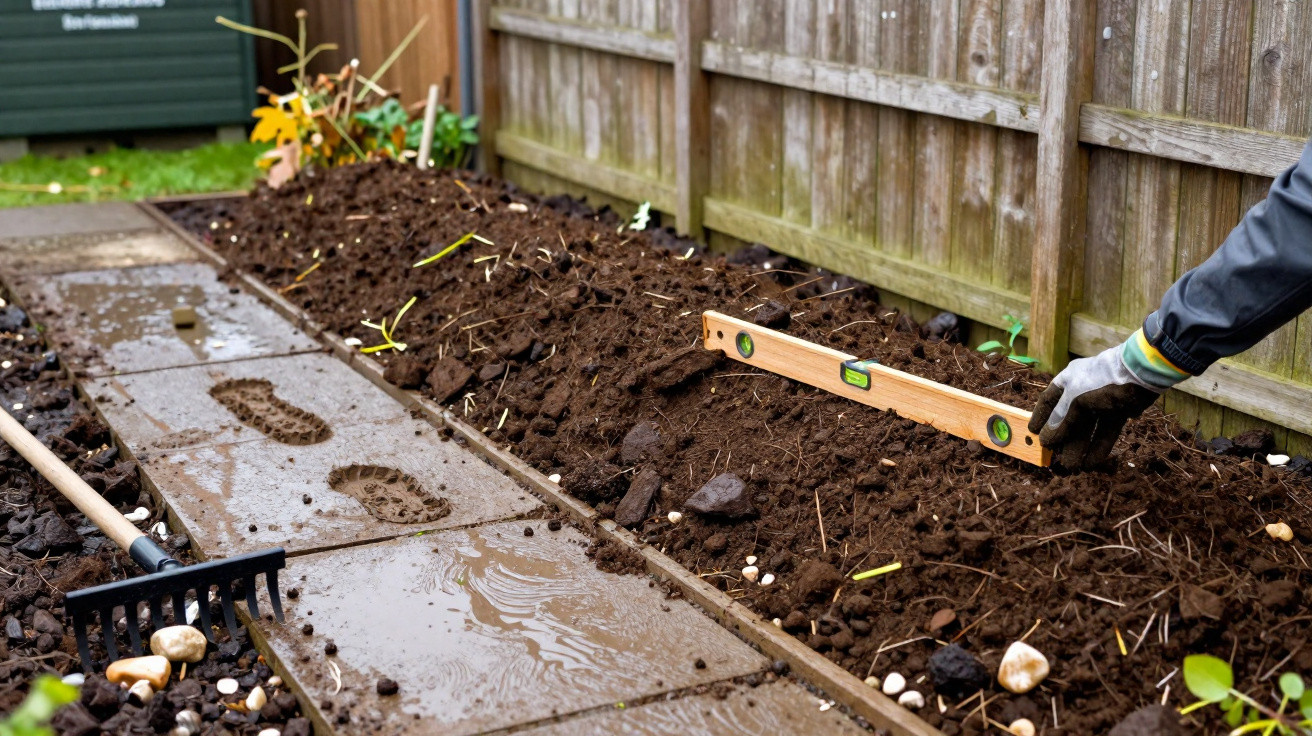
- Survey before excavation. Record ground levels, drainage routes and the existing shoreline condition before work begins.
- Protect the base. Remove unsuitable ground where necessary, compact fill in layers and install specified filters correctly.
- Build in stages. Avoid leaving incomplete sections exposed to rough weather or wave action without temporary protection.
- Keep drainage working. Check outlets and channels during the works; trapped water can build pressure behind a wall.
- Inspect after severe weather. Look for displaced rock, cracking, settlement, scour holes and erosion at the ends of the structure.
A wall has to work with the wider coast
Hard defences can be necessary where a road, homes or essential infrastructure are immediately threatened. But they change how waves and sediment behave. A structure that protects one frontage may contribute to erosion nearby if the wider shoreline has not been considered.
That is why a broader coastal plan is important. Depending on the location, it may combine a wall with lower-impact measures such as improving drainage, restoring dunes, protecting existing coastal vegetation, raising vulnerable routes or allowing space for a beach to adjust in less developed areas.
These measures are not interchangeable. Coastal planting, for example, may be useful in sheltered places with suitable ground conditions, but it is not a replacement for engineered protection where powerful waves are already reaching a road or building. The tide range, seabed, soil, wave exposure and local land use all affect what is realistic.
The practical question is not only “how high should the wall be?” but “where will the water go around, beneath and behind it?”
Common mistakes on coastal wall projects
Many expensive problems start before the first concrete pour or stone delivery. A coastal wall should never be treated as a cosmetic upgrade to the waterfront.
- Building too low. A barrier that copes with ordinary high tides may be overtopped during severe weather.
- Neglecting the toe. Wave action can remove material at the base and cause settlement or failure.
- Leaving the ends vulnerable. Water often exploits the point where a new defence meets natural ground.
- Using inadequate filter layers. Fine soil can wash out through gaps in armour stone if layers are wrongly specified or installed.
- Blocking natural drainage. Water trapped inland of a wall can flood land or undermine the structure.
- Treating handover as the finish. Defects need regular checks and repair after storms.
- Ignoring local users. Residents, fishers and maintenance workers may spot access, drainage or safety concerns that are not clear from plans alone.
Safety and environmental care on site
Coastal construction brings together heavy lifting, moving plant, changing tides, unstable ground and deep excavations. Work should be planned and supervised by competent people, with clear exclusion zones around machinery and safe procedures for lifting, excavation and work near water.
Nobody should work beneath suspended loads or enter an unsupported excavation. Tide and weather limits should be agreed in advance, with a clear stop-work process if conditions worsen. Life-saving equipment, communications and access routes should be available where people are working close to the sea.
Fuel, wet-concrete washout, sediment and waste need to be contained so they do not enter the water. If damaged services, unknown materials or potentially hazardous waste are found, work should stop until they have been assessed properly.
Small-scale coastal works can also have consequences. Homeowners and local contractors should not copy large seawall details without professional advice and the necessary permissions. An improvised barrier may redirect water towards neighbouring land, obstruct drainage or become dangerous in rough conditions.
Maintenance is part of the protection
A 1.8km wall may provide important protection, but it needs a plan for the years after construction. That means access for inspections, records showing where drainage features are located, and a route for obtaining repair materials after severe weather.
Simple monitoring can help identify problems early:
- repeat photographs taken from the same points;
- notes of overtopping and flooding events;
- checks of beach level and exposed foundations;
- post-storm inspections of joints, drainage outlets and rock armour.
For any construction team working on an island coast, success is not measured only in metres completed. The finished defence needs to be safe, maintainable and appropriate for the people living behind it.
A wall can be a significant line of protection when the weather turns. Its best chance of lasting comes from sound design, careful workmanship, local knowledge and the commitment to inspect and repair it long after the machinery has gone.














Comments
No comments yet. Be the first to comment!
Leave a Comment