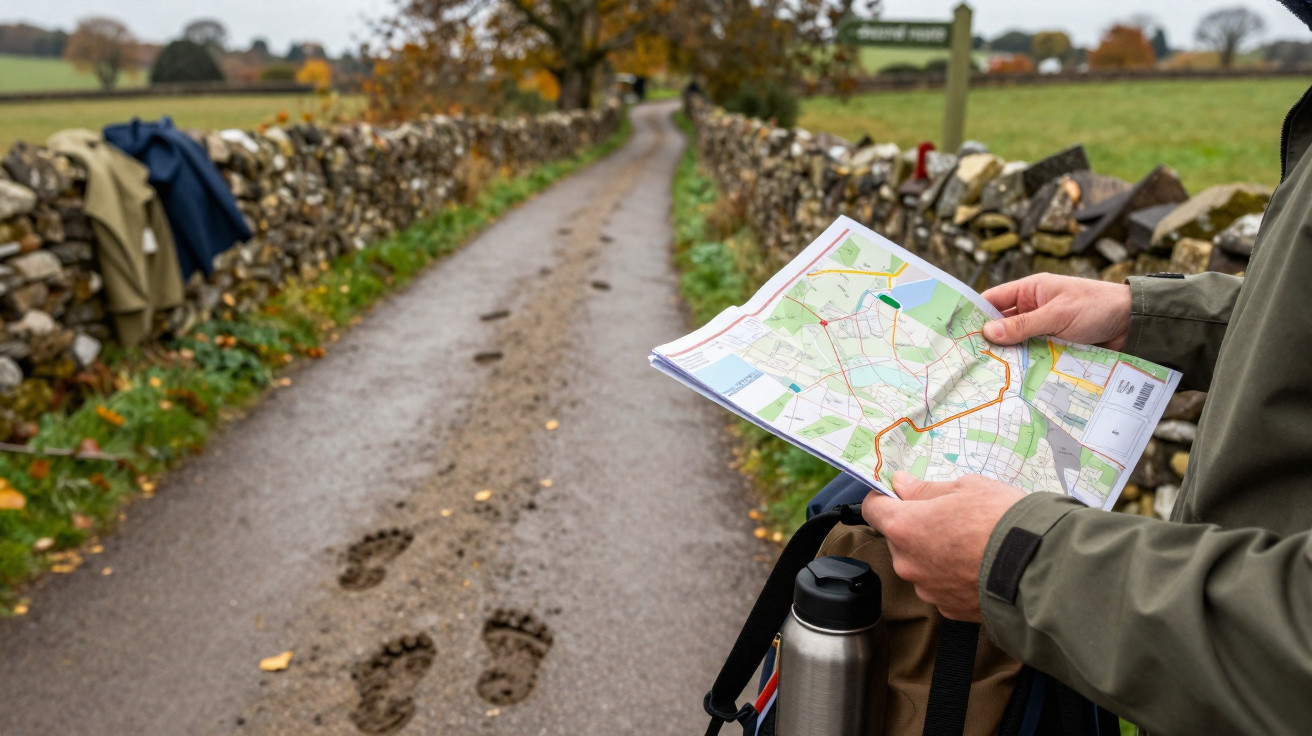
The saying “He who walks alone arrives faster, but he who walks accompanied goes further” is often used when someone is deciding whether to press on alone or ask others to get involved. Its useful message is simple: working independently can be quicker, but the right support can make a difficult or long-term goal easier to sustain.
It is widely attributed to Arabic tradition, although the exact wording and origin are hard to verify; similar versions are linked to several cultures. Rather than treating it as a rule about who should do what, it is best read as a prompt to choose the right approach for the journey ahead.
The plain-English meaning
Taken literally, a person walking alone can set their own pace, choose a route and stop whenever they like. There is no need to wait, compromise or explain a decision. For a short, straightforward journey, that freedom may indeed get them there sooner.
Travelling with others takes more coordination. People may have different speeds, needs and ideas about the route. Yet on a longer journey, companionship can bring practical help, encouragement and another perspective when things go wrong.
The contrast is between two different kinds of progress:
- Arriving faster: making quick decisions and acting independently.
- Going further: building endurance, sharing skills and coping better with setbacks.
Independence can help you begin without delay; good cooperation can help you continue when the task becomes demanding.
The proverb does not claim that groups are always wiser, or that solitude is a problem. It simply recognises that speed and staying power are not the same thing.
It is not a warning against doing things alone
There are plenty of occasions when getting on with something yourself is sensible. You may need a quiet afternoon to write, study or think through a decision. Sorting a cupboard, replying to an email or handling a familiar household task rarely needs a group discussion.
Working alone can offer:
- fewer distractions;
- faster decisions on simple matters;
- room to develop confidence and judgement;
- the freedom to work at your own pace.
Personal responsibility still matters, too. Other people can offer advice or encouragement, but they cannot make every choice or do every difficult piece of work for you.
The warning is against assuming that self-reliance is the best answer in every situation. A project may need more time, knowledge or resilience than one person can reasonably provide.
Why the right company can take you further
Good collaboration is more than splitting a list of jobs. Different people notice different things. One person may spot a risk, another may understand the practical detail, and someone else may keep the project moving when enthusiasm fades.
This can be especially useful when the goal is uncertain or complicated. A quick decision made alone might be perfectly adequate, but it may also leave weak points untested. Talking through an idea can reveal a problem before it turns into wasted time or expense.
In everyday UK life, this might mean:
- friends keeping each other company on regular walks through a dark, wet winter;
- relatives sharing the work of clearing, decorating or maintaining a home;
- colleagues bringing different skills to a complicated project;
- neighbours organising a local clean-up or community event;
- a learner joining a class, club or study group after an early setback.
None of this means that any group will work well simply because it is a group. Trust, clear communication and a shared aim make the difference.
Speed and distance measure different things
The proverb is useful because it asks a question that is easy to overlook: are you trying to finish quickly, or create something that will last?
One person might repaint a small bedroom in an afternoon. A wider renovation, however, may call for skilled trades, sound advice and realistic planning. Trying to rush unfamiliar electrical, gas or structural work alone can create risks as well as poor results.
At work, someone may draft a proposal quickly on their own. A team review may take longer, but it can clarify responsibilities, test assumptions and make it easier for people to support the final plan.
When deciding how to proceed, ask:
- What genuinely needs to happen quickly?
- What needs to keep working over time?
- Where would another person’s skill, challenge or encouragement improve the result?
The first answer may point towards independent action. The second and third often point towards collaboration.
How to use the idea in everyday life
You do not have to choose between total self-sufficiency and involving everyone you know. The practical skill is identifying where support would be useful.
1. Define the journey
Name the goal clearly. Is it a one-off job, such as sorting a cupboard, or a longer aim such as retraining, moving home or setting up a local group? The more complicated or long-running the task, the more likely it is that support will help.
2. Identify what is missing
“Help” can be vague. You may need a second pair of hands, specialist knowledge, accountability, a lift, childcare cover or simply someone who will listen and ask sensible questions.
3. Choose people carefully
The right companion is not necessarily the closest or most enthusiastic person. Look for people who are dependable, respectful and clear about what they can offer. An unsuitable partnership can add stress and delay.
4. Agree the basics early
For a shared task, decide who is doing what, when it needs doing and how decisions will be made. This need not be formal, but unspoken assumptions are a common source of resentment.
5. Keep ownership of your part
Support should strengthen responsibility, not replace it. If you have agreed to do something, communicate early if circumstances change rather than leaving another person to pick up the pieces.
The point is not to avoid walking alone; it is to recognise when a longer road deserves shared strength.
What it can mean in relationships and communities
In friendship, the saying can be a reminder that struggling in silence is not always necessary. Asking a friend to accompany you on a difficult errand, or sharing a worry, can make a hard week feel more manageable.
In families, it may mean sharing recurring work instead of allowing one person to become the default organiser, cleaner or carer. The person who already knows how everything works may complete a task fastest, but teaching and dividing the work can be fairer and more sustainable.
In a neighbourhood, one resident can pick up litter on their street, while a small group can establish a regular clean-up, contact the council where appropriate and help the effort continue. Shared action does not guarantee success, but it can turn a good intention into a routine.
Common mistakes when interpreting the saying
A proverb becomes less useful when it is treated as an instruction for every circumstance. Common misreadings include:
- Assuming groups are always better. A poorly organised group can make a simple task needlessly difficult.
- Waiting for help before starting. Seeking support should not become a reason to postpone an action you can safely take yourself.
- Confusing company with cooperation. Being surrounded by people is not the same as sharing effort or responsibility.
- Expecting others to solve everything. Friends, relatives and colleagues have their own limits, boundaries and commitments.
- Ignoring disagreement. Going further together requires honest conversation, not pretending conflict does not exist.
- Treating the attribution as certain. The saying is often labelled an Arabic proverb, but repeated online attributions do not establish a single, verified origin.
A note on the walking metaphor
For an actual countryside walk or hike, company can be reassuring, but it is not a substitute for preparation. Check the forecast and route, wear suitable footwear and clothing, carry water and a charged phone, and tell someone where you are going if you are heading into a remote area.
In the UK, conditions can change quickly, particularly on hills, coastal paths and moorland. Turn back if the weather, light or ground conditions make continuing unsafe.
A balanced lesson
The appeal of this saying lies in its balance. It values the satisfaction of acting on your own, while recognising that many worthwhile aims depend on trust, cooperation and shared effort.
If the task is clear, short and personal, working alone may be exactly right. If it will take time, affect other people or demand skills beyond your own, consider who could make the journey stronger. You may move a little more slowly at first, but be better equipped to keep going.

















Comments
No comments yet. Be the first to comment!
Leave a Comment