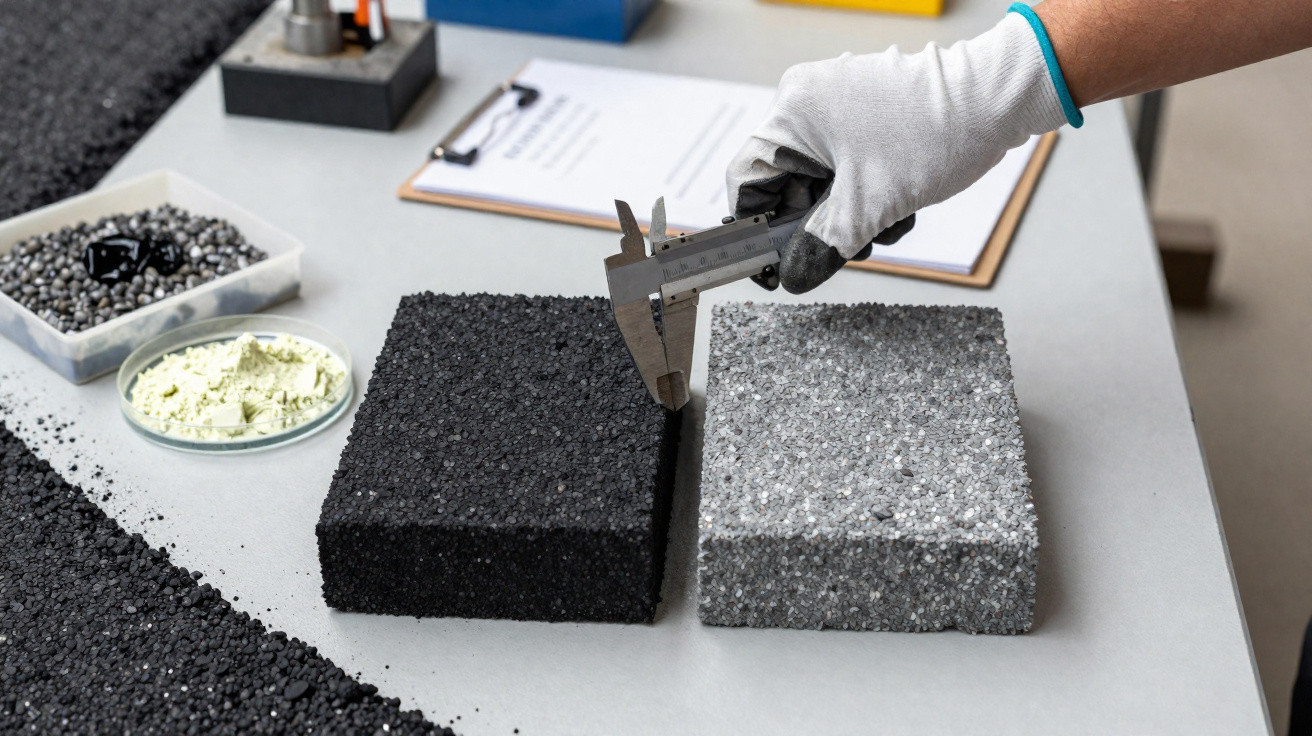
A road base disappears from view once the surface is laid, yet it carries much of the load. It helps spread traffic forces, supports the layers above and must cope with moisture beneath the carriageway. That makes household-waste ash seem an unlikely ingredient - but a Houston trial in 1974 used it as the principal aggregate in an asphalt-bound road base.
The headline figure was 89% incinerator ash by weight. After three years in service, the experimental section was reported to look and perform much like a nearby conventional section. The important caveat is equally striking: this was one monitored trial, not proof that untreated ash can be used freely in roads or driveways.
What Houston actually built
The project used a material described as littercrete: an asphalt-bound mix in which municipal waste incinerator ash replaced conventional mineral aggregate. Aggregate is the stone-like bulk material in asphalt mixtures, normally supplied by quarries or recovered from processed construction materials.
The experimental material was laid in a municipal street alongside a conventional hot-mix asphalt base, described in the records as blackbase. An asphalt layer was laid above both base sections.
The reported littercrete mix comprised:
- 89% municipal waste incinerator ash;
- 9% asphalt binder; and
- 2% lime.
A later highway review noted that the aggregate in the 150mm (six-inch) base was entirely incinerator ash. This was not a token addition of recycled content: ash made up almost all of the mineral portion of the working road layer.
The lesson is not that any ash can replace stone. It is that a difficult residual material may sometimes become an engineered product when it is properly characterised, processed and monitored.
Why an ash road base was considered
Incinerating municipal waste reduces the volume sent for disposal, but produces ash that must itself be managed. Road construction, meanwhile, requires substantial quantities of aggregate. It was therefore reasonable for engineers to investigate whether a residual material could replace some virgin stone.
The Houston scheme was a demonstration project from a period when public bodies were exploring uses for industrial and municipal by-products. It should not be read as a ready-made specification for widespread construction.
The same broad reasons still drive interest in recycled and secondary aggregates today:
- reducing reliance on virgin quarried material;
- finding controlled uses for residual materials;
- potentially cutting haulage where suitable material is available locally; and
- designing around dependable local supply.
Those possible benefits make robust technical and environmental assessment more important, not less.
What the three-year review found
After three years under traffic, the experimental and conventional sections were assessed through site observations and tests on extracted pavement cores. The 1977 assessment described the littercrete section as performing well and as almost identical to the conventional section in appearance and performance.
That is useful evidence because road materials are exposed to repeated loading, rain, heat, drainage conditions and seasonal changes in moisture. A material that looks promising in a short laboratory test may behave differently once it is built into a road.
But “almost identical” needs careful interpretation. It describes this section, built to this design, in Houston’s climate and under its particular traffic conditions, during that period. It does not show that every incinerator ash, road design or site would behave in the same way.
Why ash is not a simple aggregate substitute
Incinerator ash is not a single, uniform material. Its properties depend on the waste stream, combustion process, separation methods, processing and subsequent storage. This is why a historic demonstration cannot simply be replicated elsewhere by copying its proportions.
Some municipal waste incinerator ash can contain soluble salts and trace metals. It may also be porous and absorbent, affecting binder demand and the way a mixture responds to water. Different residues from the same facility may not necessarily have the same properties.
Studies of asphalt mixtures containing municipal solid-waste incinerator bottom ash indicate that performance can be affected by ash porosity and the proportion of conventional aggregate replaced. Depending on the material and mix design, high replacement rates can affect resistance to rutting in warmer conditions, moisture performance or behaviour at low temperatures.
The point is not that ash is automatically unsuitable. It must be treated as a distinct engineered material, not as anonymous fill.
What a modern project would need
A UK scheme considering ash-derived aggregate would need a far more structured process than adapting a historic recipe. Material classification, environmental controls, highway requirements and the intended pavement layer all matter.
1. Characterise the material
Before design work begins, establish what the material is and whether it is consistent from batch to batch. Testing may cover grading, density, water absorption, strength-related properties and chemical composition.
2. Assess environmental behaviour
Leachability and potential contaminant risks are central, particularly where soil, drainage systems, groundwater or watercourses could be affected. Stockpile management and runoff require consideration too.
3. Design for the intended layer
A granular sub-base, bound base and asphalt mixture have different performance requirements. Testing must suit the proposed use, expected traffic, drainage design and local ground conditions.
4. Construct and inspect a trial
A controlled trial section allows engineers to assess handling, compaction, drainage and early condition before considering wider use. Longer-term monitoring remains important.
5. Follow current approvals and specifications
For UK highway work, the relevant highway authority, client requirements, environmental regulation and applicable technical standards determine what can be used. Depending on the material and application, permits, waste controls or an end-of-waste decision may be relevant.
Historic success is evidence worth examining, not a substitute for current testing, approvals and professional design responsibility.
What this means for UK construction
The UK already uses various recycled and secondary aggregates, including recycled concrete and certain industrial by-products, where they meet relevant specifications. Houston’s wider principle therefore still has value: assess materials by measured performance, safety and suitability for a defined purpose, not simply by their origin.
Circular construction works only when the whole chain is considered:
- reliable supply and traceability;
- controlled processing and quality assurance;
- realistic transport distances;
- suitable standards and specifications;
- protection for workers and the environment; and
- a plan for maintenance, removal and future recovery.
A material may appear beneficial on paper but be a poor option if its quality is highly variable, it needs extensive treatment or it must travel long distances. Conversely, a well-controlled local secondary aggregate may be useful where its performance is demonstrated.
Common mistakes when discussing ash in roads
The Houston example is most helpful when its limitations remain clear.
- Treating all ash as the same material. Bottom ash, fly ash and air-pollution-control residues can have very different properties and risks.
- Confusing one successful trial with unrestricted approval. A serviceable road section does not establish universal suitability.
- Copying the 89% figure as a specification. It belonged to one historic littercrete mix, not a modern design rule.
- Ignoring water management. Drainage, moisture sensitivity and possible leaching must be considered across the whole site.
- Looking only at landfill diversion. Transport, treatment, durability and end-of-life management also affect the environmental case.
- Using unverified ash on private land. Private work may still be subject to environmental duties, planning conditions and waste controls.
Safety and environmental care
Ash and fine mineral materials can create dust, and some residues need controlled handling. Contractors should use project-specific risk assessments, appropriate dust controls, suitable respiratory protection where required, and proper washing and hygiene arrangements.
Never spread, crush or reuse ash from a domestic burner, fire pit or commercial incinerator without knowing exactly what it is and how it has been classified. It is not comparable with a tested construction product simply because it looks granular.
Do not mix ash with other waste materials or chemicals in an attempt to make it usable. In particular, never mix bleach with acids, ammonia or other cleaners, and keep chemicals well away from construction stockpiles and drainage.
The practical takeaway
Houston’s 1974 trial showed that an asphalt-bound base dominated by incinerator ash could function on a real street for at least several years and compare favourably with a conventional section in that specific assessment.
Its lasting value is not a formula for an ash driveway. It is a disciplined approach: waste-derived materials can have a place in construction only after appropriate testing, controlled design, legal compliance and real-world monitoring. That is the useful part of the experiment to carry forward.














Comments
No comments yet. Be the first to comment!
Leave a Comment