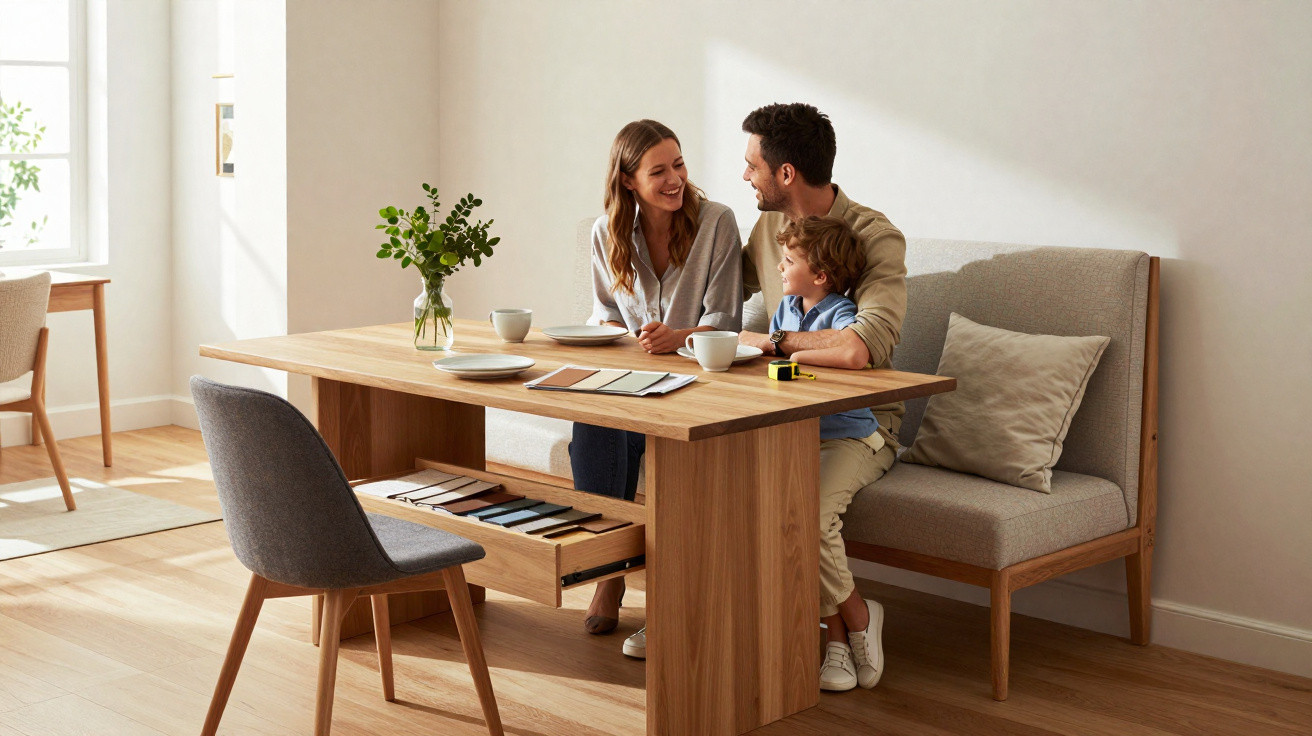
In interiors magazines, on Instagram and throughout new furniture-store ranges, the same eye-catching feature is appearing more and more often: rather than placing ten individual chairs around a table, one side is occupied by a single long seat. The dining bench – frequently upholstered and occasionally built in – is taking centre stage, gradually replacing conventional seating. Why is this happening, and who can genuinely benefit from the trend?
Why a bench at the dining table is in such demand
Greater closeness, less formality
A bench immediately changes the atmosphere around a table. People sit alongside one another and naturally move closer; children can shuffle about, while friends share a corner. It automatically feels more relaxed than a line of separate chairs with fixed gaps between them.
“The bench turns the ‘dining area’ into a meeting place where conversations, games and long evenings happen naturally.”
Anyone who enjoys leisurely Sunday breakfasts, games nights or winter fondue gatherings will benefit especially. This furniture has something of the feel of a favourite café: you sit comfortably, stay longer and do not get up straight after the final bite.
Practical space savings in compact rooms
Many homes now have open-plan kitchens and relatively compact dining spaces. This is precisely where a bench comes into its own. It requires less depth than several chairs, can sit directly against a wall and makes excellent use of corners.
- As an L-shaped corner bench: ideal for room corners
- As a straight bench along a wall: slim and space-saving
- As a built-in seat beneath a window: a comfortable sitting area with a view
Where three chairs would fit, the same length will often accommodate four or five people. In larger homes, a bench also keeps walkways clear: there is no chair permanently blocking a route and no need to move chairs whenever someone passes.
A favourite of interior designers
Interior designers are increasingly choosing benches when planning dining areas. They are a striking design feature: one continuous horizontal upholstered surface calms the room and visually connects the kitchen, dining space and living room.
Particularly popular arrangements include:
- A bench in front of a bookcase wall, visually combining dining and reading
- A bench used as a room divider between the kitchen and seating area
- A bench set into a niche that would otherwise be difficult to use
Large cushions, soft fabrics and warm colours can turn the dining spot into a place to retreat to. Materials such as velvet, coarse linen and bouclé wool are currently appearing repeatedly in new designs.
Creating the perfect bench in the dining area
Shape and placement: what works particularly well
Before buying a bench or having one fitted, it is worth briefly considering the routes through the room. People should be able to get in and out comfortably, even when others are already seated.
Well-established options include:
- L-shape in a corner: makes use of two walls and provides plenty of seating on a small footprint.
- Straight bench against a wall: a classic choice that is easy to pair with chairs opposite.
- Freestanding, gently curved bench: especially homely in open-plan living and dining rooms.
Planning tip: the seat height should match any existing chairs so that nobody is sitting too low or too high. A seat height of around 45 centimetres with a table height of roughly 75 centimetres is usually ideal.
Style, materials and colours: integrating the bench into your interior
A bench does not have to look like it belongs in a restaurant. The right blend of materials and upholstery can make it feel both contemporary and homely.
- Light Scandinavian style: a pale timber frame, natural-coloured linen or cotton upholstery, plus neutral beige and grey cushions.
- Warm bohemian style: woven materials, rattan or wood combined with cushions in terracotta, mustard yellow or fir green, ideally with fringes and texture.
- Mediterranean style: a solid built-in bench, rustic ceramics and cushions in sand and ochre shades – particularly suited to tiled floors.
- Modern minimalist style: clean lines, grey or dark-blue upholstery, minimal decoration and high-quality fabrics.
Especially in winter, throws, sheepskins and plenty of cushions intensify the sense of a cosy nest. The dining area can therefore quickly become a favourite place even when no one is eating.
Built-in storage: when the bench helps keep things tidy
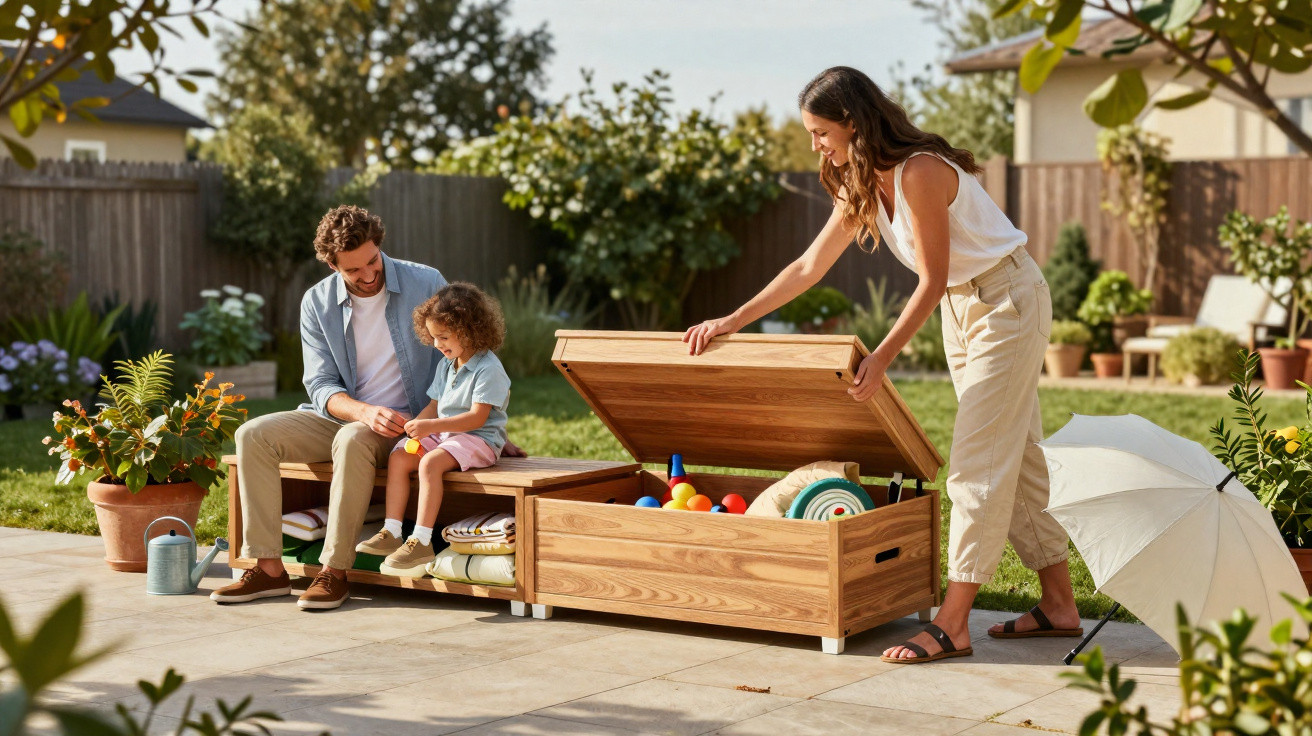
Many modern benches include integrated storage, which makes them particularly appealing in small homes. Lift-up seats and side compartments are especially popular.
| Type | Benefit | Suitable for |
|---|---|---|
| Bench with a lift-up lid | Large enclosed internal space | Games, tablecloths, seasonal decorations |
| Bench with drawers | Organisation without rummaging | Cutlery, napkins, tealights |
| Open compartments underneath | Easy access | Shoes in an entrance hall, baskets, magazines |
This dual purpose is especially useful in open-plan layouts: after a meal, toys can disappear immediately rather than having to be carried all the way to a child’s bedroom.
What experts and everyday experience say about the dining bench
Why interior designers are keen to recommend it
In many design studios, the bench is now seen as a kind of “signature piece”. It creates a recognisable feature, gives a room a clear line and makes it possible to introduce coloured fabrics deliberately without making the entire room look colourful.
“A continuous bench works like a coloured underline in a room – it brings calm, even when everything else is lively.”
It is little surprise that major furniture chains are offering ever more versions, from ready-to-place models to systems where customers can freely choose fabrics, legs and length.
How the bench performs in daily life
The more revealing stage comes once the first few weeks of use have passed. Many households report that routines around the dining table begin to change:
- Vacuuming is quicker because eight chairs do not need to be moved.
- Children sit down at the table more willingly and remain there for longer.
- The sought-after “best” seat disappears, as everyone shares the same long seating surface.
During the colder months, evening meals often become longer almost automatically. The bench encourages people to remain seated after eating with a tea, read something or briefly put their feet up. At times, it even becomes an impromptu guest bed or a quiet place for a phone call.
How it changes the way people host
Placing guests on a bench sends an unspoken but clear message: make yourself comfortable here. The rhythm at the table becomes less formal, the seating arrangement feels less rigid, children may switch sides and someone can lean back into the corner while telling a story at leisure.
This is particularly positive at celebrations or family meals. Instead of fixed rows of seats, a kind of “communal bench” is created. Seasonal fabrics, fairy lights and candles can quickly turn it into a setting for long autumn and winter evenings.
What to consider before buying
Planning comfort, depth and back support properly
A beautiful bench is of little use if it becomes uncomfortable after 20 minutes. Three measurements matter greatly:
- Seat depth: if it is too deep, shorter people’s legs will dangle; if it is too shallow, people slide forwards. 45–50 centimetres often works well.
- Upholstery: overly soft padding may feel cosy but can become uncomfortable over time. Many people prefer medium-firm foam with an additional cushioned layer.
- Backrest: it should be slightly angled and not too low so that longer conversations remain comfortable.
Anyone who often welcomes older guests should ensure getting in and out is stable and easy: the bench should be neither too high nor too low, with sufficient space to stand up from the side.
Fabric care and durability
Stains will sooner or later end up on upholstery in a dining area. It is therefore worth looking for removable covers or hard-wearing, stain-resistant materials. Microfibre, durable faux leather or tightly woven outdoor fabrics can look homely while also being easy to clean.
Households with pets should generally avoid scratch-sensitive materials such as very fine velvet. Textured fabrics or replaceable loose covers that can be put in the washing machine are reliable alternatives in these circumstances.
How to combine a bench with chairs
Mixed seating for maximum flexibility
Many households do not choose one option over the other, instead opting for a mixture. One side of the table has the bench, while the other remains furnished with chairs. Chairs or small armchairs can also be placed at either end.
This offers several advantages:
- Guests can choose whether they prefer an individual chair or the bench.
- Chairs can be added to the ends of the table whenever required.
- Visually, the dining area feels more varied and less like a furniture showroom.
Those expecting frequent visitors can use only the bench and two chairs day to day, then bring a few stackable spare chairs from a storage cupboard out for larger gatherings.
A piece of furniture that genuinely changes everyday life
The dining bench’s renewed popularity has practical reasons: it saves space, provides storage, creates a welcoming atmosphere and makes everyday life a little easier. At a time when many people are spending more time at home, the desire for inviting, multifunctional spaces is growing.
Anyone considering replacing a row of chairs should first do one thing: consciously observe how the dining area is currently used. Is it only for meals, or is it also used for work, games and reading? The answer determines which bench shape, fabric and additional features will suit it best. In this way, a single piece of furniture becomes a true focal point of the home.






Comments
No comments yet. Be the first to comment!
Leave a Comment