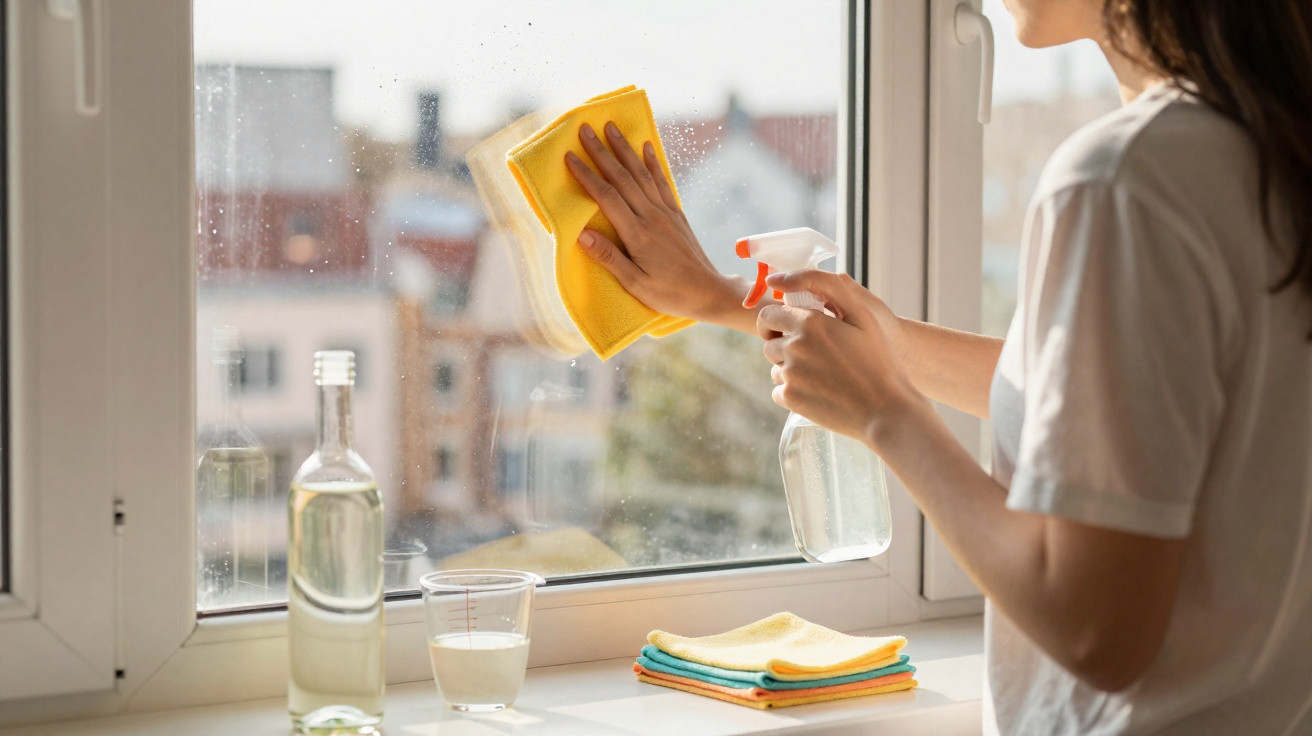
Cleaning windows may seem straightforward, yet achieving a truly crystal-clear shine without streaks calls for a few basic precautions. Distilled white vinegar is an effective, economical household alternative: when paired with warm water and suitable tools, it can lift grease, dust and fingerprints, reduce reliance on harsh chemicals, and help natural light enter the home.
Why is vinegar effective for cleaning windows?
White vinegar, particularly distilled white vinegar, is useful for cleaning glass because its moderate acidity breaks down greasy residue, built-up dust and grime from outdoors. Combined with warm water, it creates a simple household cleaner that tackles the marks and film that make glass look dull, usually without the need for extensive rinsing.
As it is colourless, white vinegar generally lowers the chance of marking pale window frames and sills. Compared with many ready-made cleaners, this homemade mixture has a simpler formula with fewer volatile ingredients, making it a common option for those seeking a more straightforward, affordable cleaning routine with fewer industrial products.
How to clean windows with vinegar without leaving streaks
To prevent visible marks, halos and drips, the cleaning method matters just as much as the vinegar solution. The weather, order of each step and cloth chosen all directly affect the finished result. It is best to work on one window at a time and not allow the product to dry fully on the glass.
In general, cleaning windows with vinegar can follow this straightforward, organised sequence:
- Prepare the area: move furniture, curtains and nearby items away from the window to prevent splashes.
- Remove loose dirt: clear dust, cobwebs and debris using a vacuum cleaner with a brush attachment or a soft broom.
- Mix the vinegar solution: combine white vinegar and warm water in the appropriate ratio in a spray bottle.
- Spray the glass: apply the mixture evenly, covering the whole window surface.
- Spread and remove: use a microfibre cloth or squeegee in continuous strokes, working from top to bottom or in a “Z” pattern.
- Dry straight away: wipe with a dry microfibre cloth to remove any excess and polish the glass.
- Clean frames and sills: finish with a cloth lightly dampened with the solution, without soaking any structural parts.
What is the ideal vinegar mixture for streak-free windows?
The balance of water and vinegar is important for safe, effective cleaning. For lightly soiled windows, use roughly 1 part vinegar to 10 parts warm water. This avoids an overly strong smell and helps protect more sensitive fittings while still removing everyday marks.
If the glass has older rain spots, pollution residue or hard-water marks, the vinegar concentration can be increased slightly, or a few drops of mild washing-up liquid can be added to improve grease removal. Even so, begin with gentler dilutions and strengthen the mixture only if residue remains, rather than using neat vinegar for routine cleaning.
Essential care to prevent streaks, lint and strong smells
A few practical considerations can help produce a clearer shine. Ideally, clean on an overcast day or when sunlight is mild, as on very hot days the solution dries too quickly and is more likely to leave marks. Cleaning while it is raining, meanwhile, can interfere with even drying and a transparent finish.
The tools used also deserve attention, since suitable choices limit lint and lingering odours. To organise the routine and improve the appearance of the glass, many people use simple practices such as:
- Using a microfibre cloth, which releases little lint and absorbs moisture well.
- Keeping dedicated cloths solely for glass, preventing grease traces from other surfaces.
- Cleaning the squeegee after each pass, removing excess solution and dirt collected on the rubber blade.
- Working from top to bottom, which reduces marked drips and repeated touch-ups.
- Using only a small amount of solution, spraying enough to cover the glass without soaking it.
By following these guidelines, cleaning windows with vinegar is likely to become a quick, reliable task, leaving transparent glass, good natural light and a fresher appearance both indoors and out.














Comments
No comments yet. Be the first to comment!
Leave a Comment