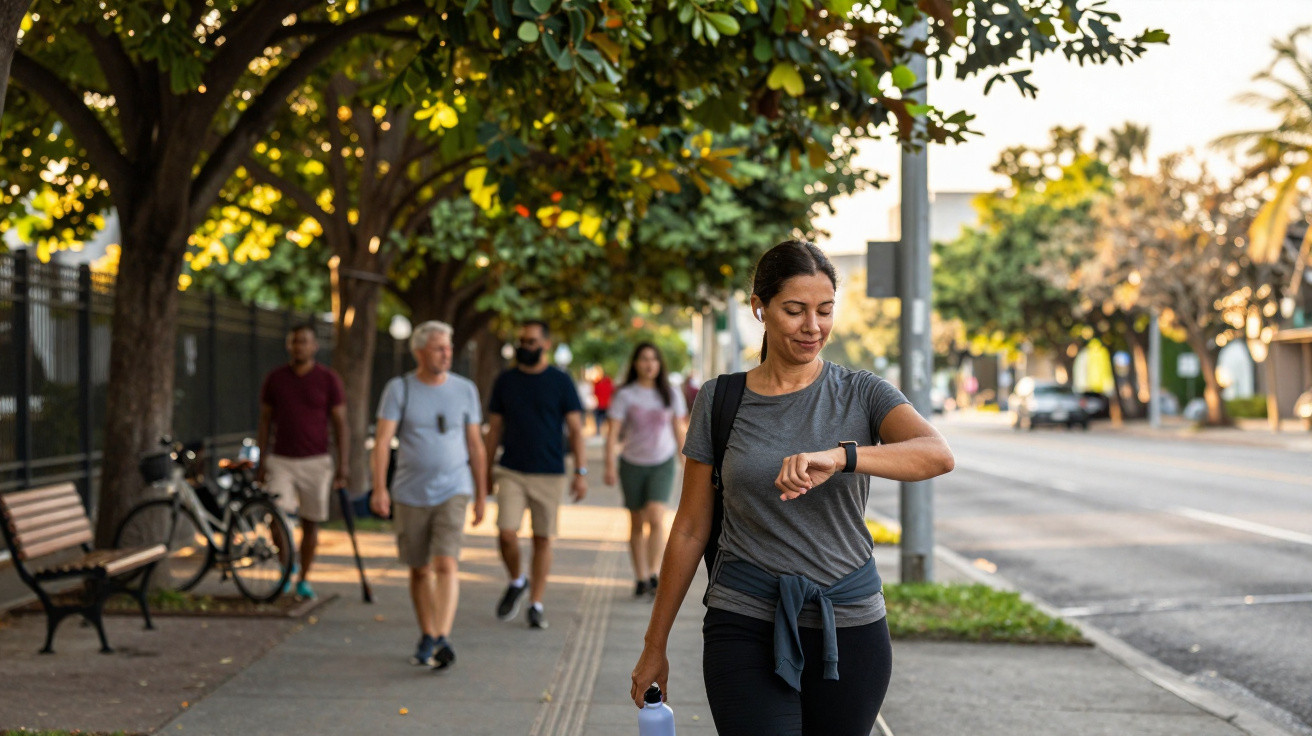
When cities began factoring tree canopy into public-health budgets, the argument was simple: make a neighbourhood greener and its residents will become healthier. For years, the available evidence appeared to back that claim.
However, a fresh analysis involving 40,307 adults and satellite imagery of every census block across the country has produced a more nuanced picture. The health benefit exists – yet access to it is uneven.
A nationwide picture of tree canopy
Researchers from Michigan State University (MSU) combined federal health data for 40,307 adults with satellite maps of every census block in the country, matching records by address.
Dr Amber Pearson, a professor in the Charles Stewart Mott Department of Public Health, led the research.
The researchers wanted to establish whether living beneath greater tree canopy produces measurable effects within the body.
More than 80% of adults in the sample lived in neighbourhoods with less than the 30% tree cover that planners advise for a healthy urban environment.
Despite widespread discussion of tree-planting, national canopy cover remains limited.
How prolonged stress affects the body
The team examined allostatic load, which describes the accumulated physical burden caused by long-term stress.
It can be understood as a record of the damage stress leaves on biology: rising blood pressure, higher inflammatory markers in the bloodstream and cortisol levels moving outside their usual pattern.
Although these effects build over many years, they can be detected now through a straightforward blood test.
An earlier, smaller study in North Carolina had suggested that people living close to greater tree cover had lower allostatic loads. That research involved only a few hundred people in one metropolitan area rather than an entire country.
Before Pearson’s analysis, researchers had not determined whether this relationship applied across the full US population. For the most part, it does: residents of greener census blocks had lower allostatic load than those living in areas with less canopy.
Physical activity links trees and lower allostatic load
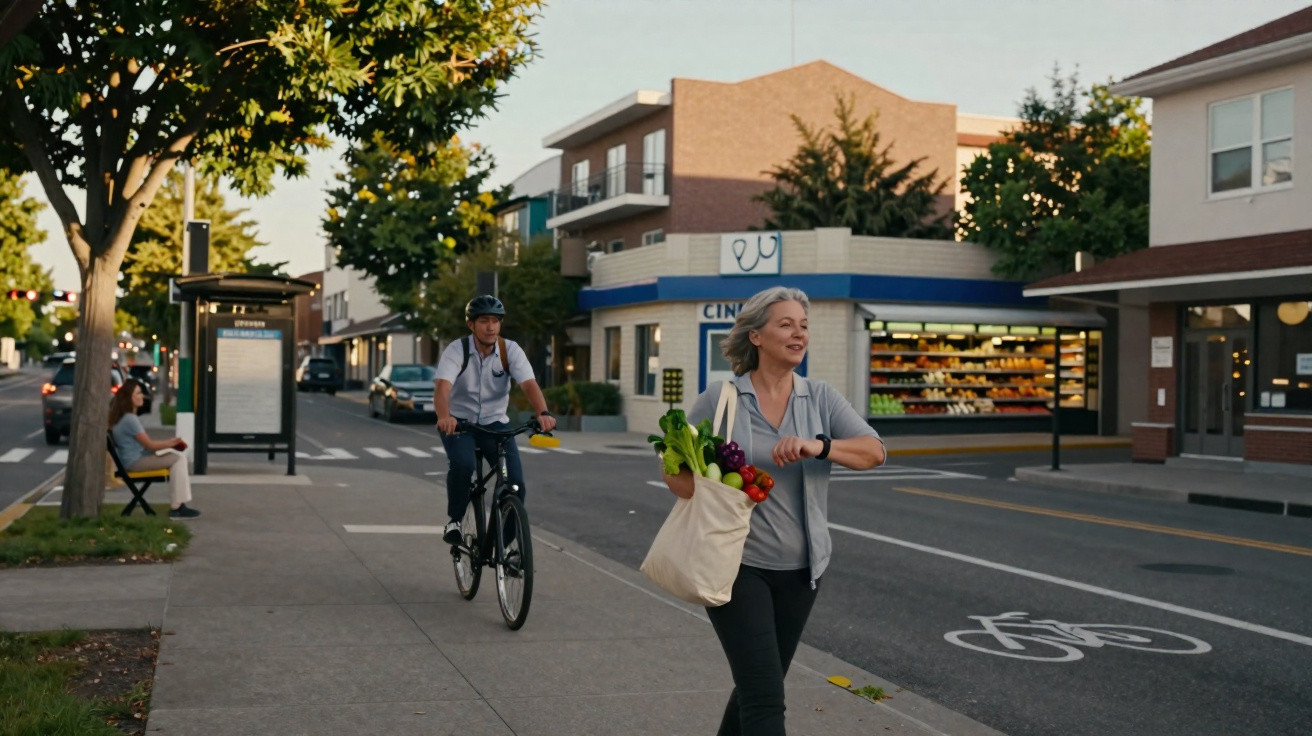
The trees are not solely responsible for the effect. The findings indicated that physical activity may be the link between canopy and health.
Greater tree cover near a person’s home was generally associated with more activity outside, while more activity was associated with lower allostatic load.
The protective effect is not simply a mystical property of foliage or shade. Instead, it depends on whether a neighbourhood encourages people to spend time outdoors.
Where the disparity emerges
The complication emerged when the researchers separated the results by income, education, employment status and race. The overall pattern divided into two distinct outcomes.
Among higher-income, employed and better-educated adults, the connection between tree cover and lower allostatic load remained clear.
For adults facing greater disadvantage, it disappeared. White and Hispanic adults experienced the anticipated benefit, but Black adults did not, including in neighbourhoods with dense tree canopy.
Roughly one quarter of Black study participants lived in neighbourhoods with more substantial tree cover. Even so, researchers identified no measurable decline in allostatic load compared with other groups.
Previous research had already connected this racial disparity in physical wear and tear with an increased likelihood of premature death.
This research found that one presumed answer does not consistently work for everyone.
Stress among disadvantaged groups
No earlier national research had identified this result. Trees that consistently reduce stress for certain groups had no measurable effect for others.
Pearson’s interpretation is straightforward: trees can ease the smaller, persistent pressures of everyday life, but not the larger stresses embedded in someone’s lived circumstances.
“There are other things that may be more stressful in disadvantaged groups like unfair treatment, lack of good job opportunities, or poor neighborhood conditions that tree canopy is not going to overcome,” Pearson said.
The limits of urban greening
For 20 years, urban greening has been presented as one of the simplest and cleanest public-health measures available to cities. Planting additional trees was expected to produce healthier residents, and the logic appeared uncomplicated.
The latest findings make that argument more complex without dismissing it. Trees still benefit people who already have a degree of stability, but they cannot replace that stability.
A separate trial examining the effect of nearby vegetation on inflammation reached a similar conclusion. Nature’s calming influence is not experienced equally by everyone.
“The prevailing thought among urban planners and health professionals has been that if we plant trees, everyone’s health will get better. Our study found that the benefits of trees aren’t equally experienced,” said Pearson.
The study provides a snapshot at one point in time, rather than following the same individuals while their neighbourhoods change.
Consequently, the identified links between tree cover, physical activity and stress load show associations rather than confirmed causes.
What must change
Before this paper, researchers could reasonably regard tree-planting schemes as public-health investments that broadly reduced inequality. That assumption can no longer stand.
Cities using canopy as a health intervention on its own are likely funding a benefit that mainly reaches residents who are already relatively secure.
Supporting people with the highest allostatic load will require more than planting seedlings.
It will require tackling discrimination, insecure employment and neighbourhood disinvestment, which keep stress active no matter how green a street may appear.






Comments
No comments yet. Be the first to comment!
Leave a Comment