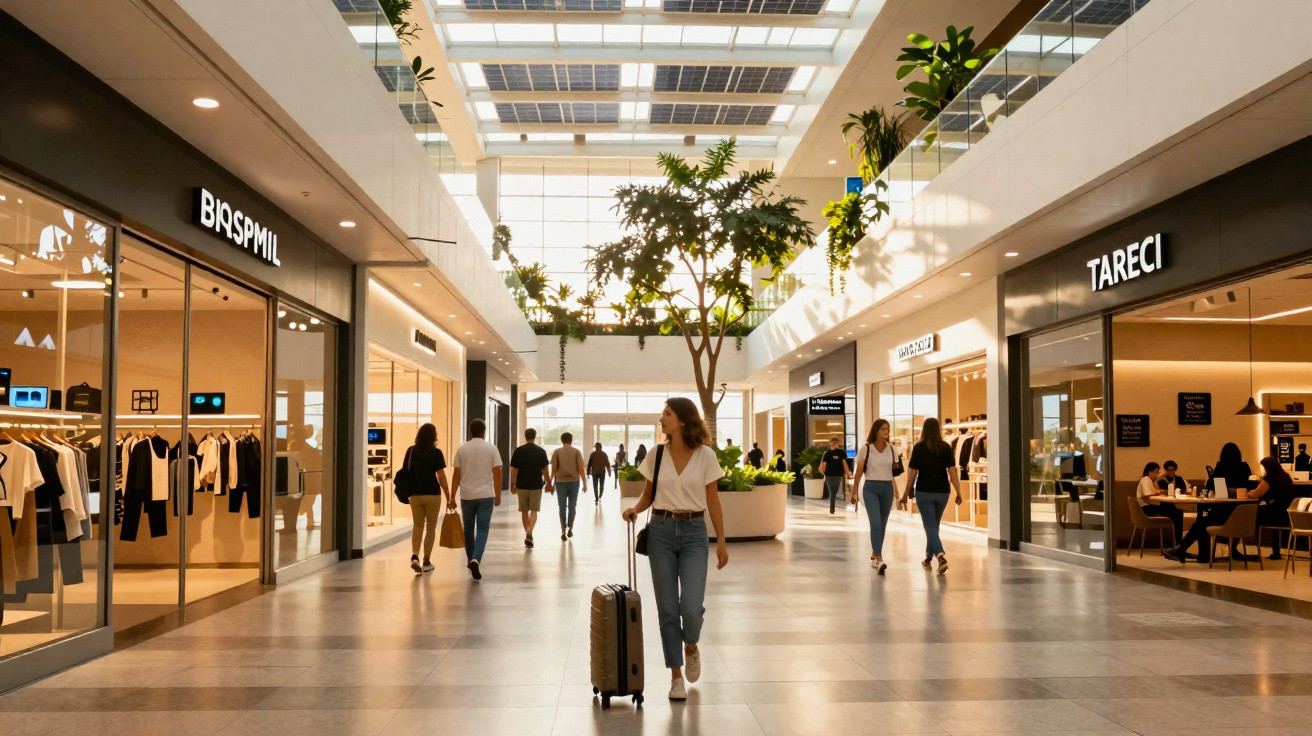
The Ministry of Ports and Airports (MPor) reports that operations at Brasília International Airport will soon extend far beyond the arrival and departure of passengers and freight.
Driven by MPor’s Investe+ Airports programme, the airport site in Brazil’s federal capital is undergoing an unprecedented transformation, with more than R$1.1 billion invested in new leisure, retail and logistics developments.
Investe+ Airports transforms Brasília International Airport
From September, Brasília will gain a shopping centre concept unlike any other in Brazil, located within the airport complex. Construction already employs around 650 people and is expected to create approximately 2,000 direct jobs once it opens.
“Investe+ Airports was created precisely to drive new business around airports, increasing the generation of jobs, income and regional development. We are working to ensure airports become commercial showcases and opportunities for all Brazilians, through improvements in services and convenience for the public,” said MPor Minister Tomé Franca during a visit to the works on Wednesday (13).
Juan Horacio Djedjeian, vice-president of concessionaire Inframerica, welcomed the initiative. “It will be a completely new, surprising experience, with open spaces. It will be genuinely very different from what people see in a conventional shopping centre,” he said.
As he helps build the development, drywall installer Nilson Jones is already imagining his future visits to the place he is helping create. “I want to come here afterwards and enjoy what I have built as well. In future, when I come here with my daughter, I will be able to say that I took part in this, while we have a milkshake or go to the cinema,” said the 23-year-old worker.
The redevelopment of Brasília airport is a direct result of Investe+ Airports, an MPor initiative that broadens the scope for commercial use at Brazilian airports. The programme allows states, municipalities and concessionaires to enter into commercial contracts with longer terms, providing legal certainty and predictability for major private investment. At Brasília Airport, the developments may be operated until 2067.
For Inframerica commercial director Rogério Coimbra, the programme changes the conventional idea of Brazilian airports. “The terminal is no longer simply a place for landings and take-offs; it becomes a setting for socialising, leisure and services. Investe+ Airports creates the conditions to attract developments that bring people closer to this airport environment,” he said.
Shopping centre, sustainability and new facilities
As well as expanding the airport’s economic potential, the new shopping centre is incorporating sustainable measures. Environmental technician Noeli Maria, who is monitoring the construction work, highlights the care built into the scheme. “This shopping centre is different precisely because of its concern for the environment,” she says.
The development includes a dedicated nursery for native Cerrado species and approximately 3,000 saplings, which will form part of the site’s landscaping.
Situated less than 500 metres from the passenger terminal, the shopping centre will have more than 60,000 square metres of built area. It will include over 130 shops, a 3,000-square-metre gym, a food court, ten restaurants and six cinema screens, four of them VIP, as well as a giant open-air cinema screen. It is scheduled to open on 15 September 2026.
In addition to the shopping centre, the airport complex will gain a surf club with a wave pool, a R$450 million development that will be announced shortly. It will also include a Logistics Distribution Centre, with estimated investment of R$35 million, further strengthening the freight market in the federal capital and Brazil’s Central-West region.
Commercial revenue at Brazilian airports
Currently, around 60% of Brazilian airport revenue already comes from commercial activities carried out within terminals, while 40% comes from airport charges. By encouraging additional revenue streams, Investe+ Airports reinforces the economic and financial balance of contracts and helps ease pressure on air-ticket prices.
“Across the world, airports are becoming established as centres for business and innovation. With stronger ancillary revenues, terminals can lower operating costs and reduce the pressure on the charges paid by passengers,” explains Clarissa Barros, director of MPor’s Department of Airport Grants, Assets and Regulatory Policies.
Information from MPor







Comments
No comments yet. Be the first to comment!
Leave a Comment