
France’s VINCI has agreed to acquire Fletcher Construction in New Zealand for approximately €183 million. The deal transforms what had been a far-flung regional presence into a core element of its Oceania strategy, while delivering a pointed message to competitors in Australia and the wider Asia-Pacific region.
VINCI acquires a builder at the far end of the world
VINCI is doing far more than adding several contracts to its order book: it is assuming control of one of New Zealand’s most recognisable construction businesses.
Founded in 1909, Fletcher Construction has developed into a major national operator. It employs around 2,300 people and produces almost €630 million of annual revenue in New Zealand alone.
For €183 million, VINCI buys more than a company name: it acquires local roots, relationships and technical know‑how built over a century.
The business delivers projects across numerous sectors, including strategic motorways, heavy civil engineering, sophisticated buildings and substantial public-sector programmes. Its activities also extend into the South Pacific islands, where schemes must contend with isolated sites, sensitive ecosystems, difficult marine logistics and frequently severe weather.
Fletcher is structured into specialist divisions accustomed to long-term projects and design–build contracts. Its sites are often located in tightly built-up urban areas or places vulnerable to earthquakes, heavy rain and landslides. This background in high-risk conditions is particularly appealing to VINCI, which has been looking to build its expertise in climate-resilient infrastructure.
New Zealand: a real-world laboratory for modern infrastructure
New Zealand’s infrastructure sector is highly active. Prolonged underinvestment, together with climate pressures and population growth, has created an extensive programme of upgrades and new construction.
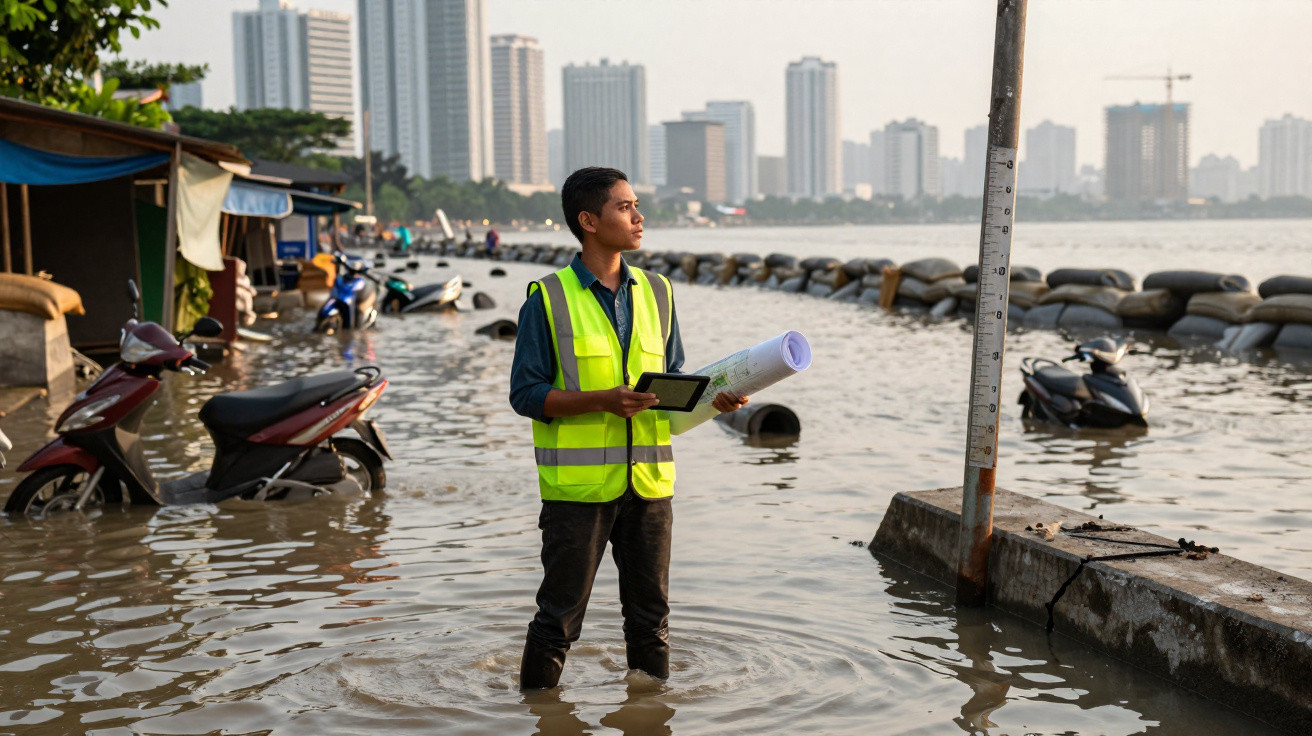
Authorities nationwide are rolling out schemes to strengthen roads, adapt ports to changing trade patterns, upgrade rail networks and redesign water systems following a series of major storms and floods.
VINCI already had a foothold in the country through HEB Construction, which works on roads, bridges and marine infrastructure. Buying Fletcher expands that presence considerably and adds meaningful scale.
With HEB and Fletcher under the same umbrella, VINCI shifts from being “one more foreign player” to a structuring force in New Zealand’s infrastructure pipeline.
Prior to the acquisition, VINCI’s yearly revenue in New Zealand was already above €900 million. Incorporating Fletcher brings greater industrial capability, a more powerful local brand and a larger workforce able to deliver multiple major projects simultaneously across both islands.
What Fletcher brings to VINCI’s Oceania capabilities
- A 115-year track record and established ties with New Zealand’s national and local authorities
- 2,300 employees experienced in seismic engineering, challenging terrain and remote Pacific islands
- Approximately €630 million in annual New Zealand revenue
- A portfolio spanning heavy civil engineering, transport connections and major public buildings
For VINCI, the €183 million valuation represents more than present-day earnings; it also reflects the pipeline of transport, water and resilience projects expected across New Zealand.
Australia: major schemes on the other side of the Tasman Sea
VINCI’s Oceania investment does not end in Wellington or Auckland. On the other side of the Tasman Sea, the group is already established in Australia’s infrastructure expansion through its Seymour Whyte subsidiary.
Seymour Whyte has recently won three significant contracts with a combined value of about €604 million, further cementing VINCI’s position among the area’s leading contractors.
Major Australian projects in VINCI’s pipeline
- Eastern Freeway Hoddle–Burke, Melbourne – An alliance scheme worth roughly €450 million to the joint venture, intended to increase capacity while providing bus lanes, shared routes and noise barriers. It is due for completion around 2028.
- Urban road project in Sydney – A design–build contract worth about €154 million for Transport for New South Wales, aimed at reducing congestion, enhancing road safety and incorporating active-travel facilities.
- Lower Molonglo wastewater treatment plant, Canberra – A ten-year upgrade programme delivered with VINCI Construction Grands Projets for Icon Water. It is intended to expand capacity, raise performance and improve environmental resilience. The total budget has not been disclosed.
Together, these Australian contract awards and the Fletcher acquisition create a regional platform running from Australia’s largest cities to the smaller islands of the Pacific.
Innovation drive: from concrete to data
VINCI’s Oceania approach does not rest solely on acquiring established local businesses. Through its Leonard innovation platform, focused on construction, energy and mobility, the group is also bringing in technology and research and development.
In Australia and New Zealand, teams are exploring ways to reduce construction-site environmental impacts, enhance the energy efficiency of new infrastructure and deploy digital tools for maintenance.
Sensors embedded in bridges, tunnels and pipes can send real-time data, allowing operators to spot weaknesses before they become failures.
These technologies are designed to prolong the service life of assets including bridges, water networks and coastal defences, while reducing both the cost and disruption associated with major maintenance. The proposition for public authorities is straightforward: invest more in early-stage design and digital monitoring to avoid expensive emergency repairs later.
A more international VINCI, with Oceania growing in importance
Across the world, VINCI has more than 280,000 employees in over 120 countries. Europe, especially France, continues to account for the largest share of its workforce and revenue, although the group’s centre of gravity is moving.
Recent purchases, including Spain-based Cobra IS and now Fletcher, lift the proportion of employees outside Europe to above 30%, as Asia-Pacific and the Americas assume a greater role in future growth.
| Region | Estimated staff | Share of total | Main activities |
|---|---|---|---|
| Europe (including France) | ~200,000 | ~71% | Motorways, high-speed rail, airports, energy, urban construction |
| Americas | ~50,000 | ~18% | Airports, highways, civil engineering, power networks |
| Africa – Middle East | ~16,000 | ~6% | Roads, ports, renewables, infrastructure |
| Asia-Pacific / Oceania | 15,000+ (rising) | 6%+ | Airports, highways, construction in Australia and New Zealand |
The Fletcher transaction pushes Oceania higher in this breakdown and gives VINCI a more evenly balanced portfolio across mature European markets and faster-growing regions facing climate and demographic pressures.
Why Oceania is important to global builders
Although New Zealand and Australia may appear modest beside the US or Europe, they bring together several developments now reshaping infrastructure around the world.
Both nations are exposed to climate events ranging from intense rainfall and coastal erosion to bushfires. They must also maintain extensive, thinly spread road, rail and electricity networks across demanding terrain. At the same time, they operate strict environmental standards and are increasingly requiring low-carbon construction techniques.
For groups like VINCI, Oceania acts as a laboratory: crack resilience and low‑carbon design here, and those solutions can be exported elsewhere.
Political risk is comparatively limited, currencies are stable and legal systems are well defined. For a European group seeking expansion beyond its domestic market without immediately entering higher-risk territories, Oceania provides an attractive combination of complexity and certainty.
What the deal could mean for communities and workers
For construction workers in New Zealand, the arrival of a global group creates both hopes and concerns. A new owner may offer training, international career opportunities and investment in equipment and digital technologies. Equally, it may prompt worries over centralised decision-making and pressure on margins.
From the public-sector perspective, governments generally value large, financially robust contractors for difficult projects. However, they must also preserve competitive pressure to restrain prices and stimulate innovation. Regulators will closely monitor how VINCI manages its enlarged presence alongside domestic and overseas competitors.
Terms and possible scenarios: how the deal may unfold
Two ideas are central to this story: design–build and resilience.
Design–build contracts combine engineering and construction within one package. Rather than having the state design a road before separately inviting builders to tender, a single consortium undertakes both stages. This approach may shorten delivery times and better align incentives, but it also concentrates accountability and risk.
In infrastructure terminology, resilience refers to an asset’s ability to absorb shocks and recover rapidly. In practical terms, this could involve elevating a coastal motorway, strengthening bridge foundations against flooding or creating a treatment plant able to remain operational during extreme storms.
With Fletcher incorporated, VINCI can trial scenario-led planning alongside local authorities. For example, it could model the impact of a one-in-100-year flood on a motorway network in 2040 and then revise the design and materials in response. Such modelling can influence everything from a road’s alignment to the chosen concrete or drainage system.
Risks remain. Budget overruns on complicated schemes could diminish the value of the acquisition. Cultural differences between French management and New Zealand teams might delay integration. A pronounced fall in public spending would also affect order books on both sides of the Tasman Sea.
Nevertheless, the potential benefits are considerable: more resilient infrastructure in New Zealand and Australia, a stronger Oceania base for VINCI, and climate-ready engineering methods that could be deployed from Wellington and Sydney to Latin America and further afield.









Comments
No comments yet. Be the first to comment!
Leave a Comment