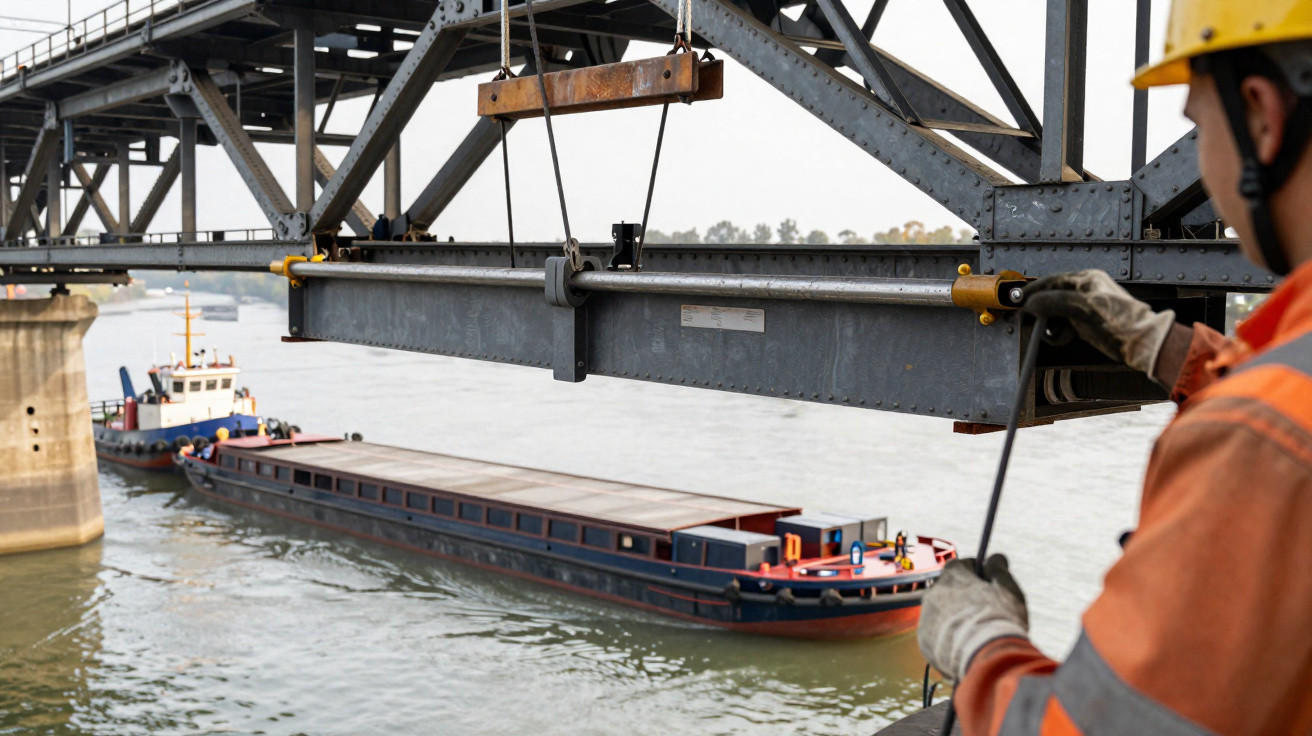
A bridge can appear to vanish almost overnight. From the bank, a familiar steel arch may seem to be standing one day and gone after a weekend closure. The visible work is quick only because the preparation is not: surveys, temporary bracing, load calculations and marine planning all happen well before the first lift.
The key method in a removal of this kind is controlled lowering, not dramatic demolition. Rather than allowing an arch to fall or cutting it free over a river, engineers transfer its weight to purpose-designed lifting equipment, lower it onto barges and secure it for transport. The title refers to a planned, tightly managed removal window; it should not be read as meaning that the whole demolition can be safely completed at speed.
Why a steel arch cannot simply be cut down
The former Pattullo Bridge crossed the Fraser River between New Westminster and Surrey in British Columbia. Opened in 1937, it was a long-standing and recognisable crossing. Its replacement and removal are Canadian infrastructure matters, but the engineering principles are relevant to any major bridge dismantling project, including those over busy UK rivers and estuaries.
An arch is part of a structural system, not an isolated piece of steel. Removing deck sections, hangers, bracing or connections changes the way forces travel through what remains. Before an arch can be lifted, engineers must establish exactly how it will behave at every stage.
A removal plan needs to consider:
- the measured weight and centre of gravity of each section;
- the condition of steel members, rivets, bolts and connections;
- lifting points and temporary bracing designed for the operation;
- barge capacity, deck loading, trim and stability;
- river level, current, wind, visibility and navigation;
- exclusion zones for workers, the public and river traffic.
This is why a headline may focus on a 48- or 60-hour lift window, while the enabling work has taken far longer.
The lift is not the start of the job. It is the point at which every earlier survey, calculation and temporary support has to perform as intended.
Controlled lowering: the central idea
For heavy bridge components, specialist contractors may use hydraulic strand jacks, cranes, gantries or a combination of systems. The chosen arrangement depends on the structure, access, available headroom and the receiving vessel’s position.
Strand jacks use bundles of high-strength steel strands that can be gripped and moved in controlled increments. They are used where a very heavy load needs to travel slowly and predictably. Crucially, they are part of a designed lifting system, not a substitute for engineering assessment.
A typical lowering sequence
Install temporary works
Engineers add lifting beams, braces, connection plates and supports. These items must be designed, inspected and independently checked where required.Remove unnecessary weight
Surfacing, services, deck material and non-structural components may be removed first. This reduces the load, but it must not compromise the remaining structure’s stability.Bring the barges into position
Marine crews align the barge beneath the planned landing points. Moorings, tide, current and the changing weight on deck all affect its position.Transfer the load gradually
The lifting system is tensioned in stages. Teams compare instrument readings with the planned load distribution before releasing any final connections.Lower in small increments
The structure is brought down under close monitoring. If readings, weather or vessel movement exceed agreed limits, work stops and the plan is reviewed.Land and secure the steel
Once the arch is supported on engineered stools or cradles on the barge, it is restrained against movement before lifting gear is released.
Why river conditions set the timetable
A river closure is a safety control, not merely an inconvenience to boat users. During a critical lift, passing vessels can create wake, enter a danger area or interfere with the room needed by tugs and workboats.
Tides matter because a barge rises and falls while the bridge remains fixed until the load is fully transferred. The lift plan must allow for predicted water levels and define conditions in which work must pause. River flow can add another variable, particularly after heavy rainfall.
Wind is equally important. A large steel member may be extremely heavy, but exposed surfaces can still be affected by gusts. Rain can reduce grip and visibility; lightning, poor visibility or unsafe wind conditions may stop work altogether.
For comparable work on the Thames, Humber, Mersey, Tyne or a tidal estuary, the same approach applies: programme the critical move around navigation and weather, then retain enough contingency to avoid forcing a lift to meet a publicised date.
The removal order is part of the safety plan
Bridge dismantling is normally done in a carefully defined sequence. Approaches and deck sections may be removed before the main span, provided this does not destabilise the remaining steelwork. The sequence will differ from project to project, and should never be inferred from what looks convenient from the ground.
A broad programme may include:
- diverting traffic to the replacement crossing;
- isolating utilities and restricting access to the old bridge;
- removing approach decks, ramps and ancillary structures;
- completing new road, walking and cycling connections;
- dismantling the main span using the chosen lifting method;
- removing piers and foundations under separate environmental controls.
The least visible stages can be the most demanding. Work around in-river piers may require specialist marine plant, permits, environmental monitoring and measures to protect navigation and aquatic habitat.
What happens after the arch reaches a barge
Landing a bridge section on a barge ends one part of the work and begins another. The load must be secured for the journey, taking account of vessel movement, weather and the route to the unloading point.
At a suitable yard or temporary unloading location, steel can be cut into manageable pieces and sent for recycling. Recycling is generally preferable to sending recoverable metal to landfill, but older structures can contain hazardous coatings, lead-based paint, oils or other contaminants. These need testing, containment and disposal by appropriately licensed specialists.
There can also be heritage value in an older bridge. Riveted details, fabrication marks and distinctive components may be recorded or retained where the project’s approvals require it.
Good deconstruction treats material recovery, heritage recording and environmental protection as part of the job, not as tasks left until the end.
Common mistakes in bridge deconstruction planning
Major bridge removal is not suitable for improvised demolition or ordinary lifting arrangements. Risks increase when teams:
- Rely on historic drawings alone. Old structures may have undocumented repairs, corrosion or alterations.
- Treat temporary works as secondary. Lifting beams and braces can carry exceptional forces and need rigorous design and inspection.
- Ignore changing barge stability. A heavy load alters draught, trim and centre of gravity as it is landed.
- Plan only for good weather. Wind, current and visibility limits must be agreed in advance, with authority to stop the job.
- Release connections too early. No cut, bolt removal or release should happen until load transfer is confirmed.
- Forget the public interface. River restrictions, diversions, noise and viewing areas require clear communication and secure boundaries.
Safety and environmental safeguards
No member of the public should attempt to watch a bridge removal from closed paths, riverbanks behind barriers or from a private boat near the work area. Obey navigation notices, road closures and instructions from marshals. A dramatic view is never worth entering an exclusion zone.
For workers, bridge deconstruction over water requires competent structural, lifting and marine specialists, approved lift plans, reliable communications and rescue arrangements. No one should stand beneath a suspended load. Fall protection, safe access and a plan for water rescue are essential.
Environmental controls may include debris containment, dust suppression, spill kits and measures to prevent fuel, hydraulic fluid or contaminated material reaching the water. These controls need maintaining throughout the operation, not only during the main lift.
A fast-looking result built on slow preparation
The removal of an old bridge arch is memorable because the change is so visible. Yet controlled lowering onto barges is the opposite of a quick-fix demolition technique: it is a carefully sequenced engineering operation built around verified loads, temporary works, river conditions and safety margins.
The practical lesson is simple. Whether the structure is on the Fraser River or closer to home, a successful removal depends on allowing time for preparation and accepting weather-led delays. The most impressive part may happen over a weekend, but safe results are created long before the steel begins to move.











Comments
No comments yet. Be the first to comment!
Leave a Comment