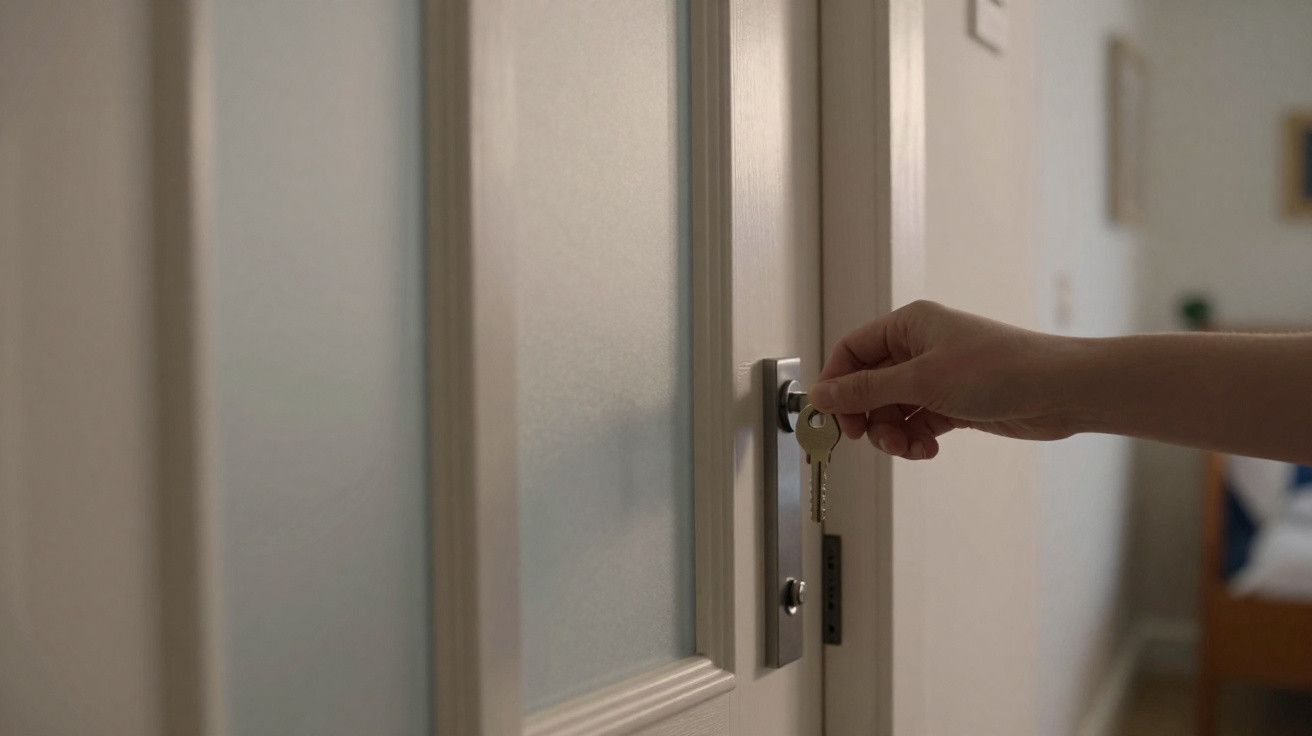
It is an easy bedtime habit: lock the front door, leave the key in the inside of the lock and assume it adds protection. In practice, it can be helpful, irrelevant or unhelpful, depending on the lock, the glazing around the door and how easily you could get out in an emergency.
The sensible rule is straightforward: fully lock the door, but do not treat an inside key as a security feature in itself. Check what type of lock you have, keep keys out of reach from outside, and make sure everyone can leave without delay if there is a fire or other emergency.
Why the answer depends on the lock
Many UK homes, especially those with uPVC, composite or aluminium doors, have a euro-cylinder lock paired with a multi-point locking system. Older timber doors may instead have a mortice deadlock, a rim lock or a night latch.
Some double cylinders cannot be operated from outside while a key is in the inside. Others have an emergency function, sometimes called a double-clutch function, which allows the correct external key to operate the lock even when there is a key inside.
That means leaving a key in place is not a dependable way to stop entry. It may block a household member with another key, but it is not a substitute for a suitable lock, sound door hardware and sensible key storage.
The important questions are whether the door is properly locked, whether the lock suits the door, and whether people inside can get out quickly.
Check your lock without risking a lock-out
You can establish how your cylinder behaves, but do it in daylight and with the door open. Never experiment from both sides while the door is shut: a fault or unfamiliar mechanism could leave someone unable to get back in.
1. Open the door fully
Keep the door open throughout the test. Make sure it cannot swing shut in a draught, and have both keys to hand.
2. Insert a key on the inside
Put a key into the internal side of the cylinder as you normally would. Do not force a key or turn a stiff lock.
3. Try another key from outside
Use a second working key from the external side. If it turns and operates the lock, the cylinder has an emergency-function arrangement. An inside key will not prevent somebody with the proper external key from unlocking it.
If the external key will not turn, do not assume this makes the door more secure. It can cause difficulties when another resident needs access, or if help is needed while you cannot reach the door.
If you have only one key, the lock feels rough, or you are uncertain about what you are seeing, ask a reputable locksmith to inspect it. Avoid dismantling a cylinder or handle unless you know exactly how the door is fitted.
Glazed doors need extra thought
An inside key is a clearer risk where it can be reached through broken glazing, an open window, a side panel or an insecure letterbox. The same applies to keys left on a hall table, hook or shelf immediately beside the entrance.
If an intruder can reach the key, they may be able to unlock the door from inside. The risk will vary with the door layout, the type and condition of the glazing, and the distance between the glass and the lock.
This does not mean every door with glass is insecure. Well-fitted toughened or laminated glazing and appropriate hardware can improve resistance. But there is little benefit in making an easily reachable key the simplest route through the door.
Useful measures include:
- keeping keys, car fobs and spare keys away from glass and letterboxes;
- checking that glazing beads, frames and panels are secure and undamaged;
- using a letterbox guard only where it is suitable for the door and does not affect safe use;
- seeking advice on compatible cylinders, handles and door furniture from a locksmith or security professional;
- repairing loose handles, misaligned locks and damaged frames promptly.
Avoid relying on social-media tricks such as foil around a handle. It does not strengthen the lock or frame, and it may create a false sense of security.
Lock the whole door, not just the latch
The useful part of the bedtime routine is properly securing the external door. With many multi-point uPVC and composite doors, you need to lift the handle to engage the locking points, then turn the key to deadlock them. Pulling the door closed may leave it only on the latch.
Timber doors vary. A Yale-style night latch and a separate mortice deadlock perform different jobs, and the mortice lock commonly needs a key to be locked. If you are unsure, check the door or lock manufacturer’s instructions, or ask a qualified locksmith.
A fully locked door can make opportunistic entry more difficult than a door that has merely been pulled shut. It also avoids the common problem of someone trying an unlocked handle.
Do not compromise escape in an emergency
Security arrangements must not make it harder for occupants to escape. This is particularly important if the front door is part of the main escape route, as it often is in flats and smaller homes.
Keep any necessary exit key in an agreed, readily reachable place on the inside, but not where it is visible or reachable from outside. Adults and older children who may need to leave independently should know where it is and how the lock works.
A thumbturn cylinder may be suitable for some doors because it can be unlocked from inside without a key. In other situations, an escape-function lock may be more appropriate. The right choice depends on the property, the door, the route out and the security risks, so professional advice is worthwhile if you are changing hardware.
Make sure smoke alarms are fitted and tested in line with the guidance for your home. If there is a fire, get out if it is safe to do so, stay out and call 999. Do not delay an escape to collect keys or belongings.
Do not change a communal entrance door, a flat entrance door or a certified fire door without permission from the landlord, managing agent or freeholder where relevant. These doors may have specific fire and security requirements.
A secure home should not leave its occupants searching for a key when every second matters.
Improve the door as a whole
A key in a lock is only one small detail. The condition of the complete door set usually matters far more.
Inspect it in daylight:
- Does the door close without lifting, pushing or slamming it?
- Does the cylinder sit neatly within the handle rather than projecting noticeably?
- Are the handles, hinges, frame and keeps firm?
- Are there damaged panels, loose glazing beads or obvious gaps?
- Does every household key turn smoothly?
For euro-cylinder doors, a locksmith can advise whether a replacement cylinder with tested resistance to common attack methods is appropriate, and whether the handle is compatible. Choose hardware suited to the door rather than assuming the dearest option is automatically best.
Other sensible steps include lighting the entrance without causing a nuisance to neighbours, keeping valuables and keys away from sightlines through glass, and maintaining a clear route to the door. If you rent, ask the landlord before changing lock hardware and keep any agreed records or receipts.
Common mistakes to avoid
Several well-meant habits can weaken either security or safety.
- Assuming an inside key blocks every lock. Many cylinders can still be operated from outside with the correct key.
- Testing with the door shut. Keep it open in case the lock behaves unexpectedly.
- Leaving keys within reach of glazing or a letterbox. Store them where they cannot be seen or reached from outside.
- Only lifting the handle on a multi-point door. Turn the key too, where the door requires it.
- Hiding the exit key too cleverly. A location nobody remembers is no help in an emergency.
- Forcing a stiff key or lock. This can break a key or make a developing fault worse.
- Using improvised gadgets instead of sound hardware. Foil, wedges and decorative chains do not replace a properly fitted lock and secure frame.
Check insurance wording, then keep the routine simple
Do not assume an insurer requires you to leave a key in the inside lock, or that doing so automatically affects cover. Requirements differ between policies and may concern door locks, windows, alarms and how the property is secured when unoccupied.
Read your current policy documents and ask the insurer for clarification if the wording is unclear, particularly after replacing a door or lock. Keep details of professionally fitted security improvements.
For most households, the practical night-time routine is uncomplicated: close the door, engage every locking point, turn the key as required, and place it in a known internal location that is easy to reach but out of sight and reach from outside. Review the arrangement after moving home, changing locks or changing who lives in the property.
Leaving the key in the door overnight is not universally right or wrong. It may make no difference with some locks, create a vulnerability near glazing, or cause an avoidable access problem. A well-maintained, properly locked door and a clear escape plan are the better foundations for peace of mind.




Comments
No comments yet. Be the first to comment!
Leave a Comment