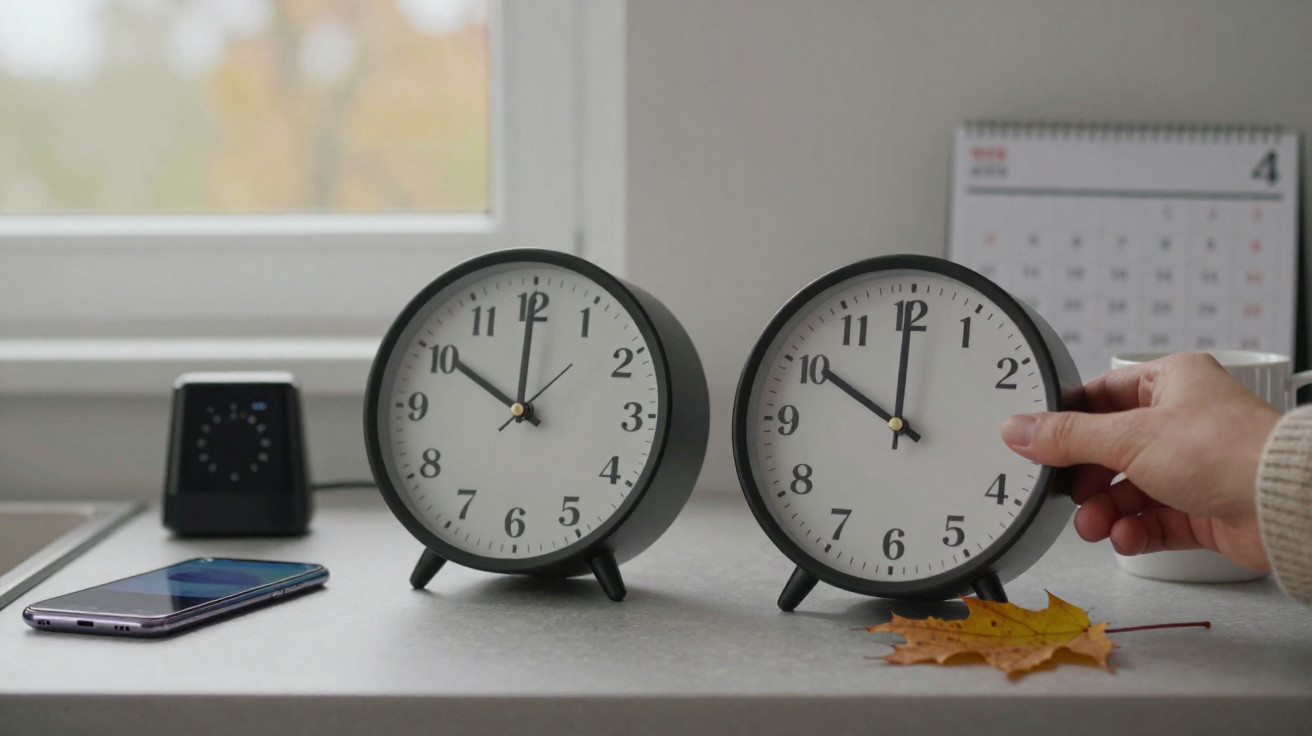
Every autumn, the same small household problem causes outsized confusion: do the clocks go forwards or backwards? In the UK, British Summer Time ends on Sunday 25 October 2026. At 2.00am BST, clocks go back one hour to 1.00am GMT.
For most people, that means an extra hour overnight. It can still catch out alarms, heating timers, travel plans and appointments scheduled during the repeated 1.00am hour. The simplest reminder is: spring forward, autumn back.
The key date for the 2026 clock change
The UK changes its clocks twice a year. In 2026, British Summer Time ends in the early hours of Sunday 25 October, when the country returns to Greenwich Mean Time.
| What happens | Date and time |
|---|---|
| BST ends | Sunday 25 October 2026 |
| Clock change | 2.00am BST becomes 1.00am GMT |
| Direction | Back one hour |
| Result | One extra hour overnight |
The autumn change takes place on the last Sunday in October. GMT is often referred to as winter time or standard time, although GMT is the usual term in the UK.
At 2.00am on Sunday 25 October 2026, manual clocks should be put back to 1.00am.
Do clocks go back or forward in October?
They go back in October.
A useful way to remember the two changes is to link them to the seasons:
- Spring forward: clocks move forward by one hour when BST begins.
- Autumn back: clocks move back by one hour when BST ends.
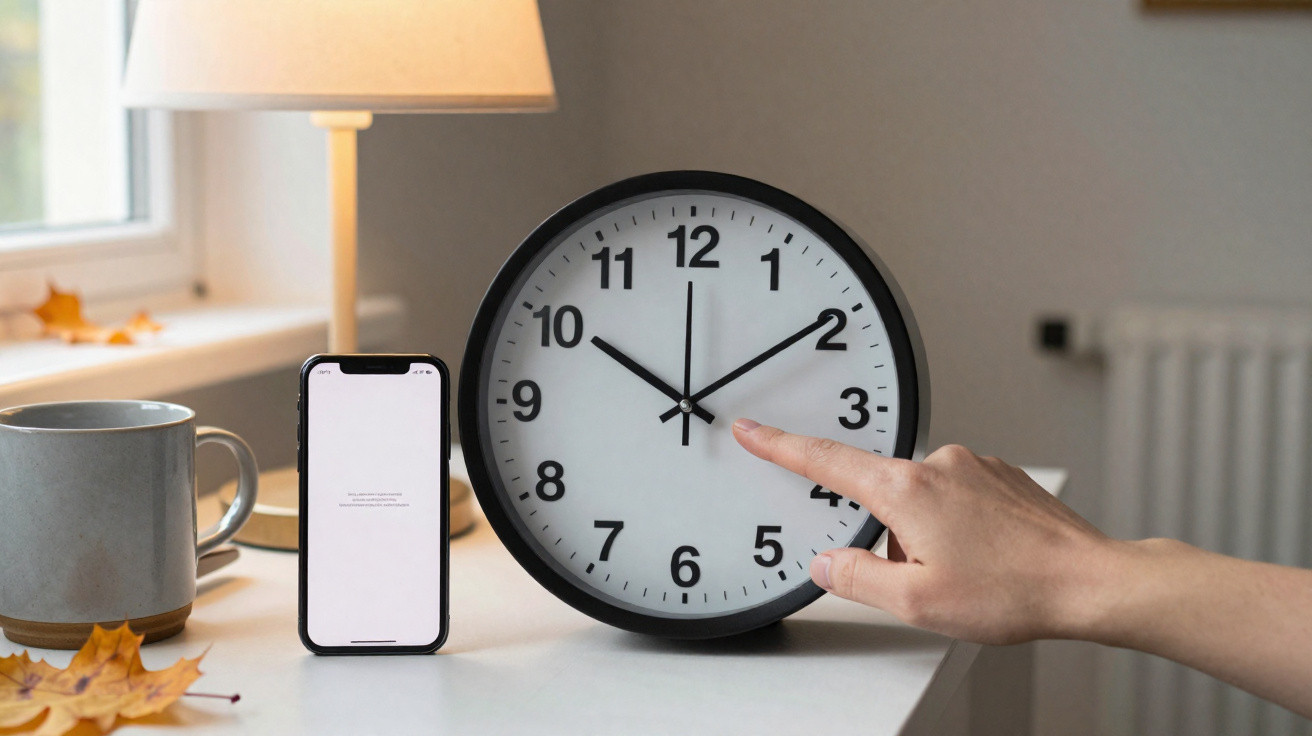
You gain an hour in autumn and lose one in spring. If you are changing a kitchen clock, wall clock or analogue watch before bed on Saturday, turn it back by one hour.
Although the October change does not cut into the night in the way the March switch can, earlier sunsets may take some adjusting to. This is particularly noticeable for school runs, dog walks, cycling and evening commutes.
Which clocks update themselves?
Many connected devices update automatically, but it is worth checking that automatic time and time-zone settings are switched on. A device with the wrong time zone, an outdated setting or no connection may not change correctly.
Devices that usually update automatically
- Smartphones and tablets
- Laptops and desktop computers
- Smart speakers and smart displays
- Many newer televisions
- Internet-connected heating controls
- Some newer vehicles
- Radio-controlled clocks, after receiving their time signal
Clocks worth checking manually
- Oven and microwave displays
- Conventional alarm clocks
- Wall clocks
- Analogue watches
- Some car dashboards
- Older heating programmers
- Plug-in timers
- Older cameras and smart-home equipment
Where a device offers a time-zone setting, select United Kingdom or Europe/London rather than merely altering the displayed hour. This helps it change properly between GMT and BST in future.
A quick home checklist for the weekend
A few minutes of preparation can prevent an oven clock being wrong all week or a timer coming on at an unexpected time.
1. Check alarms before bed
Reset older alarm clocks manually. If you use a phone alarm, check that automatic date, time and time-zone settings are enabled. If you have an early train, flight or shift, set a second alarm where practical.
2. Look at heating and hot-water timers
As October weather turns cooler, make sure the programme still matches when your household gets up and goes to bed. Some systems adjust on their own; others need the clock and programme checking separately.
3. Reset household clocks in daylight
Doing this on Saturday afternoon is often easier than trying to remember it while half-awake on Sunday. Make a quick list: kitchen, hallway, bedrooms, car and shed or garage.
4. Allow extra time for overnight travel
Rail, coach, ferry and airport services plan around the clock change, but overnight timetables can be less straightforward because the 1.00am hour happens twice. Check your operator’s updates, ticket details and the stated local time.
5. Review security and smart-home settings
Check timed lights, CCTV, video doorbells and automated blinds after the change. Correct timestamps can be especially useful if you need to review a recording later.
Why the clocks change at all
British Summer Time was introduced to shift more daylight into the evening during the lighter part of the year. In the UK, clocks go forward on the last Sunday in March and return to GMT on the last Sunday in October.
The arrangement has long been debated. Supporters value lighter evenings in spring and summer for leisure, travel and outdoor activity. Critics point to the inconvenience of changing clocks and the disruption it can cause to routines.
The energy argument is not simple. Brighter evenings can reduce the need for lighting, but this may be balanced by heating, morning activity and other household energy use. The effect varies with the weather, the type of home and how people use it.
The UK is due to continue using BST and GMT in 2026.
GMT, BST and the European clock change
When the UK returns to standard time, it returns to Greenwich Mean Time (GMT). During summer, the UK uses British Summer Time (BST), which is one hour ahead of GMT.
Many European countries also put clocks back on 25 October 2026, although their clock displays differ. Much of mainland Europe moves from Central European Summer Time to Central European Time, when 3.00am becomes 2.00am.
For international calls, online events and bookings, do not rely only on the country named. Check the time zone shown, especially for anything taking place overnight.
- GMT: UK standard time in winter
- BST: UK summer time
- UTC: the international reference time used by many digital systems
- CET/CEST: commonly used across much of mainland Europe
If an event falls in the repeated hour, look for a time-zone label such as BST or GMT. “1.30am” alone can be ambiguous on that Sunday.
Helping your routine adjust to darker days
The extra hour is welcome, but earlier darkness is often the bigger practical change. Keeping the weekend reasonably routine-led can make Monday morning simpler.
Try these straightforward adjustments:
- Keep bedtime and waking time close to their usual pattern.
- Get outside, or sit near natural light, in the morning where possible.
- Prepare school bags, work clothes and packed lunches the night before.
- Check lighting around paths, steps, drives and entrances.
- Use lights and reflective accessories when walking or cycling after dark.
- Bring pet walks forward where practical, particularly on poorly lit routes.
The clock change lasts an hour; planning for darker afternoons is usually the more useful autumn adjustment.
If sleep difficulties persist or are affecting day-to-day wellbeing, seek advice from an appropriate healthcare professional rather than relying on clock-change tips alone.
Common mistakes to avoid
The most common mistake is moving clocks in the wrong direction. In October, they go back, not forwards.
Other easily avoided errors include:
- Assuming every digital clock updates itself
- Forgetting that the 1.00am hour occurs twice on Sunday morning
- Changing a timer clock without checking the programmed schedule
- Overlooking the clock in the car
- Arranging an overseas call without confirming the other person’s time zone
- Leaving paths and entrances poorly lit as evenings become darker
Take care when reaching high wall clocks. Use a stable step stool or ladder on level ground, avoid overreaching and ask for help if the clock is awkwardly positioned. For heating controls and appliances, follow the manufacturer’s instructions. Do not remove electrical covers or attempt repairs yourself.
The practical answer
Put manual clocks back by one hour before bed on Saturday 24 October 2026, or do it at 2.00am on Sunday 25 October if you happen to be awake. Phones and many newer connected devices should handle the change themselves, but it is still sensible to check them.
A quick review of alarms, heating timers, travel plans and household clocks should make the switch uneventful. Then enjoy the extra hour - and remember that GMT, and earlier autumn sunsets, will remain until the clocks go forward again next spring.










Comments
No comments yet. Be the first to comment!
Leave a Comment